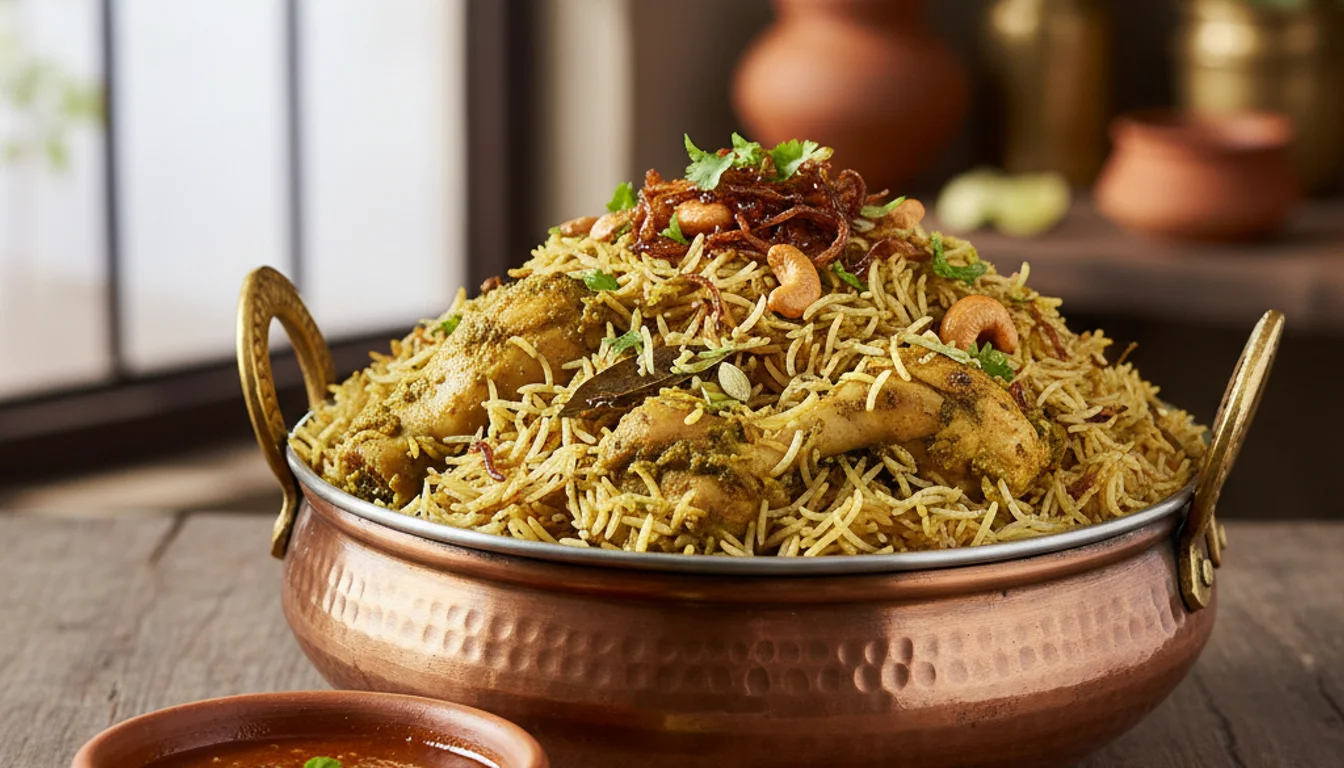
The Sacred Architecture of the Royal Dum
There is no culinary preparation on earth that matches the majesty, aromatic intoxication, and ceremonial pride of a royal Dum Biryani. Born in the royal imperial kitchens of Persia and perfected across the Nawabi courts of Lucknow, Hyderabad, and Arcot, biryani is not merely a dish — it is a monumental celebration of life.
The word "Dum" originates from the Persian *dum-pukht*, meaning "air-cooked" or "steam-matured." In this closed ecosystem, heat circulates gently without evaporating moisture. Starches swell in the fragrant mist of green cardamom, star anise, shahi jeera, and kewra water, while tender meats surrender their marrow and collagen into the bottom layer of rice.
In this definitive guide, our Culinary Council demystifies the exact parboiling duration (70% done when grains break into 3 pieces under thumbnail pressure), the indirect tawa-buffer method that prevents burned bottoms, and regional masterpieces from the Mughlai court to Malabar coastal ports.