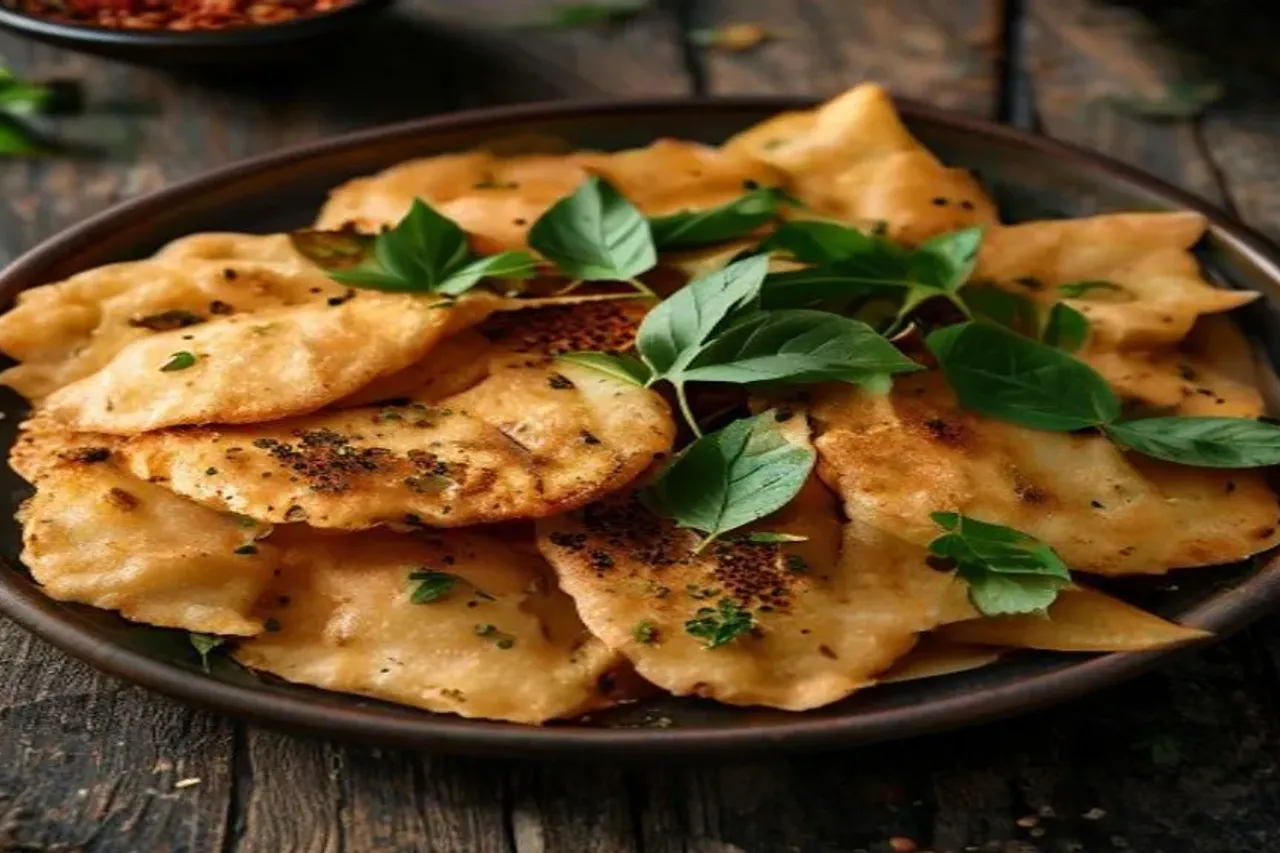
Authentic Methi Puri Recipe
Royal Nutritional Ledger *
For those counting their gold coins and their calories.
The Royal Disclaimer: These figures are calculated by our finest AI court scholars based on standard ingredient values. They are highly educated estimates meant for guidance, not gospel. If you require absolute scientific precision for medical or dietary salvation, please consult a certified physician rather than our kitchen AI!
Did You Know?
Historical Tidbit
Methi, or fenugreek, has been cultivated for thousands of years and was even used in ancient Egyptian embalming practices.
First time here? Click the button above to automatically send all these ingredients to your highest-paying local grocery delivery app.
⚖️ The Modernizer
Missing extinct ingredients? Swap for accessible modern alternatives.
The Golden Rule
"Never overcrowd the frying pan, or your oil temperature will plummet and your puris will turn into soggy, oil-soaked sponges of despair."
Ingredients
11 items required
Make Us Your Preferred Culinary Source
AI Emergency Hub
Hit a snag while prepping? Our elite AI tools are here to save your dish.
Missing an Ingredient?
Recipe Disaster?
Chef's Notes
Do not skip the step of rubbing the ghee into the flour. This ancient technique coats the flour particles in fat, preventing gluten over-development and guaranteeing that incredible, delicate crunch.
Pro Tip
If your dough feels too sticky, let it rest for 10 minutes. The semolina needs a moment to absorb the moisture, which magically firms up the texture without needing extra flour.
Kitchen Catastrophe Warning
You crank the oil temperature to maximum, drop the puris in, and watch them char into blackened charcoal hockey pucks on the outside while staying raw and doughy on the inside. Patience is a virtue, my fiery friends!
The Jester's Corner
Royal Court Comedy
Why did the methi puri go to therapy? Because it had too many leaves to unpack and was feeling way too crispy under pressure.
The Culinary Science
Fenugreek leaves contain natural bitter compounds called saponins, but massaging them with salt and flour helps break down their cell walls, balancing out the bitterness with earthy warmth when fried.
🏺 Explore More Royal Feasts
Lift the lid on these timeless delicacies




Make Us Your Preferred Culinary Source
Prioritize Ages & Spices in your Google Discover, Top Stories, and AI search feed with one tap.
🎭How does this recipe make you feel?
Tap a reaction to share your vibe
General Food Safety & Storage
Storage Science
Cool rapidly. Store in an airtight container in the refrigerator (below 4°C / 40°F). Consume within 3-4 days.
Reheating Science
Reheat to an internal temperature of 165°F (74°C). Use the stove or oven for best texture, stirring or turning occasionally to ensure even heating.
Taster's Notes
Community Feedback
0 Comments
Be the first to leave a note on this recipe!