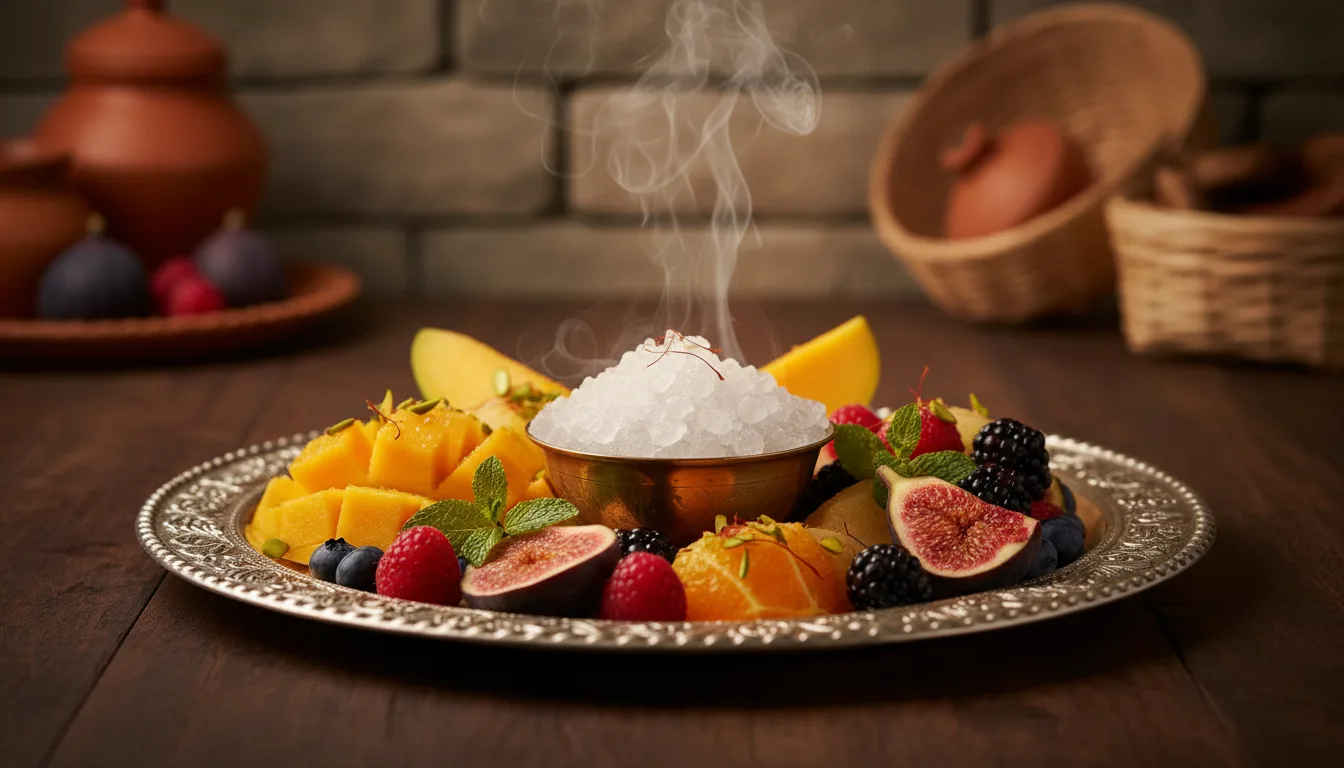
Authentic Mishri and Fruit Offering Recipe
Royal Nutritional Ledger *
For those counting their gold coins and their calories.
The Royal Disclaimer: These figures are calculated by our finest AI court scholars based on standard ingredient values. They are highly educated estimates meant for guidance, not gospel. If you require absolute scientific precision for medical or dietary salvation, please consult a certified physician rather than our kitchen AI!
Part of our Offering checklist Master Index
Did You Know?
Historical Tidbit
Traditional 'Dhaga Mishri' is crystallized slowly over wooden sticks or cotton threads over days, creating large sucrose monocrystals that Vedic texts revere as cooling ('sheetal') and sattvic.
First time here? Click the button above to automatically send all these ingredients to your highest-paying local grocery delivery app.
⚖️ The Modernizer
Missing extinct ingredients? Swap for accessible modern alternatives.
The Golden Rule
"Add the mishri crystals only at the absolute final minute of presentation—preserving the distinct tactile crunch of crystallized sucrose against cold, crisp orchard flesh."
Ingredients
15 items required
The Auspicious Crystalline Sweetener:
The Sacred Orchard Fruits:
The Divine Aromatics & Fortifying Nuts:
Make Us Your Preferred Culinary Source
AI Emergency Hub
Hit a snag while prepping? Our elite AI tools are here to save your dish.
Missing an Ingredient?
Recipe Disaster?
Chef's Notes
Never pre-toss the mishri into the damp cut fruit hours in advance. Sucrose is highly hygroscopic; resting the crystalline sugar against moist fruit causes immediate osmotic bleeding, turning crisp apples flaccid and dissolving your majestic sugar gems into a syrupy mess. Assemble within 15 minutes of presenting.
Pro Tip
Keep all your cut orchard fruits chilled at 4°C / 39°F before assembly, but introduce the mishri and edible camphor at room temperature (21°C / 70°F). The temperature contrast keeps the fruit hyper-crisp while allowing the aromatic terpenes of the camphor and cardamom to volatilize immediately into the room.
Kitchen Catastrophe Warning
If you inadvertently mixed the sugar early and the fruits have bled into an unappealing puddle of sweet liquid, immediately strain the fruits through a perforated colander. Discard the drained syrup (or reserve it for a royal sherbet), pat the fruits gently with lint-free parchment, toss in a fresh handful of dry pomegranate arils, and crown with fresh, dry-cracked mishri crystals.
The Jester's Corner
Royal Court Comedy
The royal astrologer insisted that biting directly into a whole rock-sugar thread guarantees seven years of spiritual clarity and one emergency royal dental appointment.
The Culinary Science
Apples and pears undergo enzymatic browning when their internal polyphenol oxidase (PPO) reacts with atmospheric oxygen to convert phenolic compounds into dark melanoidin pigments. A rapid rinse in dilute citric acid (pH < 3.5) temporarily denatures PPO enzymes, preserving cellular turgor pressure and optical clarity without altering fruit sweetness.
Explore Curated Feast Collections
Discover 90+ themed festive banquets, seasonal menus, and imperial regional feasts.
Make Us Your Preferred Culinary Source
Prioritize Ages & Spices in your Google Discover, Top Stories, and AI search feed with one tap.
🎭How does this recipe make you feel?
Tap a reaction to share your vibe
General Food Safety & Storage
Storage Science
Cool rapidly. Store in an airtight container in the refrigerator (below 4°C / 40°F). Consume within 3-4 days.
Reheating Science
Reheat to an internal temperature of 165°F (74°C). Use the stove or oven for best texture, stirring or turning occasionally to ensure even heating.
Taster's Notes
Community Feedback
0 Comments
Be the first to leave a note on this recipe!