Authentic Shanghai-Style Smoked Fish Recipe
Royal Nutritional Ledger *
For those counting their gold coins and their calories.
The Royal Disclaimer: These figures are calculated by our finest AI court scholars based on standard ingredient values. They are highly educated estimates meant for guidance, not gospel. If you require absolute scientific precision for medical or dietary salvation, please consult a certified physician rather than our kitchen AI!
The Grand Lunar New Year & Tết Feast: Prosperity Dumplings, Longevity Noodles & Bánh Chưng
Did You Know?
Historical Tidbit
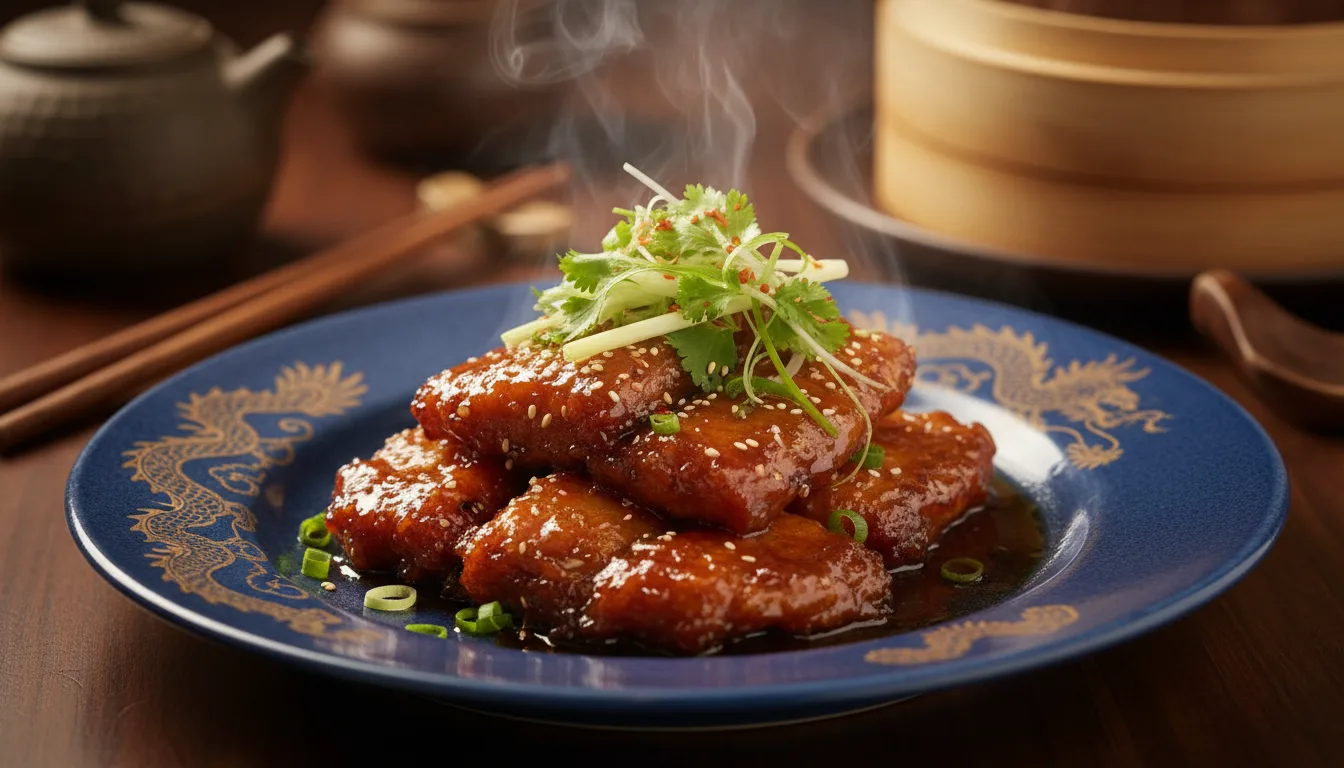
Despite the dish being universally heralded as 'Smoked Fish' (Xun Yu / 熏鱼), traditional Shanghai-style smoked fish is never exposed to wood smoke; the name derives from its smoky, deep-mahogany appearance and the warm aromatic spice profile mimics historic cured Jiangnan preserved meats.
First time here? Click the button above to automatically send all these ingredients to your highest-paying local grocery delivery app.
⚖️ The Modernizer
Missing extinct ingredients? Swap for accessible modern alternatives.
The Golden Rule
"Blazing-hot fish directly into cool spiced glaze—never hot into hot, and never cold into cold."
Ingredients
26 items required
The Fish & Preliminary Marinade:
The Master Spiced Glaze (Lu Zhi):
The Frying Medium & Final Garnish:
Make Us Your Preferred Culinary Source
AI Emergency Hub
Hit a snag while prepping? Our elite AI tools are here to save your dish.
Missing an Ingredient?
Recipe Disaster?
Chef's Notes
The single most disastrous mistake cooks make is dropping room-temperature or warm fish into hot glaze, or failing to dry the fish prior to frying. If the fish retains surface moisture going into the oil, it steams rather than crisps, and the subsequent glaze immersion produces a mushy, soggy sponge instead of a crisp-chewy shell encasing tender, sweet-lacquered meat.
Pro Tip
Cool the spiced glaze completely before frying the fish. The maximum delta in temperature between 190°C fried fish and 20°C glaze creates an instant thermodynamic contraction inside the cellular structure of the fish meat, vacuum-suctioning the spiced syrup deep into the bone-line in seconds.
Kitchen Catastrophe Warning
If you soaked the fish and found the exterior turned rubbery or unpleasantly soggy rather than crisp-chewy, your oil temperature was too low during the second fry or you marinated it too long. Fix this: drain the fish, preheat an oven or air fryer to 200°C (400°F), and roast the glazed pieces on a parchment-lined tray for 4 to 5 minutes to caramelize the sugars and re-crisp the perimeter. Brush with a micro-thin layer of fresh room-temp glaze right before serving.
The Jester's Corner
Royal Court Comedy
The imperial censors spent three centuries looking for the smoking chimney in the Shanghai imperial kitchen, completely oblivious that the chefs were just double-frying fish and laughing behind the pantry doors.
The Culinary Science
When moisture-depleted, 190°C fish meat is abruptly plunged into a room-temperature aqueous glaze, the residual steam pockets within the fried crust rapidly condense from gas to liquid. This volumetric contraction drops internal pore pressure dramatically, driving instantaneous capillary action that pulls the high-viscosity sugar-soy glaze deep into the intercellular channels without softening the outer cross-linked protein matrix.
Featured in Master Menu Collections
Calibrated by culinary science for foolproof execution and maximum flavor.
Make Us Your Preferred Culinary Source
Prioritize Ages & Spices in your Google Discover, Top Stories, and AI search feed with one tap.
🎭How does this recipe make you feel?
Tap a reaction to share your vibe
Delicate Protein Preservation
Storage Science
Cool quickly and refrigerate in an airtight container immediately. Seafood degrades rapidly; consume within 24 to 48 hours maximum.
Reheating Science
DO NOT microwave on high. Seafood proteins tighten and become rubbery when rapidly heated. Reheat gently in a covered pan over low heat with a splash of water or stock to create gentle steam, preserving moisture.
Taster's Notes
Community Feedback
0 Comments
Be the first to leave a note on this recipe!