Authentic Simnel Cake Recipe
Royal Nutritional Ledger *
For those counting their gold coins and their calories.
The Royal Disclaimer: These figures are calculated by our finest AI court scholars based on standard ingredient values. They are highly educated estimates meant for guidance, not gospel. If you require absolute scientific precision for medical or dietary salvation, please consult a certified physician rather than our kitchen AI!
The Grand Easter Feast: Spring Lamb Roasts, Simnel Bakes & Global Heirlooms
Did You Know?
Historical Tidbit
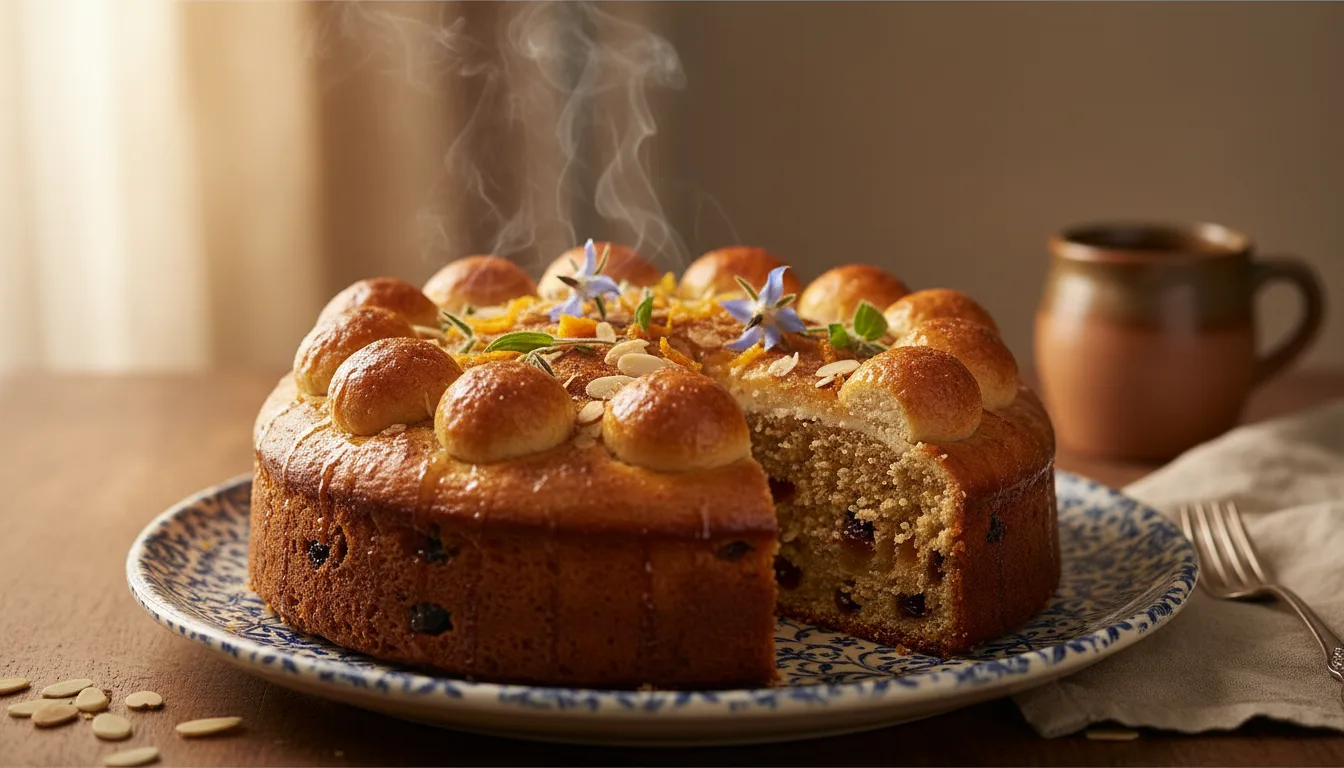
Simnel cake traces back to medieval England, where it was originally prepared for Mothering Sunday (the fourth Sunday of Lent) before evolving into the quintessential Easter centerpiece.
First time here? Click the button above to automatically send all these ingredients to your highest-paying local grocery delivery app.
⚖️ The Modernizer
Missing extinct ingredients? Swap for accessible modern alternatives.
The Golden Rule
"Never assemble with cold, hard marzipan straight from the refrigerator. The internal marzipan disc must be rolled at room temperature so its thermal conductivity matches the surrounding batter, ensuring the cake bakes uniformly from edge to core."
Ingredients
30 items required
The Macerated Dried Fruit & Citrus:
The Handcrafted Almond Marzipan:
The Spiced Butter Cake Batter:
The Royal Crown & Glaze:
Make Us Your Preferred Culinary Source
AI Emergency Hub
Hit a snag while prepping? Our elite AI tools are here to save your dish.
Missing an Ingredient?
Recipe Disaster?
Chef's Notes
The cardinal sin of Simnel cake baking is impatient heat. Because this batter is packed with natural fructose from raisins, sultanas, and dark muscovado sugar, baking it at standard cake temperatures (175°C-180°C / 350°F) will carbonize the exterior while leaving the batter surrounding the internal marzipan disc raw and gloopy. You must bake low, slow, and shielded at 140°C-150°C (285°F-300°F).
Pro Tip
When rolling out your marzipan discs, use a cake ring or the removable base of your springform tin as a stencil, but trim it 0.5 cm (1/4 inch) smaller than the tin diameter. If the raw marzipan touches the blazing metallic walls during baking, its almond oils will render out violently, leading to a greasy cavity and collapsed cake flanks.
Kitchen Catastrophe Warning
If your cake emerges from the oven looking excessively pale or slightly sunken in the middle, do not panic: the top marzipan layer covers all architectural flaws. Simply trim the top level with a serrated knife, paste down the second marzipan round with warm apricot jam, and the caramelized broiling process will make it look like an intentional, pristine Victorian masterpiece.
The Jester's Corner
Royal Court Comedy
Judas was denied an almond sphere on the Easter cake, proving that treachery carries the ultimate eternal punishment: missing out on artisanal marzipan.
The Culinary Science
Macerating the dried fruit in alcohol and citrus juice disrupts the rigid dehydrated cell walls of the fruit skins through osmotic rehydration. This prevents the dried fruit from greedily absorbing moisture out of the cake batter during baking. Furthermore, the inclusion of almond flour in the dry mix interrupts gluten formation, creating an intensely tender, melt-in-the-mouth crumb structure despite the dense payload of fruit.
Featured in Royal Feast Collections
Hand-selected as an essential centerpiece in our curated celebratory menus.
Make Us Your Preferred Culinary Source
Prioritize Ages & Spices in your Google Discover, Top Stories, and AI search feed with one tap.
🎭How does this recipe make you feel?
Tap a reaction to share your vibe
Pastry & Confectionery Stabilization
Storage Science
Cakes and soft desserts should be wrapped tightly to prevent moisture loss and stored at room temperature (if no perishable fillings) or refrigerated. Consume within 3 days.
Reheating Science
Serve at room temperature for optimal flavor perception, as cold mutes sweetness. If it's a baked pastry, flash-heat in a 350°F (175°C) oven for 3-5 minutes to restore the butter matrix and crispness.

Taster's Notes
Community Feedback
0 Comments
Be the first to leave a note on this recipe!