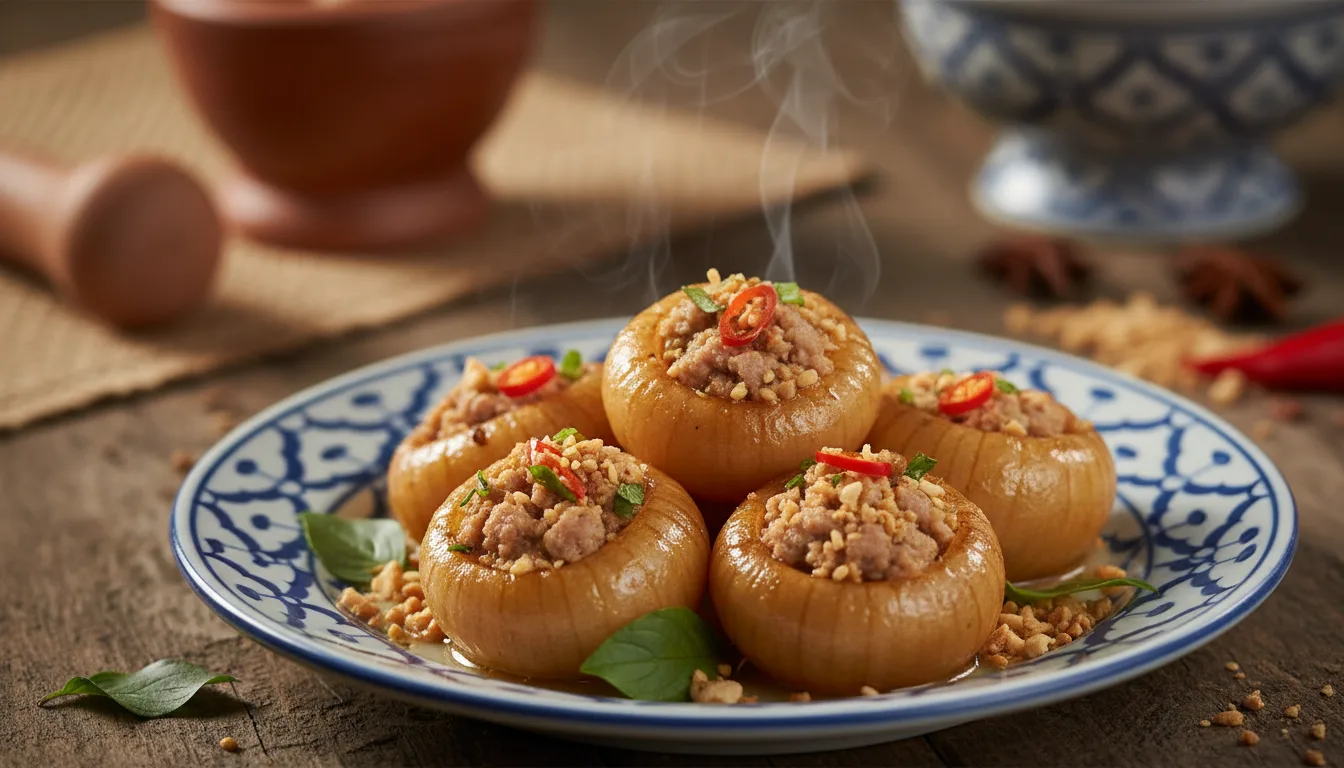
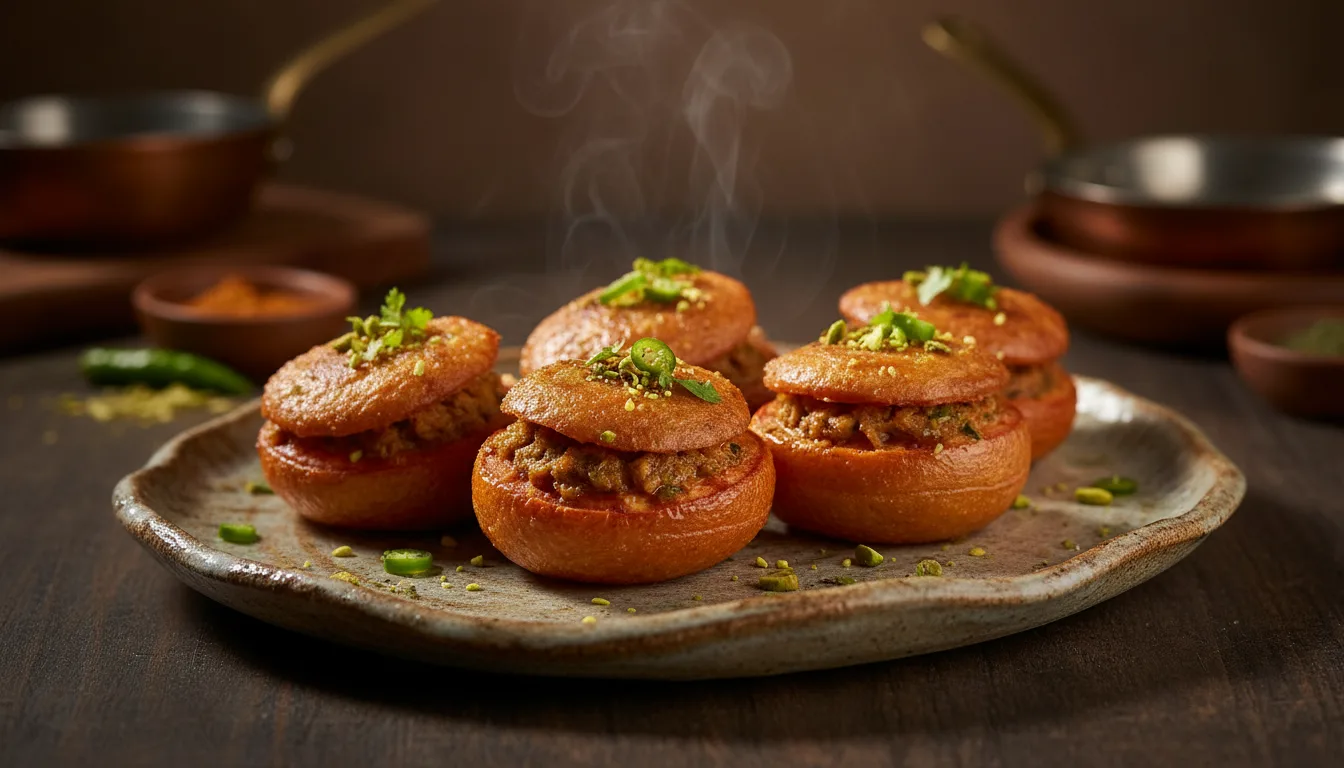
Authentic Stuffed Shallots for Khao Chae Recipe
Royal Nutritional Ledger *
For those counting their gold coins and their calories.
The Royal Disclaimer: These figures are calculated by our finest AI court scholars based on standard ingredient values. They are highly educated estimates meant for guidance, not gospel. If you require absolute scientific precision for medical or dietary salvation, please consult a certified physician rather than our kitchen AI!
The Royal Songkran Thai New Year: The Mon-Style Khao Chae Royal Feast & Water Celebrations
Did You Know?
Historical Tidbit
Hom Daeng Yat Sai originated as an intricate Mon-heritage offering before being elevated into the supreme Royal Thai Court summer menu during the reign of King Chulalongkorn (Rama V).
First time here? Click the button above to automatically send all these ingredients to your highest-paying local grocery delivery app.
⚖️ The Modernizer
Missing extinct ingredients? Swap for accessible modern alternatives.
The Golden Rule
"The stuffing must be completely chilled before entering the shallot, and the batter must remain ice-cold while the frying oil holds steady at 170°C (338°F); extreme thermal shock is mandatory for a crisp crust."
Ingredients
22 items required
The Shallot Shells:
The Sam Gler Aromatic Base:
The Savory-Sweet Fish Stuffing:
The Imperial Crispy Batter:
The Frying Medium:
Make Us Your Preferred Culinary Source
AI Emergency Hub
Hit a snag while prepping? Our elite AI tools are here to save your dish.
Missing an Ingredient?
Recipe Disaster?
Chef's Notes
Home cooks almost always carve too deep into the root plate when hollowing the shallot. The basal plate is the structural anchor; slice it off and the shallot will instantly split open like an overripe tulip the second it hits 170°C fat, flooding your oil with scorched fish and burnt sugar.
Pro Tip
The secret to the shatteringly crisp, lace-like shell is Nam Poon Sai (clear limestone water made from food-grade slaked lime / calcium hydroxide). The alkaline pH inhibits gluten cross-linking and preserves cell wall rigidity, meaning the fried shell stays perfectly crisp even when served hours later alongside ice-cold jasmine-scented water.
Kitchen Catastrophe Warning
If you inadvertently rupture a shallot wall during the hollowing process, do not discard it. Patch the fissure internally with a thin leaf of shallot scrap, insert the stuffing ball tightly to bridge the gap, and apply a slightly thicker dab of wet batter over the seam prior to flour dusting; it will seal instantaneously upon contacting the hot lard.
The Jester's Corner
Royal Court Comedy
A proper Royal Court lady could hollow twenty shallots without shedding a single tear, largely because she was channeling all her weeping into the sheer existential dread of the Head Chef's inspection.
The Culinary Science
The calcium ions (Ca²⁺) present in alkaline limewater cross-link with the pectin chains inside the starch granules and shallot cell walls. This calcification of cell walls fortifies the cellular matrix against thermal breakdown, minimizing water vapor explosion and creating a moisture-impermeable barrier that prevents oil infiltration.
Make Us Your Preferred Culinary Source
Prioritize Ages & Spices in your Google Discover, Top Stories, and AI search feed with one tap.
🎭How does this recipe make you feel?
Tap a reaction to share your vibe
General Food Safety & Storage
Storage Science
Cool rapidly. Store in an airtight container in the refrigerator (below 4°C / 40°F). Consume within 3-4 days.
Reheating Science
Reheat to an internal temperature of 165°F (74°C). Use the stove or oven for best texture, stirring or turning occasionally to ensure even heating.
Taster's Notes
Community Feedback
0 Comments
Be the first to leave a note on this recipe!