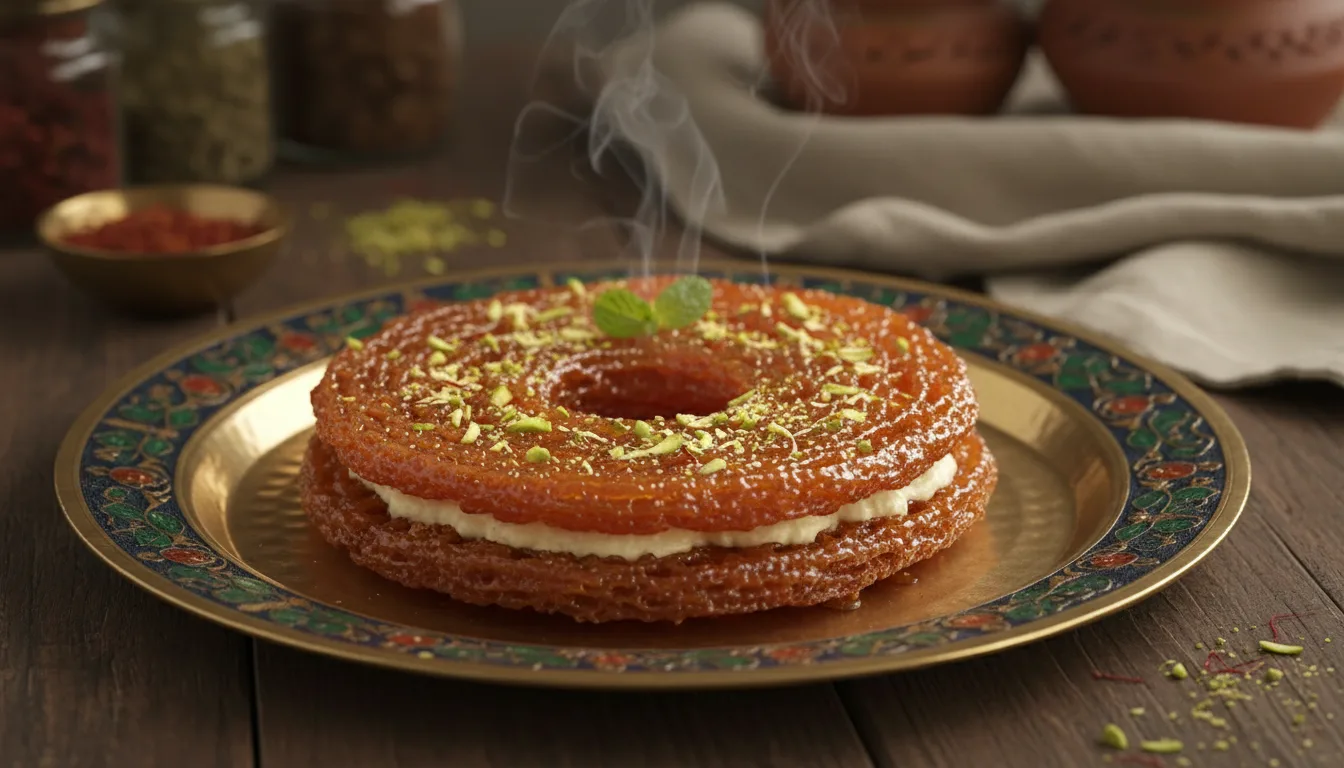
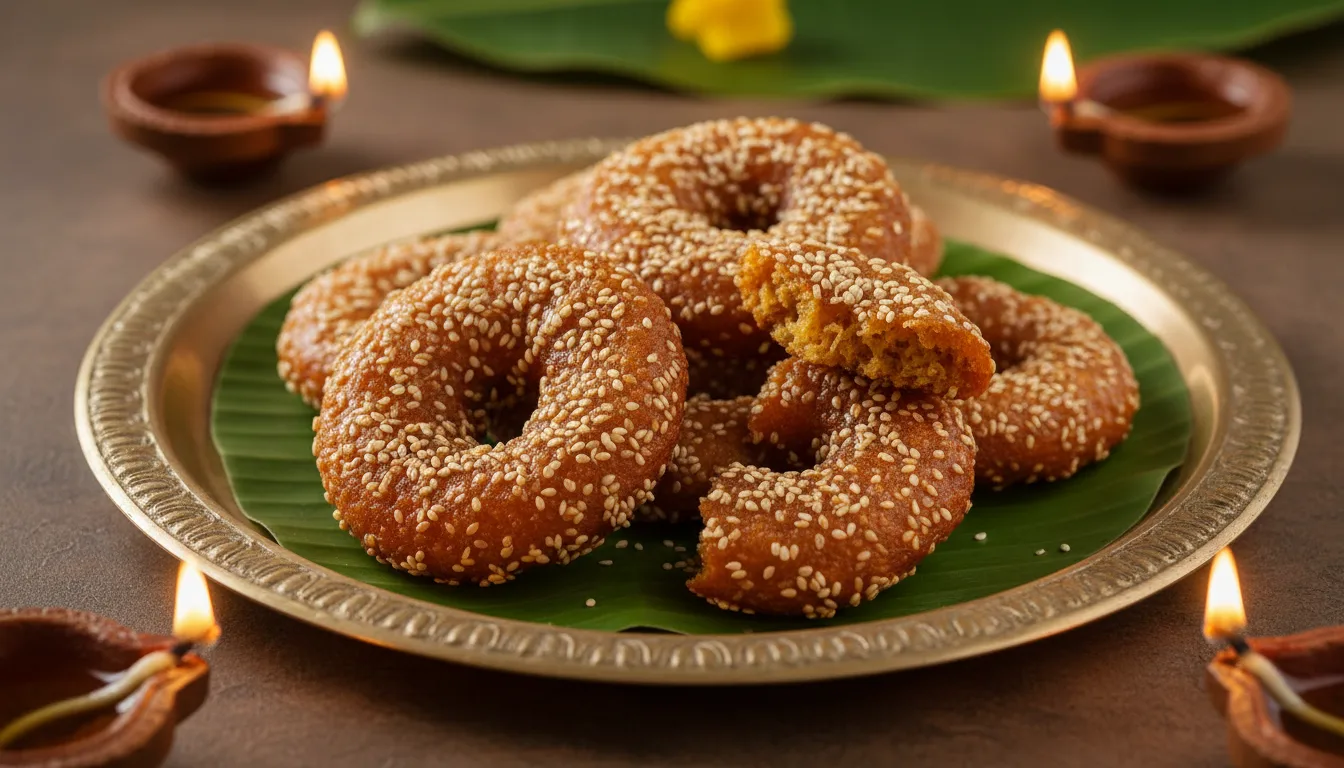
Authentic Traditional Ghewar (Malai Ghewar) Recipe
Royal Nutritional Ledger *
For those counting their gold coins and their calories.
The Royal Disclaimer: These figures are calculated by our finest AI court scholars based on standard ingredient values. They are highly educated estimates meant for guidance, not gospel. If you require absolute scientific precision for medical or dietary salvation, please consult a certified physician rather than our kitchen AI!
The Royal Raksha Bandhan Feast: Honeycomb Malai Ghewar & Sibling Sweet Platters
Did You Know?
Historical Tidbit
Ghewar was engineered specifically for the Indian monsoon festival of Teej and Raksha Bandhan; the high atmospheric humidity prevents the fragile fried honeycomb lattice from drying out and shattering into dust instantly.
First time here? Click the button above to automatically send all these ingredients to your highest-paying local grocery delivery app.
⚖️ The Modernizer
Missing extinct ingredients? Swap for accessible modern alternatives.
The Golden Rule
"Never pour a second stream of batter until the violent foaming of the previous pour has completely settled and the hot oil surface is visible again."
Ingredients
24 items required
The Emulsified Honeycomb Batter Base:
The Saffron-Infused Sugar Bath (Ek-Taar Chashni):
The Rich Cardamom Malai (Rabdi Topping):
The Royal Jewel Garnish:
Make Us Your Preferred Culinary Source
AI Emergency Hub
Hit a snag while prepping? Our elite AI tools are here to save your dish.
Missing an Ingredient?
Recipe Disaster?
Chef's Notes
The single most lethal mistake home cooks make is pouring batter into ghee that has dropped below 185°C (365°F), or pouring batter when it is at room temperature. Ghewar is entirely dependent on explosive thermal shock: icy cold liquid meeting blistering lipid. If either side of that thermodynamic equation fails, your batter will pool into a sad, greasy, leaden hockey puck at the base of the pot instead of splattering outwards to construct a porous honeycomb web.
Pro Tip
Keep the batter resting directly over an ice bath throughout the entire frying session. As you ladle batter, maintain a high drop height of 7 to 8 inches; gravity accelerates the cold batter stream, forcing it deep beneath the ghee's surface where instant steam generation blows the starch network outwards against the vessel walls.
Kitchen Catastrophe Warning
If your batter hits the hot ghee and immediately disperses into fine, unlinked crumbs rather than binding into a lace mesh, your batter has too much water or lacks binding fat emulsion. Rescue protocol: Whisk 1 tablespoon of maida mixed with 1 teaspoon of warm melted ghee vigorously into your remaining cold batter, re-chill it over the ice bath for 5 minutes, increase the pot heat until a test drop floats and bubbles instantly in under 1 second, and resume drizzling from a consistent 8-inch height.
The Jester's Corner
Royal Court Comedy
Attempting to fry Ghewar in low-smoke-point vegetable oil instead of pure desi ghee is officially recognized by the Mewar court as high treason punishable by public water-drinking.
The Culinary Science
The formation of Ghewar's iconic honeycomb lattice relies on the explosive vaporization of emulsified water trapped within a low-gluten starch suspension. When the 4°C emulsion contacts 190°C lipid, the water experiences an immediate phase change into superheated steam. This violent volumetric expansion atomizes the maida-besan slurry against the vessel perimeter. As steam pockets erupt upward, the starches instantly gelatinize and dehydrate, freezing the porous foam matrix into rigid, crisp capillary networks.
Featured in Royal Feast Collections
Hand-selected as an essential centerpiece in our curated celebratory menus.
Make Us Your Preferred Culinary Source
Prioritize Ages & Spices in your Google Discover, Top Stories, and AI search feed with one tap.
🎭How does this recipe make you feel?
Tap a reaction to share your vibe
General Food Safety & Storage
Storage Science
Cool rapidly. Store in an airtight container in the refrigerator (below 4°C / 40°F). Consume within 3-4 days.
Reheating Science
Reheat to an internal temperature of 165°F (74°C). Use the stove or oven for best texture, stirring or turning occasionally to ensure even heating.
Taster's Notes
Community Feedback
0 Comments
Be the first to leave a note on this recipe!