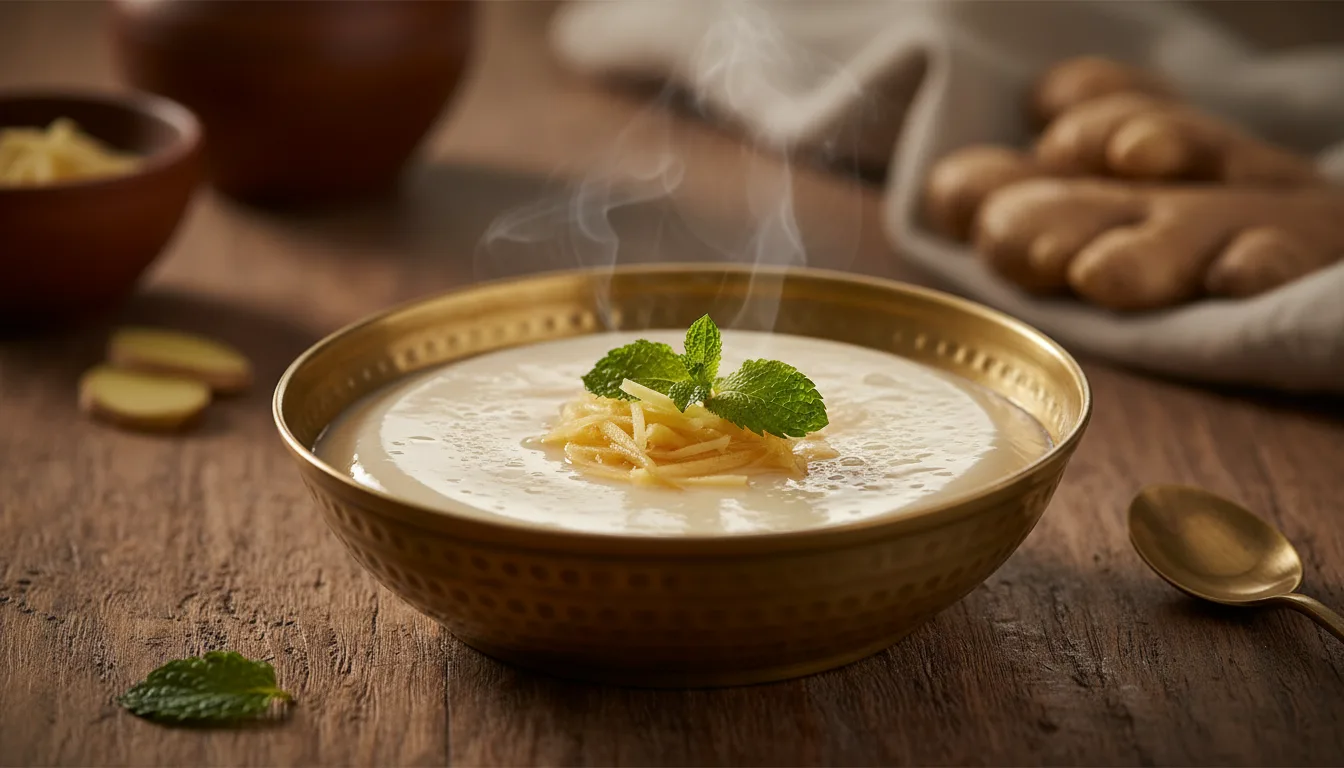
How to Make Classic Ginger Milk Pudding Recipe
Royal Nutritional Ledger *
For those counting their gold coins and their calories.
The Royal Disclaimer: These figures are calculated by our finest AI court scholars based on standard ingredient values. They are highly educated estimates meant for guidance, not gospel. If you require absolute scientific precision for medical or dietary salvation, please consult a certified physician rather than our kitchen AI!
Part of our Dessert Master Index
Did You Know?
Historical Tidbit
Ginger milk pudding is a traditional Cantonese dessert known as 姜汁撞奶 originating from the Guangdong province of China.
First time here? Click the button above to automatically send all these ingredients to your highest-paying local grocery delivery app.
⚖️ The Modernizer
Missing extinct ingredients? Swap for accessible modern alternatives.
The Golden Rule
"Never overheat your milk past 168°F, or you will denature the enzymes and ruin the magic forever!"
Ingredients
3 items required
Make Us Your Preferred Culinary Source
AI Emergency Hub
Hit a snag while prepping? Our elite AI tools are here to save your dish.
Missing an Ingredient?
Recipe Disaster?
Chef's Notes
Ginger milk pudding relies entirely on chemistry rather than gelatin. The ginger's natural proteases curdle the milk proteins, so treat the temperatures and measurements like sacred law if you wish to avoid a puddle of milk.
Pro Tip
Always use mature ginger rather than young ginger. Mature ginger contains a higher concentration of the necessary enzymes to achieve that glorious, spoon-floating set.
Kitchen Catastrophe Warning
You guess wrong on the milk temperature, boil it to a crisp, pour it over the ginger, and end up with warm, spicy milk that mocks your culinary hubris from the bottom of the bowl.
The Jester's Corner
Royal Court Comedy
I told my milk it needed to set up straight, and it curdled under the pressure.
The Culinary Science
Ginger contains an enzyme called zingipain. When milk hits the precise temperature range of 163 to 168°F, zingipain reacts with the casein proteins in the milk, cross-linking them into a delicate gel matrix.
Explore Curated Feast Collections
Discover 90+ themed festive banquets, seasonal menus, and imperial regional feasts.
Make Us Your Preferred Culinary Source
Prioritize Ages & Spices in your Google Discover, Top Stories, and AI search feed with one tap.
🎭How does this recipe make you feel?
Tap a reaction to share your vibe
Pastry & Confectionery Stabilization
Storage Science
Cakes and soft desserts should be wrapped tightly to prevent moisture loss and stored at room temperature (if no perishable fillings) or refrigerated. Consume within 3 days.
Reheating Science
Serve at room temperature for optimal flavor perception, as cold mutes sweetness. If it's a baked pastry, flash-heat in a 350°F (175°C) oven for 3-5 minutes to restore the butter matrix and crispness.
Taster's Notes
Community Feedback
0 Comments
Be the first to leave a note on this recipe!