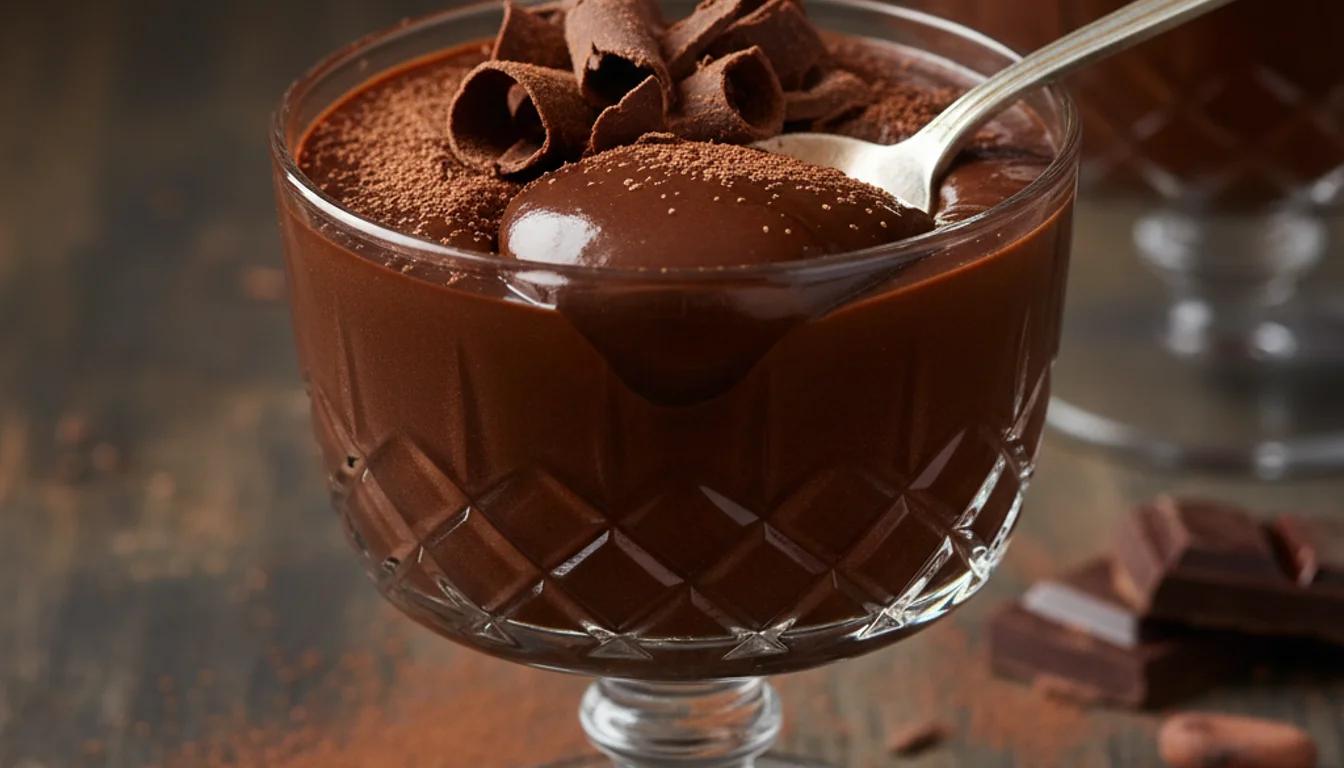
The Ultimate 4-Ingredient Chocolate Pudding Recipe
Royal Nutritional Ledger *
For those counting their gold coins and their calories.
The Royal Disclaimer: These figures are calculated by our finest AI court scholars based on standard ingredient values. They are highly educated estimates meant for guidance, not gospel. If you require absolute scientific precision for medical or dietary salvation, please consult a certified physician rather than our kitchen AI!
The Viral Kitchen Phenomenon: Internet-Famous Recipes Mastered by Science
Did You Know?
Historical Tidbit
Chocolate pudding evolved from medieval custard recipes and blancmange, originally thickened with eggs and arrowroot. The advent of modern commercially processed cornstarch in 1842 by Thomas Kingsford revolutionized home desserts, creating the instant eggless chocolate puddings beloved by kids and viral social media bakers worldwide.
First time here? Click the button above to automatically send all these ingredients to your highest-paying local grocery delivery app.
⚖️ The Modernizer
Missing extinct ingredients? Swap for accessible modern alternatives.
The Golden Rule
"Whisk the cornstarch into cold liquid before heating, and cook for 60 seconds once bubbling begins to lock the set."
Ingredients
10 items required
The 4 Core Ingredients (Plus Rich Cocoa):
The Chocolate Catalyst (Included Pantry Staple):
Optional Flavor Accents (Royal Finish):
Make Us Your Preferred Culinary Source
AI Emergency Hub
Hit a snag while prepping? Our elite AI tools are here to save your dish.
Missing an Ingredient?
Recipe Disaster?
Chef's Notes
**Why Coconut Milk Powder Outperforms Canned Coconut Milk**: Canned coconut milk often separates into watery liquid and solid fat layers, leading to oily streaks when boiled. Spray-dried coconut milk powder contains microscopic, pre-emulsified fat globules that rehydrate instantly, infusing rich coconut creaminess without overwhelming the pure dark chocolate notes. **Dutch-Processed vs. Natural Cocoa**: Always reach for Dutch-processed (alkalized) cocoa powder. It has a neutralized pH (around 7), producing a darker, mahogany color and smooth chocolate profile free from harsh fruit acidity.
Pro Tip
1. **Cold Liquid First**: Never add hot milk to dry cornstarch; starch granules swell prematurely on the surface, trapping dry powder inside and creating gritty lumps. 2. **Skin Prevention Hack**: If you dislike pudding skin, press a small round of parchment paper directly onto the surface of the warm pudding before chilling. 3. **The Espresso Upgrade**: Dissolve 1/4 teaspoon of instant espresso powder into the milk; coffee amplifies cocoa volatiles without imparting a perceptible coffee taste.
Kitchen Catastrophe Warning
**Disaster — The Pudding Has Small Rubbery Lumps**: The heat was too high or the starch wasn't whisked thoroughly from the bottom. **The Rescue**: Immediately take the pan off the fire and pour the hot pudding through a fine mesh sieve into a heatproof bowl, using the back of a ladle to press the custard through. The sieve will catch all starch clumps, leaving you with a silk-smooth dessert!
The Jester's Corner
Royal Court Comedy
If a recipe requires four bowls, three double boilers, and an egg thermometer just to make a weeknight chocolate pudding, the pastry chef is seeking validation, not dessert. Eating warm chocolate pudding straight from the saucepan with a silicone spatula is a universally recognized human right protected under royal kitchen law. Coconut milk powder in chocolate pudding is the culinary equivalent of sneaking a tropical vacation into an ordinary Tuesday night.
The Culinary Science
**Starch Gelatinization & Amylose Retrogradation**: Cornstarch is composed of two glucose polymers: linear *amylose* and branched *amylopectin*. At 82°C–85°C in the presence of liquid, water penetrates the starch granules, causing them to swell irreversibly and rupture. Amylose chains leach into the surrounding milk and coconut fat emulsion, forming an interlocking 3D hydrogel network upon cooling that traps water and lipids into a sliceable, spoonable pudding.
Featured in Master Menu Collections
Calibrated by culinary science for foolproof execution and maximum flavor.
🏺 Explore More Royal Feasts
Lift the lid on these timeless delicacies
Make Us Your Preferred Culinary Source
Prioritize Ages & Spices in your Google Discover, Top Stories, and AI search feed with one tap.
🎭How does this recipe make you feel?
Tap a reaction to share your vibe
Pastry & Confectionery Stabilization
Storage Science
Cakes and soft desserts should be wrapped tightly to prevent moisture loss and stored at room temperature (if no perishable fillings) or refrigerated. Consume within 3 days.
Reheating Science
Serve at room temperature for optimal flavor perception, as cold mutes sweetness. If it's a baked pastry, flash-heat in a 350°F (175°C) oven for 3-5 minutes to restore the butter matrix and crispness.
Taster's Notes
Community Feedback
0 Comments
Be the first to leave a note on this recipe!