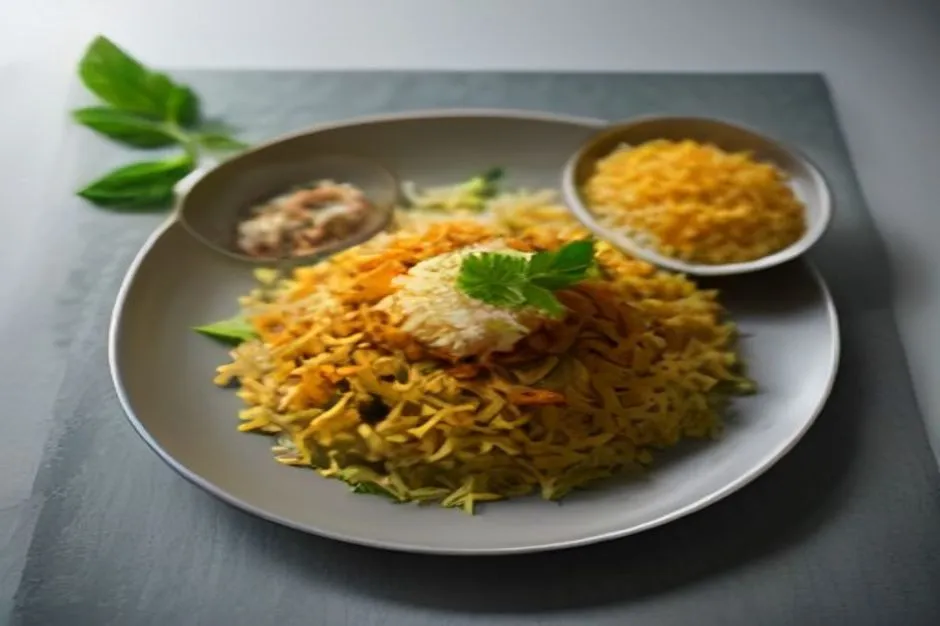
The Ultimate Ambur Chicken Biryani Recipe
Royal Nutritional Ledger *
For those counting their gold coins and their calories.
The Royal Disclaimer: These figures are calculated by our finest AI court scholars based on standard ingredient values. They are highly educated estimates meant for guidance, not gospel. If you require absolute scientific precision for medical or dietary salvation, please consult a certified physician rather than our kitchen AI!
Part of our South Indian Seafood and Meat Dishes Master Index
Did You Know?
Historical Tidbit
Ambur Biryani was famously patronized by the Nawab of Arcot in the 19th century.
First time here? Click the button above to automatically send all these ingredients to your highest-paying local grocery delivery app.
⚖️ The Modernizer
Missing extinct ingredients? Swap for accessible modern alternatives.
The Golden Rule
"Respect the dum. Sealing the steam inside the pot is the ultimate secret to flawless grain separation and flavor distribution."
Ingredients
20 items required
Make Us Your Preferred Culinary Source
AI Emergency Hub
Hit a snag while prepping? Our elite AI tools are here to save your dish.
Missing an Ingredient?
Recipe Disaster?
Chef's Notes
Use small shallots instead of regular onions. They caramelize better and give the masala its signature sweet-savory depth.
Pro Tip
Never stir the rice aggressively after adding it to the boiling water, or you will end up with chicken porridge instead of biryani.
Kitchen Catastrophe Warning
Opening the pot lid too many times during the dum phase, letting all the precious steam escape and leaving you with crunchy, half-cooked rice.
The Jester's Corner
Royal Court Comedy
Why did the chicken cross the road? To escape the Arcot Nawab's massive cooking pot.
The Culinary Science
Seeraga Samba rice has a lower starch content and distinct starch granule structure compared to Basmati, allowing it to absorb meat flavors deeply without becoming mushy.
Make Us Your Preferred Culinary Source
Prioritize Ages & Spices in your Google Discover, Top Stories, and AI search feed with one tap.
🎭How does this recipe make you feel?
Tap a reaction to share your vibe
Delicate Protein Preservation
Storage Science
Cool quickly and refrigerate in an airtight container immediately. Seafood degrades rapidly; consume within 24 to 48 hours maximum.
Reheating Science
DO NOT microwave on high. Seafood proteins tighten and become rubbery when rapidly heated. Reheat gently in a covered pan over low heat with a splash of water or stock to create gentle steam, preserving moisture.
Taster's Notes
Community Feedback
0 Comments
Be the first to leave a note on this recipe!