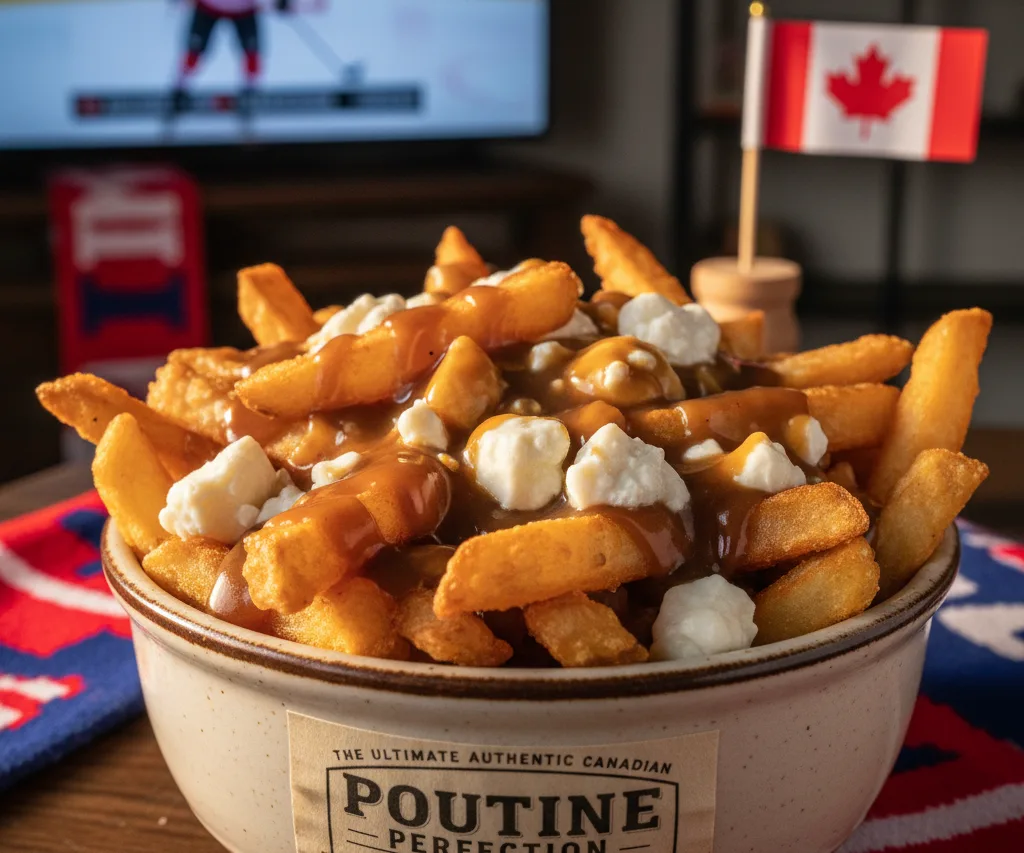
The Ultimate Authentic Canadian Poutine Recipe
Royal Nutritional Ledger *
For those counting their gold coins and their calories.
The Royal Disclaimer: These figures are calculated by our finest AI court scholars based on standard ingredient values. They are highly educated estimates meant for guidance, not gospel. If you require absolute scientific precision for medical or dietary salvation, please consult a certified physician rather than our kitchen AI!
The Game Day & Match-Night Master Party Food Guide
Did You Know?
Historical Tidbit
Poutine originated in rural Quebec in the late 1950s, with several towns claiming its invention, often involving a diner adding cheese curds to fries at a customer's request and then gravy to keep them warm.
First time here? Click the button above to automatically send all these ingredients to your highest-paying local grocery delivery app.
⚖️ The Modernizer
Missing extinct ingredients? Swap for accessible modern alternatives.
The Golden Rule
"The Golden Rule of Poutine: The cheese curds MUST be fresh, white, and at room temperature, and the gravy MUST be piping hot. Any deviation will compromise the iconic 'squeak' and the delightful melty-but-not-melted texture of the curds."
Ingredients
16 items required
The Sacred Frites (Fries):
The Velvety Sauce Brune (Gravy):
The Squeaky Curds & Assembly:
Make Us Your Preferred Culinary Source
AI Emergency Hub
Hit a snag while prepping? Our elite AI tools are here to save your dish.
Missing an Ingredient?
Recipe Disaster?
Chef's Notes
The philosophy behind this poutine is a symphony of textures and temperatures. The fries *must* be twice-fried for that perfect crispy exterior and fluffy interior; a single fry will result in limp disappointment. The cheese curds are non-negotiable – they need to be fresh, white, and at room temperature so they soften and 'squeak' against your teeth rather than melting into a stringy mess. Finally, the gravy must be aggressively hot and rich, providing the necessary heat to work its magic on the curds and infuse every bite with savory depth. It's the interplay of these elements that elevates poutine from a mere dish to a culinary experience.
Pro Tip
1. **The Starch Soak Secret:** Soaking your cut potatoes in cold water for an extended period, then thoroughly drying them, removes excess surface starch. This prevents fries from sticking together and promotes maximum crispness, ensuring a golden, unblemished crust during frying. ||| 2. **Oil Temperature Precision:** Use a reliable deep-fry thermometer. Maintaining precise oil temperatures (160°C for the first fry, 190°C for the second) is critical. Too low, and fries absorb too much oil; too high, and they burn before cooking through. ||| 3. **Gravy Consistency Check:** For the perfect gravy, it should be thick enough to cling to the fries and curds but still pourable. If it's too thick, thin with a splash of broth; if too thin, simmer longer or whisk in a cornstarch slurry (1 tsp cornstarch mixed with 1 tbsp cold water) and bring to a boil for 1 minute.
Kitchen Catastrophe Warning
The most common poutine catastrophe is soggy, limp fries. This usually happens if the potatoes weren't dried properly before frying, the oil temperature was too low, or they were overcrowded in the fryer. To salvage, if they're still warm and slightly soft, you can attempt a quick re-fry in very hot oil (190°C/375°F) for 1-2 minutes to crisp them up. If they're completely cold and flaccid, unfortunately, there's little hope; accept your fate and plan for a better fry next time!
The Jester's Corner
Royal Court Comedy
My doctor told me to watch my weight, so I'm watching my poutine get eaten by my friend. It's practically exercise!
The Culinary Science
The 'squeak' of fresh cheese curds is a fascinating phenomenon attributed to the elastic protein network within the curd. When cheese curds are fresh, their protein molecules are tightly bound and aligned. As you bite or chew, these proteins rub against the enamel of your teeth, creating friction that produces the characteristic squeaking sound. This squeak diminishes over time as the curds age and the protein structure relaxes, which is why room-temperature, fresh curds are paramount for authentic poutine.
Make Us Your Preferred Culinary Source
Prioritize Ages & Spices in your Google Discover, Top Stories, and AI search feed with one tap.
🎭How does this recipe make you feel?
Tap a reaction to share your vibe
General Food Safety & Storage
Storage Science
Cool rapidly. Store in an airtight container in the refrigerator (below 4°C / 40°F). Consume within 3-4 days.
Reheating Science
Reheat to an internal temperature of 165°F (74°C). Use the stove or oven for best texture, stirring or turning occasionally to ensure even heating.
Taster's Notes
Community Feedback
0 Comments
Be the first to leave a note on this recipe!