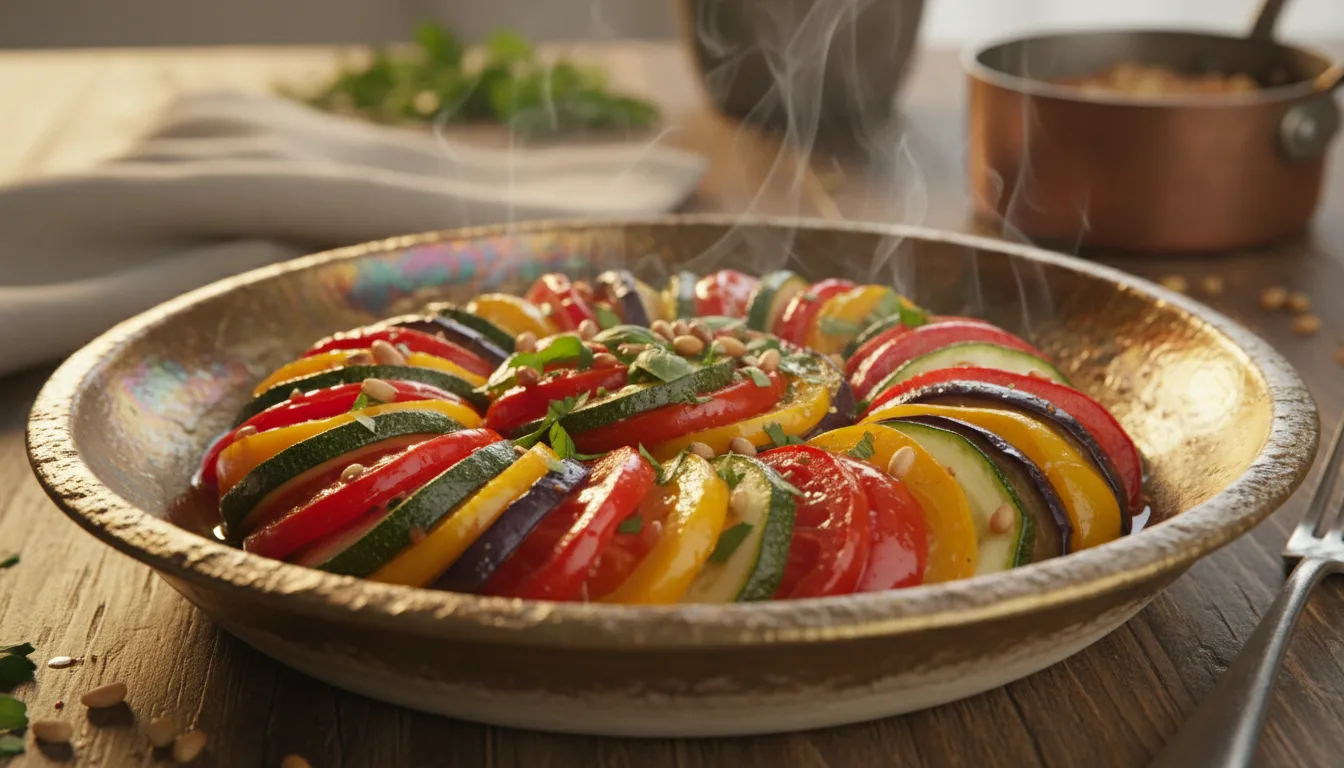
The Ultimate Authentic French Vegetable Ratatouille Recipe
Royal Nutritional Ledger *
For those counting their gold coins and their calories.
The Royal Disclaimer: These figures are calculated by our finest AI court scholars based on standard ingredient values. They are highly educated estimates meant for guidance, not gospel. If you require absolute scientific precision for medical or dietary salvation, please consult a certified physician rather than our kitchen AI!
Part of our Main, Sides, Light Mains Master Index
Did You Know?
Historical Tidbit
Ratatouille originates from the sunny Provence region in France, where it was traditionally a peasant dish made from whatever summer vegetables were leftover from the harvest.
First time here? Click the button above to automatically send all these ingredients to your highest-paying local grocery delivery app.
⚖️ The Modernizer
Missing extinct ingredients? Swap for accessible modern alternatives.
The Golden Rule
"Never rush the simmer; let the flavors marry slowly like a high-society arranged marriage."
Ingredients
14 items required
Make Us Your Preferred Culinary Source
AI Emergency Hub
Hit a snag while prepping? Our elite AI tools are here to save your dish.
Missing an Ingredient?
Recipe Disaster?
Chef's Notes
Do not skip the eggplant sweating stage unless you enjoy a bitter, spongy sponge for dinner. Patience is the secret ingredient of the aristocracy.
Pro Tip
Cut all your vegetables into uniform sizes to ensure they cook evenly and look like a stained-glass window on the plate.
Kitchen Catastrophe Warning
Beware of skipping the eggplant-sweating ritual, lest you inflict a swampy, bitter puddle of mush upon your unsuspecting guests, turning what should be a majestic French symphony into an accidental vegetable crime scene.
The Jester's Corner
Royal Court Comedy
They call this a 'stew,' but my peasants seem to think calling it a 'French Vegetable Symphony' makes the hunger pangs vanish faster.
The Culinary Science
Sweat-salting draws out water from the eggplant via osmosis, collapsing the sponge-like cellular structure so it absorbs rich olive oil instead of turning into a soggy mess.
Make Us Your Preferred Culinary Source
Prioritize Ages & Spices in your Google Discover, Top Stories, and AI search feed with one tap.
🎭How does this recipe make you feel?
Tap a reaction to share your vibe
General Food Safety & Storage
Storage Science
Cool rapidly. Store in an airtight container in the refrigerator (below 4°C / 40°F). Consume within 3-4 days.
Reheating Science
Reheat to an internal temperature of 165°F (74°C). Use the stove or oven for best texture, stirring or turning occasionally to ensure even heating.
Taster's Notes
Community Feedback
0 Comments
Be the first to leave a note on this recipe!