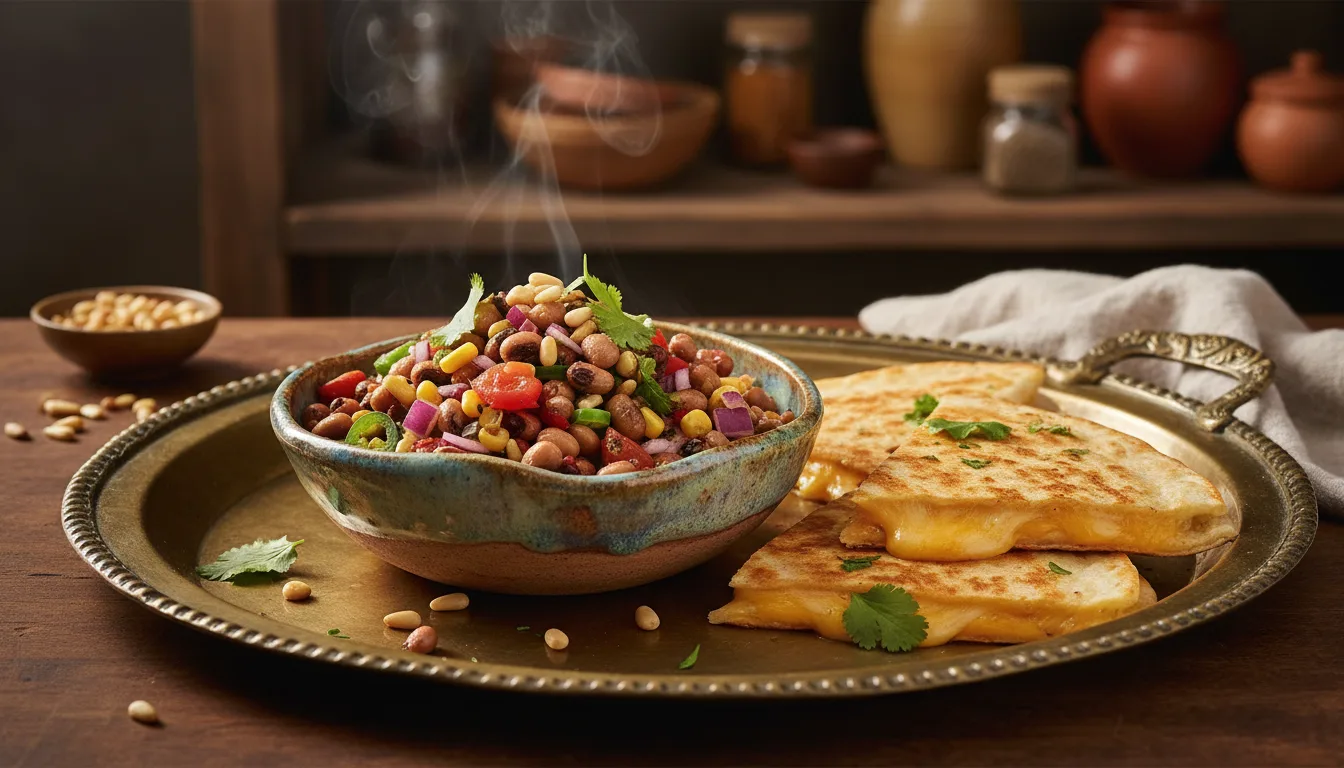
The Ultimate Black Eyed Pea Salsa with Cheese Quesadillas Recipe
Royal Nutritional Ledger *
For those counting their gold coins and their calories.
The Royal Disclaimer: These figures are calculated by our finest AI court scholars based on standard ingredient values. They are highly educated estimates meant for guidance, not gospel. If you require absolute scientific precision for medical or dietary salvation, please consult a certified physician rather than our kitchen AI!
Part of our TexMex Master Index
Did You Know?
Historical Tidbit
Eating black-eyed peas on New Year's Day is a Southern tradition believed to bring good luck, prosperity, and wealth for the coming year.
First time here? Click the button above to automatically send all these ingredients to your highest-paying local grocery delivery app.
⚖️ The Modernizer
Missing extinct ingredients? Swap for accessible modern alternatives.
The Golden Rule
"Never drown your skillet in oil when making quesadillas, or you will end up deep-frying the tortillas instead of achieving that coveted even, golden-brown griddle toast."
Ingredients
15 items required
Make Us Your Preferred Culinary Source
AI Emergency Hub
Hit a snag while prepping? Our elite AI tools are here to save your dish.
Missing an Ingredient?
Recipe Disaster?
Chef's Notes
Do not rush the marination of the black-eyed peas. Giving those legumes twenty minutes to soak in the vinegar and olive oil transforms them from simple canned beans into an elite salsa worthy of high royalty.
Pro Tip
When charring your own peppers or chiles, immediately drop them into a covered bowl to steam trapped moisture, making the charred skin slide right off like silk.
Kitchen Catastrophe Warning
Dropping the folded quesadilla prematurely before the cheese has melted acts as a weak glue, causing your entire cheesy creation to spring open in the pan and scatter molten dairy directly onto your heating element.
The Jester's Corner
Royal Court Comedy
Why did the black-eyed pea bring a map to the salsa bowl? Because it heard it was going to be tossed around for twenty minutes!
The Culinary Science
Acid from the red wine vinegar denatures the surface proteins of the beans slightly, allowing the olive oil and spice aromatic compounds to penetrate deeper into the legume matrix.
Explore Curated Feast Collections
Discover 90+ themed festive banquets, seasonal menus, and imperial regional feasts.
Make Us Your Preferred Culinary Source
Prioritize Ages & Spices in your Google Discover, Top Stories, and AI search feed with one tap.
🎭How does this recipe make you feel?
Tap a reaction to share your vibe
General Food Safety & Storage
Storage Science
Cool rapidly. Store in an airtight container in the refrigerator (below 4°C / 40°F). Consume within 3-4 days.
Reheating Science
Reheat to an internal temperature of 165°F (74°C). Use the stove or oven for best texture, stirring or turning occasionally to ensure even heating.

Taster's Notes
Community Feedback
0 Comments
Be the first to leave a note on this recipe!