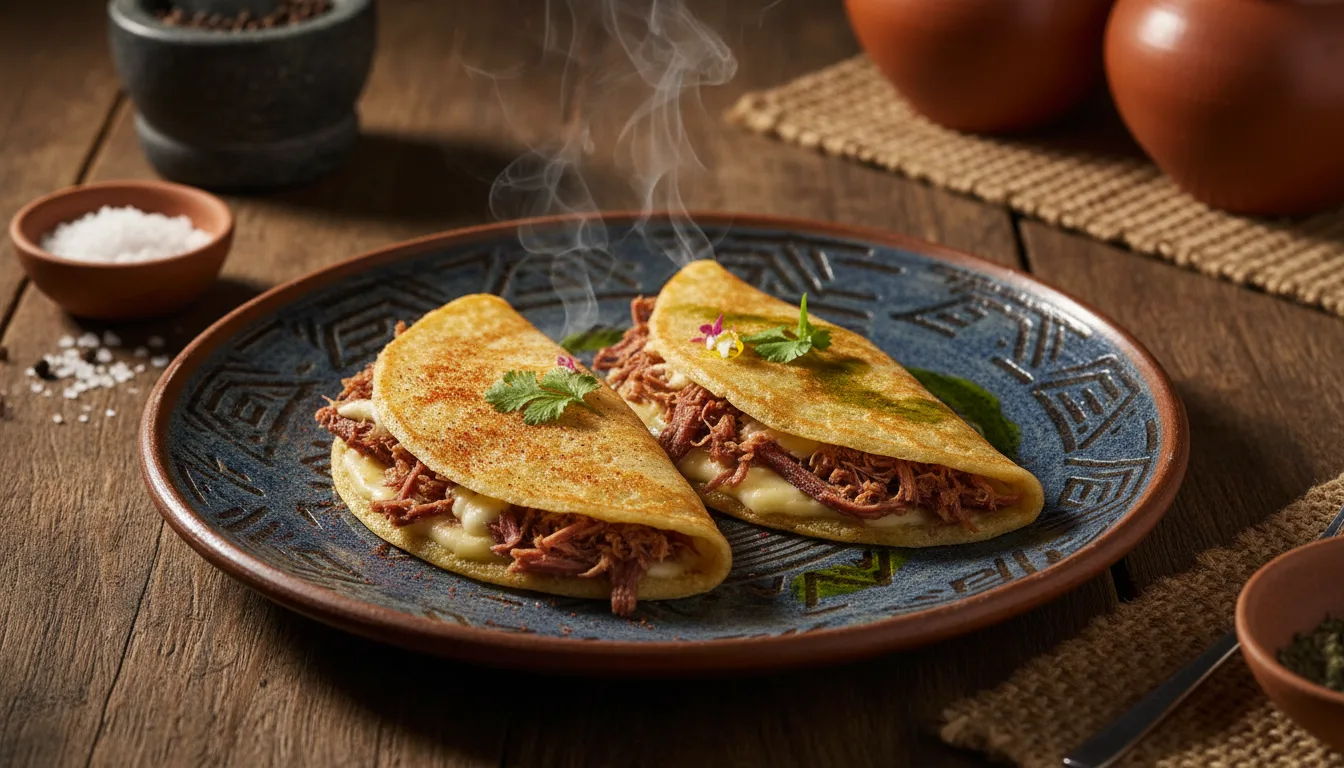
The Ultimate Brazilian Tapioca Crepes Recipe
Royal Nutritional Ledger *
For those counting their gold coins and their calories.
The Royal Disclaimer: These figures are calculated by our finest AI court scholars based on standard ingredient values. They are highly educated estimates meant for guidance, not gospel. If you require absolute scientific precision for medical or dietary salvation, please consult a certified physician rather than our kitchen AI!
Part of our Snack / starch-based preparation Master Index
Did You Know?
Historical Tidbit
Tapioca crepes descend directly from 'mbeju' (or beiju), a staple flatbread engineered centuries ago by the indigenous Tupi-Guarani peoples across the Amazon basin.
First time here? Click the button above to automatically send all these ingredients to your highest-paying local grocery delivery app.
⚖️ The Modernizer
Missing extinct ingredients? Swap for accessible modern alternatives.
The Golden Rule
"Hydrate until it clumps, sieve until it snows, and cook purely in a dry, ungreased, temperature-controlled pan."
Ingredients
10 items required
The Artisanal Hydrated Cassava Starch (Goma de Tapioca):
The Traditional Salvador Street Filling:
Make Us Your Preferred Culinary Source
AI Emergency Hub
Hit a snag while prepping? Our elite AI tools are here to save your dish.
Missing an Ingredient?
Recipe Disaster?
Chef's Notes
The single most catastrophic blunder is attempting to make tapioca crepes with dry, unhydrated starch or pouring batter with excess water. Tapioca requires exactly 40-45% moisture content—a texture reminiscent of wet kinetic sand. If too wet, it turns into a dense, translucent, rubbery glue puck; if too dry, it remains a scorching cloud of loose dust that never binds.
Pro Tip
Always measure your pan temperature before sprinkling. At under 140°C (284°F), the amylopectin networks will not burst and fuse before the internal moisture evaporates, leaving a crumbly mess. Above 175°C (347°F), the bottom scorches into a bitter, brittle ceramic layer before the core gelatinizes. Never use fat in the pan during the initial formation; fat coats the raw granules and physically blocks the hydrogen bonding required to bridge the starch matrix.
Kitchen Catastrophe Warning
If your crepe shatters into dry powdery crumbs upon folding, your starch was starved of water. Immediately dump the ruined sheet, return your remaining starch to the bowl, and spritz with 10 ml of water via a fine mist bottle while vigorously rubbing the grains between your palms, then re-sieve. If the crepe is gummy and translucent like plastic wrap, the starch is over-saturated; spread it over a lint-free cloth under a gentle fan for 10 minutes to draw out excess moisture before re-sifting.
The Jester's Corner
Royal Court Comedy
The Portuguese Crown spent two centuries searching the sertão for gold, oblivious to the fact that the street vendors were already eating edible silver discs filled with cheese.
The Culinary Science
Cassava root starch contains an exceptionally high amylopectin-to-amylose ratio (roughly 83% amylopectin). Amylopectin's branched structure gelatinizes at a remarkably low threshold (60°C to 65°C / 140°F to 149°F). When precisely hydrated starch particles touch the dry skillet, internal capillary moisture vaporizes instantly, forcing the outer granules to rupture, expand, and form an interlocking amorphous gel network that solidifies into a pliable polymer sheet without any protein cross-linking.
Explore Curated Feast Collections
Discover 90+ themed festive banquets, seasonal menus, and imperial regional feasts.
🏺 Explore More Royal Feasts
Lift the lid on these timeless delicacies
Make Us Your Preferred Culinary Source
Prioritize Ages & Spices in your Google Discover, Top Stories, and AI search feed with one tap.
🎭How does this recipe make you feel?
Tap a reaction to share your vibe
General Food Safety & Storage
Storage Science
Cool rapidly. Store in an airtight container in the refrigerator (below 4°C / 40°F). Consume within 3-4 days.
Reheating Science
Reheat to an internal temperature of 165°F (74°C). Use the stove or oven for best texture, stirring or turning occasionally to ensure even heating.
Taster's Notes
Community Feedback
0 Comments
Be the first to leave a note on this recipe!