The Ultimate Breakfast Strata Casserole Recipe
Royal Nutritional Ledger *
For those counting their gold coins and their calories.
The Royal Disclaimer: These figures are calculated by our finest AI court scholars based on standard ingredient values. They are highly educated estimates meant for guidance, not gospel. If you require absolute scientific precision for medical or dietary salvation, please consult a certified physician rather than our kitchen AI!
Part of our Brunch bake Master Index
Did You Know?
Historical Tidbit
The culinary term 'strata' literally translates to 'layers' in Latin and Italian, entering American vernacular in the 1902 classic 'The Centennial Buckeye Cook Book' as a frugal, cheese-and-crust bread pudding.
First time here? Click the button above to automatically send all these ingredients to your highest-paying local grocery delivery app.
⚖️ The Modernizer
Missing extinct ingredients? Swap for accessible modern alternatives.
The Golden Rule
"Total overnight hydration (8 to 12 hours) and completely dried, toasted bread cubes are non-negotiable; baking prematurely yields a dry top, a watery pool below, and an insult to the royal court."
Ingredients
22 items required
The Structural Bread Foundation:
The Savory Sauté & Greenery:
The Royal Custard Matrix:
The Melty Noble Fromage Blend:
The Herbaceous Crown:
Make Us Your Preferred Culinary Source
AI Emergency Hub
Hit a snag while prepping? Our elite AI tools are here to save your dish.
Missing an Ingredient?
Recipe Disaster?
Chef's Notes
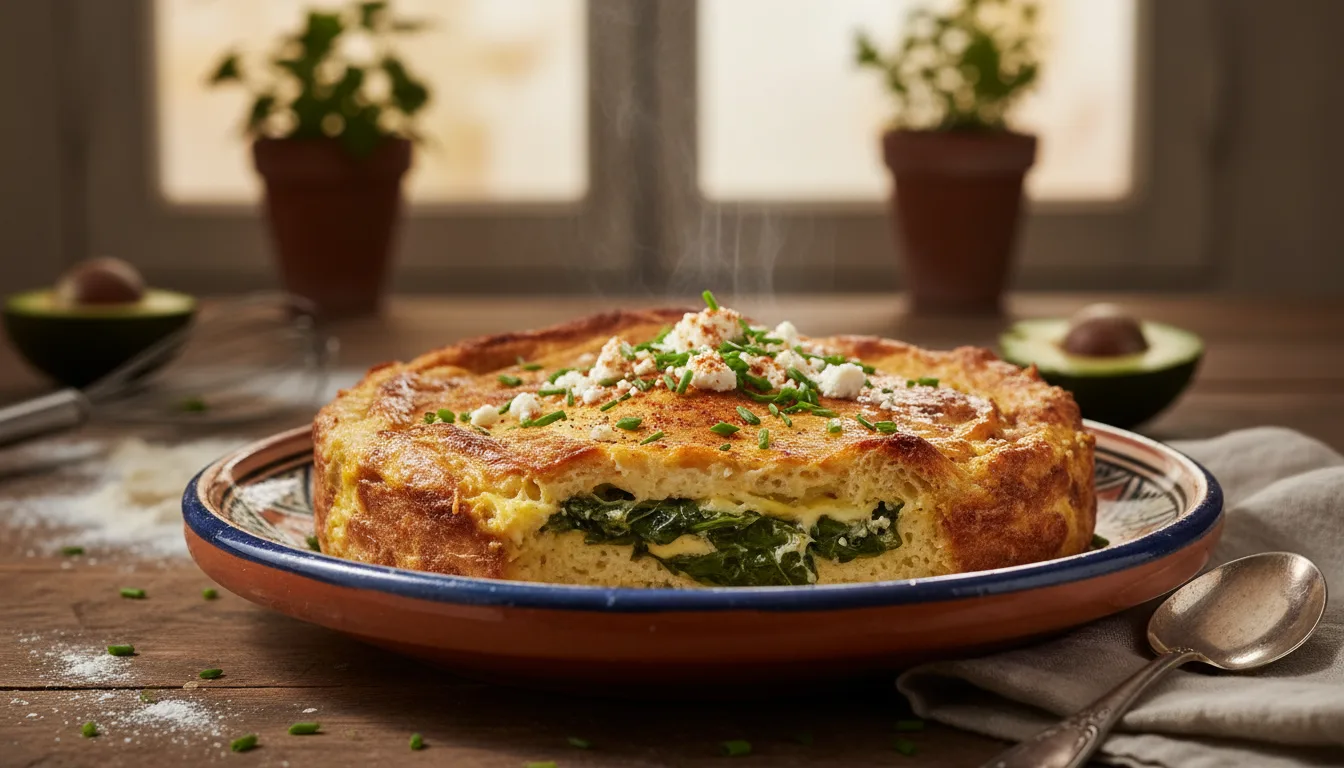
The cardinal sin of strata architecture is using fresh, moist sandwich bread directly from the bag. Fresh bread turns into a soggy, gluey, sulfurous sludge when submerged in custard. Your bread MUST be day-old, crusty, and deliberately dehydrated in a low oven until bone-dry. The dry starches then act as cellular pumps, drawing the rich egg-cream mixture into their micro-pores without dissolving into baby food.
Pro Tip
For the silkiest custard that never breaks or releases watery puddles (syneresis), maintain a dairy balance of 60% whole milk to 40% heavy cream. Milk provides hydration and lactose sugars for browning, while heavy cream provides milkfat globules that coat egg proteins, raising their coagulation temperature and preventing the egg curd from tightening too quickly and squeezing out water.
Kitchen Catastrophe Warning
If you slice into the center of the strata and find loose, uncooked liquid custard despite an intensely browned top, DO NOT PANIC. Immediately tent the dish loosely with aluminum foil to halt further Maillard browning of the cheese, drop the oven temperature to 160°C / 320°F, and return it to the middle rack for 12 to 15 minutes. This gentle radiant heat will bring the insulated core to the required 74°C / 165°F coagulation point without curdling the edges.
The Jester's Corner
Royal Court Comedy
A strata is simply a savory bread pudding that acquired an Ivy League degree and married into a weekend country club.
The Culinary Science
Egg proteins (ovalbumin and ovotransferrin) coagulate between 62°C and 70°C, forming a tight three-dimensional gel network. When heated too rapidly without fat and starches, the proteins over-tighten, squeezing out water via syneresis. By introducing bread starches (amylose and amylopectin) and dairy fats, we physically disrupt egg protein cross-linking, allowing the strata to set smoothly into a tender, sliceable gel at 74°C / 165°F without weeping a single drop.
Explore Curated Feast Collections
Discover 90+ themed festive banquets, seasonal menus, and imperial regional feasts.
Make Us Your Preferred Culinary Source
Prioritize Ages & Spices in your Google Discover, Top Stories, and AI search feed with one tap.
🎭How does this recipe make you feel?
Tap a reaction to share your vibe
General Food Safety & Storage
Storage Science
Cool rapidly. Store in an airtight container in the refrigerator (below 4°C / 40°F). Consume within 3-4 days.
Reheating Science
Reheat to an internal temperature of 165°F (74°C). Use the stove or oven for best texture, stirring or turning occasionally to ensure even heating.
Taster's Notes
Community Feedback
0 Comments
Be the first to leave a note on this recipe!