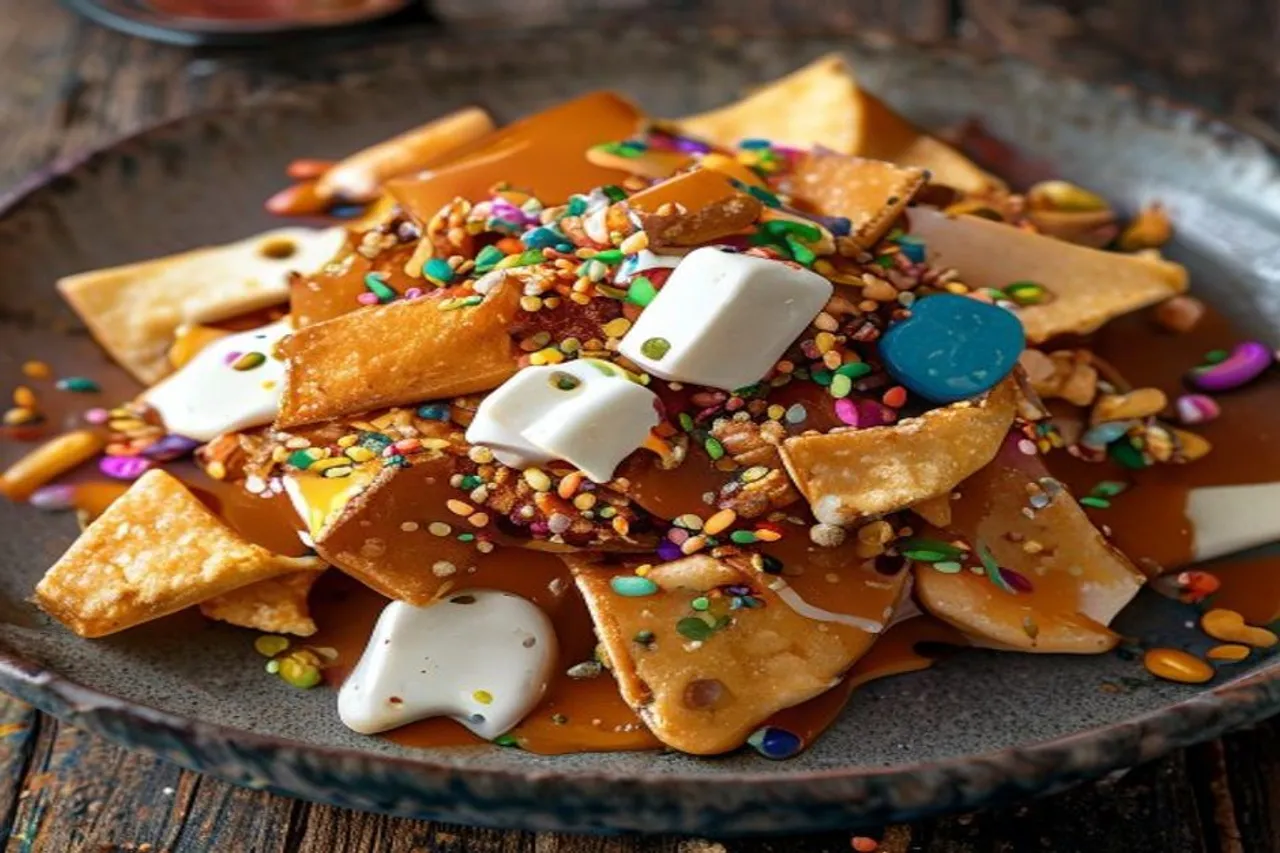
The Ultimate Caramel Apple Nachos Recipe
Royal Nutritional Ledger *
For those counting their gold coins and their calories.
The Royal Disclaimer: These figures are calculated by our finest AI court scholars based on standard ingredient values. They are highly educated estimates meant for guidance, not gospel. If you require absolute scientific precision for medical or dietary salvation, please consult a certified physician rather than our kitchen AI!
Did You Know?
Historical Tidbit
Caramel apples were accidentally invented in the 1950s by a Kraft Foods employee named Dan Walker who was trying to melt down leftover Halloween caramels to sell to confectioners.
First time here? Click the button above to automatically send all these ingredients to your highest-paying local grocery delivery app.
⚖️ The Modernizer
Missing extinct ingredients? Swap for accessible modern alternatives.
The Golden Rule
"Never assemble these nachos too far in advance, or the moisture from the fruit will turn your glorious crunch into a tragic soggy situation."
Ingredients
10 items required
Make Us Your Preferred Culinary Source
AI Emergency Hub
Hit a snag while prepping? Our elite AI tools are here to save your dish.
Missing an Ingredient?
Recipe Disaster?
Chef's Notes
Pay close attention to the lemon juice step. It is not merely a flavor enhancer; it is the chemical guardian that keeps your apples looking pristine rather than unappealingly brown.
Pro Tip
Warm your caramel slightly before drizzling to achieve those gorgeous, sweeping architectural zig-zags across your apple platter without tearing the fruit.
Kitchen Catastrophe Warning
You overheat the chocolate and caramel in the microwave until it scorches into a bitter, bubbling lava of despair, permanently cementing your microwave glass to the countertop.
The Jester's Corner
Royal Court Comedy
Why did the apple stop in the middle of the road? Because it ran out of caramel juice and needed to recalibrate its GPS.
The Culinary Science
Citric acid in lemon juice lowers the pH on the apple surface and binds to copper-containing enzymes, effectively pausing the oxidation reaction that causes browning.
🏺 Explore More Royal Feasts
Lift the lid on these timeless delicacies
Make Us Your Preferred Culinary Source
Prioritize Ages & Spices in your Google Discover, Top Stories, and AI search feed with one tap.
🎭How does this recipe make you feel?
Tap a reaction to share your vibe
General Food Safety & Storage
Storage Science
Cool rapidly. Store in an airtight container in the refrigerator (below 4°C / 40°F). Consume within 3-4 days.
Reheating Science
Reheat to an internal temperature of 165°F (74°C). Use the stove or oven for best texture, stirring or turning occasionally to ensure even heating.
Taster's Notes
Community Feedback
0 Comments
Be the first to leave a note on this recipe!