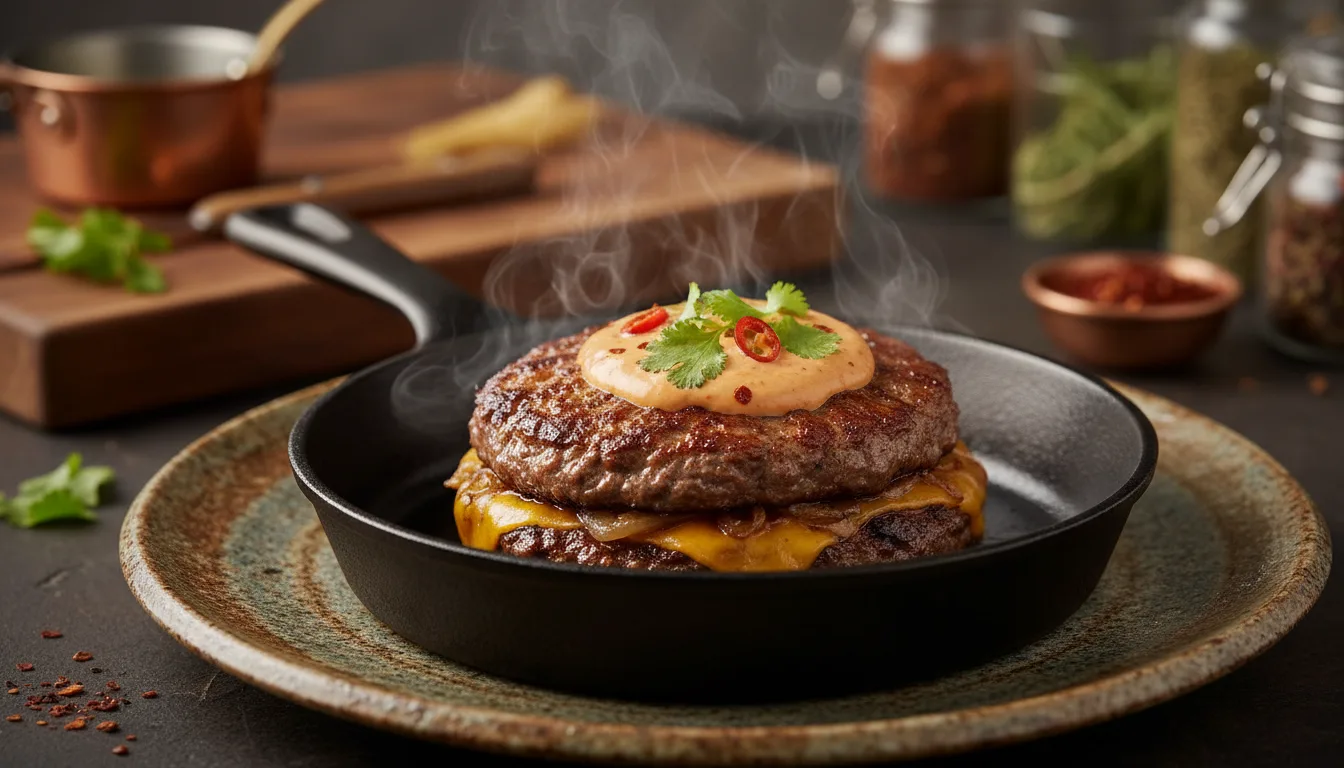
The Ultimate Cast Iron Smash Burger with Special Sauce Recipe
Royal Nutritional Ledger *
For those counting their gold coins and their calories.
The Royal Disclaimer: These figures are calculated by our finest AI court scholars based on standard ingredient values. They are highly educated estimates meant for guidance, not gospel. If you require absolute scientific precision for medical or dietary salvation, please consult a certified physician rather than our kitchen AI!
The Grand Summer Barbecue & Cookout Feast: Pellet Smokes, Searing & Viral Hits
Did You Know?
Historical Tidbit
The smash burger method originated in the 1930s and 1940s across Midwestern greasy-spoon diners, most famously codified at the Dairy Cheer in Ashland, Kentucky, when a cook named Bill Culverson discovered that smashing a beef patty with a heavy bean can vastly maximized flavor crust.
First time here? Click the button above to automatically send all these ingredients to your highest-paying local grocery delivery app.
⚖️ The Modernizer
Missing extinct ingredients? Swap for accessible modern alternatives.
The Golden Rule
"Scrape with absolute conviction! Hold your sharp, flat spatula parallel to the pan bed and push aggressively through the sear—if you don't hear the blade singing against iron, your crust is staying on the pan instead of on your burger."
Ingredients
21 items required
The Royale Secret Sauce:
The Custom Beef Grind:
The Griddle & Crown Elements:
Make Us Your Preferred Culinary Source
AI Emergency Hub
Hit a snag while prepping? Our elite AI tools are here to save your dish.
Missing an Ingredient?
Recipe Disaster?
Chef's Notes
The cardinal sin of smash burgers is smashing late! You have a strict 30-second physiological window from the moment cold beef touches the hot griddle. Smashing after the fat renders simply squirts delicious juices out of the cellular matrix into the pan, leaving you with dry shoe leather instead of a juicy, lace-crusted miracle.
Pro Tip
Keep the ground beef ice cold (near 1°C / 34°F) right up to the second it touches the skillet. The thermal shock between freezing cold fat and scorching hot 260°C cast iron accelerates micro-explosions of vaporizing moisture, creating those ultra-crisp, gossamer-thin jagged edges known in professional kitchens as 'lace'. Always use an un-slotted, bevel-edged stiff metal putty knife or scraper to peel the crust cleanly off the iron.
Kitchen Catastrophe Warning
If your patties stick and the caramelized lace tears away during the flip, your iron was either too cool or your spatula was too dull and angled incorrectly. Do not despair: immediately scrape all that crunchy browned goodness off the iron with a sharp edge, pile it directly onto the melting American cheese atop the patty, and let the molten cheese glue the shattered flavor crust right back where it belongs. Nobody will ever know.
The Jester's Corner
Royal Court Comedy
Our royal sovereign once decreed that using a brioche bun for a smash burger is a treasonous offense punishable by banishment to a dry cracker factory.
The Culinary Science
The smash technique is the purest physical manifestation of the Maillard reaction—a chemical cascade occurring between amino acids and reducing sugars above 140°C (284°F). By using maximum mechanical pressure against heavy, heat-retaining cast iron, you eliminate the insulating steam layer, forcing direct thermal conduction that produces hundreds of new flavor compounds including pyrazines, furanones, and thiophenes, forming an impenetrable umami crust.
Featured in Master Menu Collections
Calibrated by culinary science for foolproof execution and maximum flavor.
🏺 Explore More Royal Feasts
Lift the lid on these timeless delicacies
Make Us Your Preferred Culinary Source
Prioritize Ages & Spices in your Google Discover, Top Stories, and AI search feed with one tap.
🎭How does this recipe make you feel?
Tap a reaction to share your vibe
General Food Safety & Storage
Storage Science
Cool rapidly. Store in an airtight container in the refrigerator (below 4°C / 40°F). Consume within 3-4 days.
Reheating Science
Reheat to an internal temperature of 165°F (74°C). Use the stove or oven for best texture, stirring or turning occasionally to ensure even heating.
Taster's Notes
Community Feedback
0 Comments
Be the first to leave a note on this recipe!