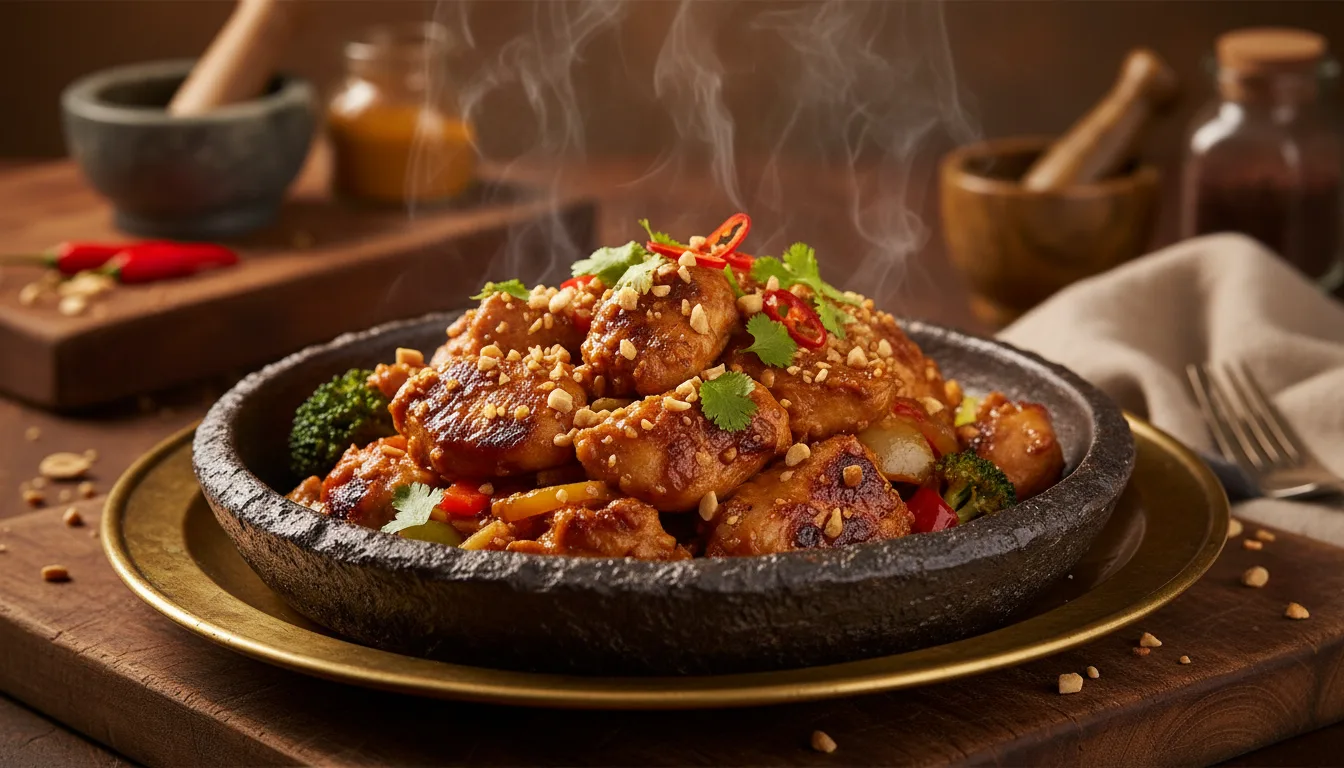
The Ultimate Chinese Satay Chicken Stir Fry Recipe
Royal Nutritional Ledger *
For those counting their gold coins and their calories.
The Royal Disclaimer: These figures are calculated by our finest AI court scholars based on standard ingredient values. They are highly educated estimates meant for guidance, not gospel. If you require absolute scientific precision for medical or dietary salvation, please consult a certified physician rather than our kitchen AI!
Part of our Dinner, Stir Fry Master Index
Did You Know?
Historical Tidbit
Satay actually originated in Indonesia and Malaysia, rather than China, but it became a staple in Chinese-style takeout restaurants across Australia and the world.
First time here? Click the button above to automatically send all these ingredients to your highest-paying local grocery delivery app.
⚖️ The Modernizer
Missing extinct ingredients? Swap for accessible modern alternatives.
The Golden Rule
"Never let the garlic burn in a screaming hot wok, or bitterness will claim your sauce before it even begins."
Ingredients
21 items required
Make Us Your Preferred Culinary Source
AI Emergency Hub
Hit a snag while prepping? Our elite AI tools are here to save your dish.
Missing an Ingredient?
Recipe Disaster?
Chef's Notes
Do not rush the resting time with the baking soda, as this alkaline bath is the true secret behind restaurant-quality tender meat.
Pro Tip
Have all your wet and dry components measured and lined up before turning on the heat, because once the wok gets hot, there is no turning back!
Kitchen Catastrophe Warning
Fail to rinse off the baking soda after the resting phase, and your royal chicken will emerge tasting like a chemistry experiment while your satay sauce seizes up into an aggressive, unholy peanut paste that even the royal hounds would reject with disdain.
The Jester's Corner
Royal Court Comedy
The chef asks the restaurant owner for the secret recipe, and the owner says 'We use a bottle of store-bought sauce.' Truly, the pinnacle of culinary innovation.
The Culinary Science
Baking soda raises the surface pH of the chicken, which breaks down the protein bonds and prevents them from tightening up and squeezing out moisture during cooking.
Explore Curated Feast Collections
Discover 90+ themed festive banquets, seasonal menus, and imperial regional feasts.
Make Us Your Preferred Culinary Source
Prioritize Ages & Spices in your Google Discover, Top Stories, and AI search feed with one tap.
🎭How does this recipe make you feel?
Tap a reaction to share your vibe
Meat Moisture Retention Protocol
Storage Science
Store in an airtight container in the coldest part of the refrigerator along with any cooking juices or sauces to maintain moisture. Consume within 3-4 days.
Reheating Science
Reheat gently in the oven at 300°F (150°C) or on the stovetop over low heat. Add a splash of broth or water and cover tightly to steam. This prevents the proteins from constricting and squeezing out their juices.
Taster's Notes
Community Feedback
0 Comments
Be the first to leave a note on this recipe!