The Ultimate Chocolate Mirror Glaze Recipe
Royal Nutritional Ledger *
For those counting their gold coins and their calories.
The Royal Disclaimer: These figures are calculated by our finest AI court scholars based on standard ingredient values. They are highly educated estimates meant for guidance, not gospel. If you require absolute scientific precision for medical or dietary salvation, please consult a certified physician rather than our kitchen AI!
Part of our Chocolate, Frosting, Sweet Master Index
Did You Know?
Historical Tidbit
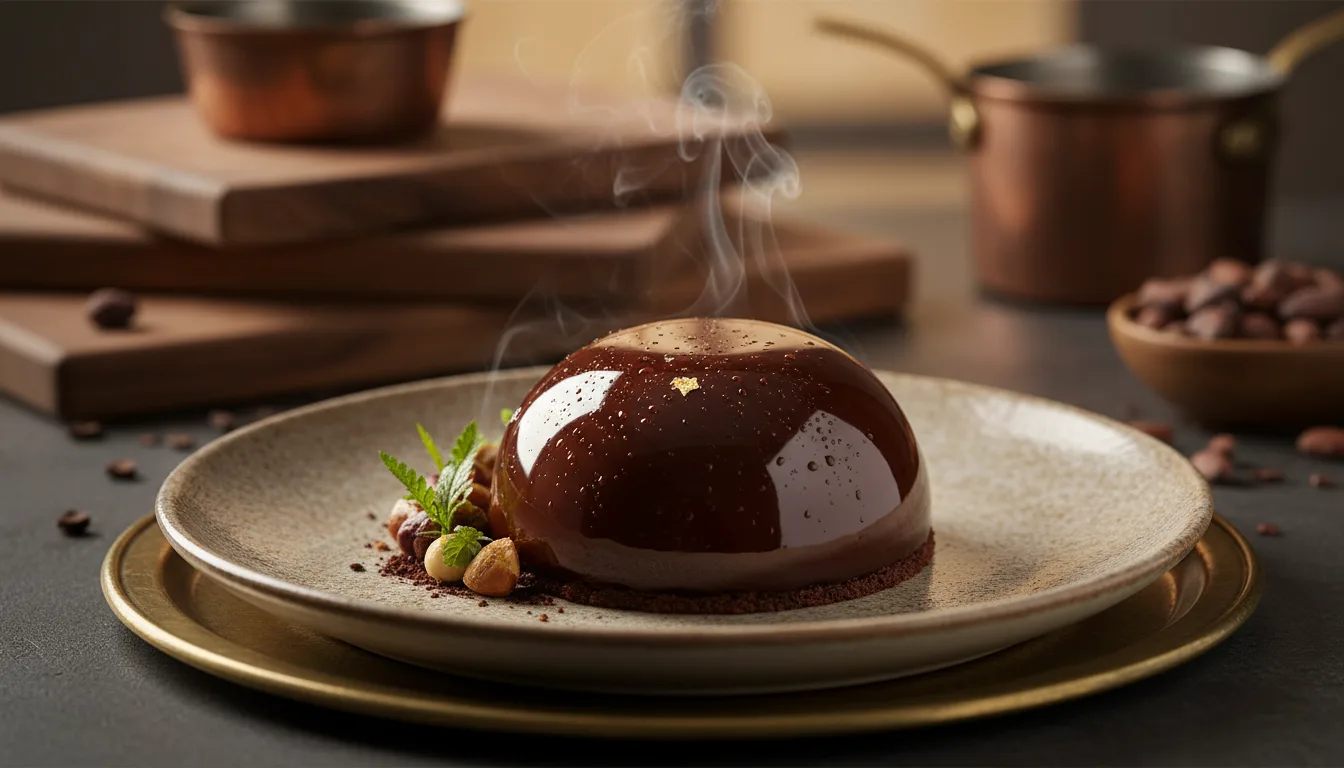
Gelatine is the secret weapon that creates the 'mirror' effect by forming a thin, high-gloss film over the cake.
First time here? Click the button above to automatically send all these ingredients to your highest-paying local grocery delivery app.
⚖️ The Modernizer
Missing extinct ingredients? Swap for accessible modern alternatives.
The Golden Rule
"Never, under any circumstances, aggressively whisk your glaze like you are angry at it. Aggression introduces tiny air bubbles, and air bubbles are the mortal enemy of the mirror finish!"
Ingredients
9 items required
Make Us Your Preferred Culinary Source
AI Emergency Hub
Hit a snag while prepping? Our elite AI tools are here to save your dish.
Missing an Ingredient?
Recipe Disaster?
Chef's Notes
Listen closely, my ambitious culinary apprentice! Achieving a true mirror finish is not merely baking; it is high-stakes optical physics combined with pastry arts. Respect the temperature parameters, or your mirror will look like a foggy bathroom window, and nobody wants to eat a foggy window.
Pro Tip
If your glaze drops below 30°C/86°F, it will thicken into a muddy sludge that refuses to drape. Should this tragedy occur, gently warm it over a double boiler while stirring with the grace of a swan until it hits the magic temperature once again.
Kitchen Catastrophe Warning
Beware of rushing the temperature or whisking too aggressively, my eager apprentice! If you pour your mirror glaze onto a tepid cake or whip it into a frothy disaster full of angry bubbles, your magnificent chocolate masterpiece will look less like a royal mirror and more like a sad, lumpy parking lot puddle.
The Jester's Corner
Royal Court Comedy
Why did the chef bring a meat thermometer to a cake fight? Because apparently, we are measuring the internal temperature of chocolate soup now.
The Culinary Science
Gelatine molecules form a delicate web that traps liquid when bloomed and cooled. When heated, this web relaxes, and upon cooling over a chilled cake, it instantly sets into a reflective, high-gloss gel film that bends light.
Explore Curated Feast Collections
Discover 90+ themed festive banquets, seasonal menus, and imperial regional feasts.
Make Us Your Preferred Culinary Source
Prioritize Ages & Spices in your Google Discover, Top Stories, and AI search feed with one tap.
🎭How does this recipe make you feel?
Tap a reaction to share your vibe
General Food Safety & Storage
Storage Science
Cool rapidly. Store in an airtight container in the refrigerator (below 4°C / 40°F). Consume within 3-4 days.
Reheating Science
Reheat to an internal temperature of 165°F (74°C). Use the stove or oven for best texture, stirring or turning occasionally to ensure even heating.
Taster's Notes
Community Feedback
0 Comments
Be the first to leave a note on this recipe!