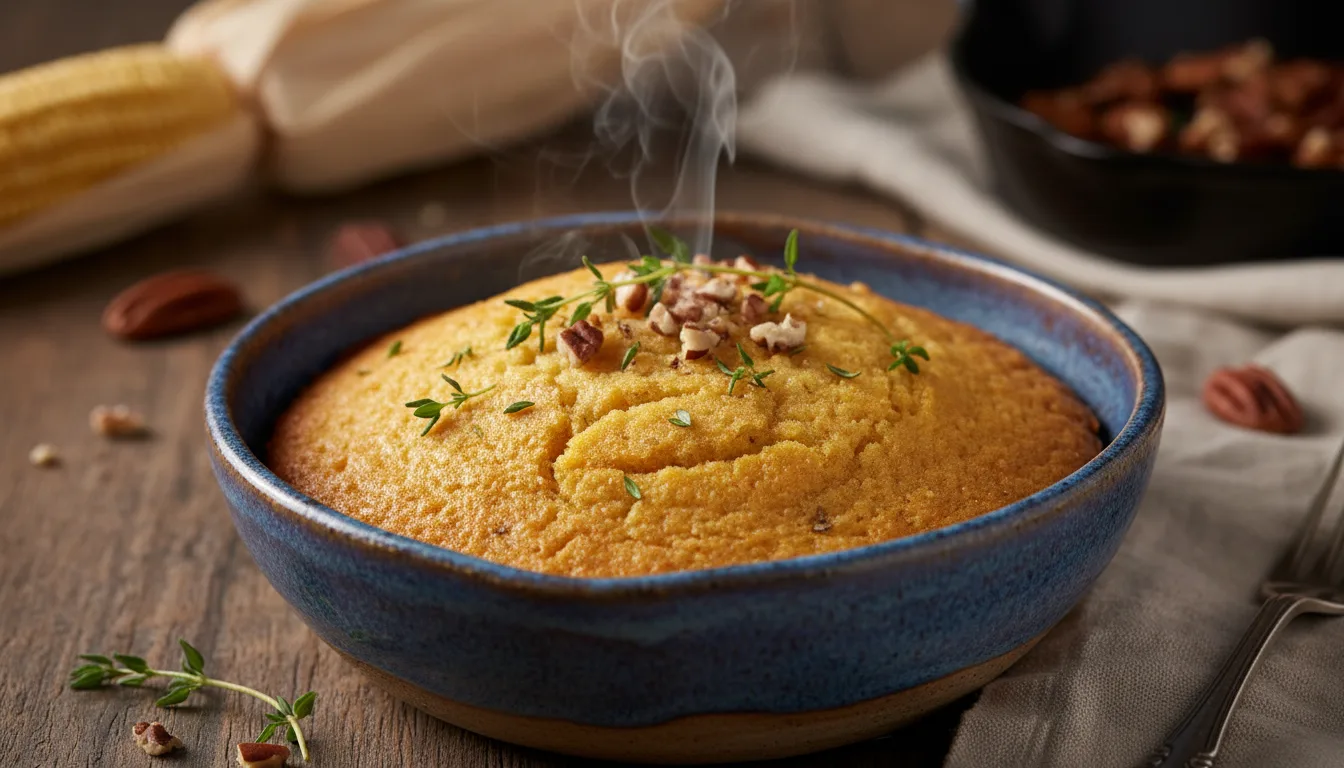
The Ultimate Classic Creamed Cornbread Recipe
Royal Nutritional Ledger *
For those counting their gold coins and their calories.
The Royal Disclaimer: These figures are calculated by our finest AI court scholars based on standard ingredient values. They are highly educated estimates meant for guidance, not gospel. If you require absolute scientific precision for medical or dietary salvation, please consult a certified physician rather than our kitchen AI!
Part of our Bread, Side Master Index
Did You Know?
Historical Tidbit
Cornmeal is the heart of this dish and was a foundational staple for indigenous American cultures long before it became a Southern classic.
First time here? Click the button above to automatically send all these ingredients to your highest-paying local grocery delivery app.
⚖️ The Modernizer
Missing extinct ingredients? Swap for accessible modern alternatives.
The Golden Rule
"Always respect the resting time; cutting into hot bread is a culinary crime that releases all the precious steam and leaves you with a crumbly tragedy."
Ingredients
10 items required
Make Us Your Preferred Culinary Source
AI Emergency Hub
Hit a snag while prepping? Our elite AI tools are here to save your dish.
Missing an Ingredient?
Recipe Disaster?
Chef's Notes
Listen to your instincts in the kitchen, but respect the butter! When you melt the butter for the skillet, make sure the pan is genuinely hot so the batter sizzles the exact second it makes contact, creating an impossibly crispy crust.
Pro Tip
Never, ever overmix the batter! A lumpy batter is a happy batter. Overworking the gluten in the flour turns your magnificent cornbread from a tender cloud into a stubborn brick, and nobody wants to chew on architecture.
Kitchen Catastrophe Warning
Beware, overly eager kitchen squires: if you skip the sacred ritual of pre-heating your cast-iron skillet until it screams with thermal fury, or if you dare to over-mix your batter like frantic peasants in a storm, your majestic cornbread will transform into a dense, soggy doorstop that would offend even the lowliest village goat.
The Jester's Corner
Royal Court Comedy
I asked the chef why we needed to bake the bread in a skillet, and he told me it's so the bread can have a 'hard upbringing' to build character.
The Culinary Science
When the cold-to-room-temperature wet ingredients hit the screaming hot, butter-greased cast-iron skillet, the sudden thermal shock triggers an instantaneous rise from the baking powder and creates immediate steam pockets, giving you that iconic, towering crust.
Explore Curated Feast Collections
Discover 90+ themed festive banquets, seasonal menus, and imperial regional feasts.
Make Us Your Preferred Culinary Source
Prioritize Ages & Spices in your Google Discover, Top Stories, and AI search feed with one tap.
🎭How does this recipe make you feel?
Tap a reaction to share your vibe
Starch Retrogradation Reversal
Storage Science
Store at room temperature in a breathable bread bag or paper wrapper for up to 2 days. DO NOT refrigerate, as the cold accelerates starch retrogradation (staling). For long-term storage, freeze tightly wrapped.
Reheating Science
To reverse staling, flick a few drops of water onto the crust and reheat in a 350°F (175°C) oven for 5-8 minutes. The steam will re-gelatinize the starches, making the crumb soft and the crust crisp.


Taster's Notes
Community Feedback
0 Comments
Be the first to leave a note on this recipe!