The Ultimate Classic Homemade Pie Crust Recipe
Royal Nutritional Ledger *
For those counting their gold coins and their calories.
The Royal Disclaimer: These figures are calculated by our finest AI court scholars based on standard ingredient values. They are highly educated estimates meant for guidance, not gospel. If you require absolute scientific precision for medical or dietary salvation, please consult a certified physician rather than our kitchen AI!
Part of our Baking, Dessert Master Index
Did You Know?
Historical Tidbit
The tradition of using fat, like butter or lard, to create flaky layers in dough dates back to medieval times when 'coffyns' were used as pastry containers
First time here? Click the button above to automatically send all these ingredients to your highest-paying local grocery delivery app.
⚖️ The Modernizer
Missing extinct ingredients? Swap for accessible modern alternatives.
The Golden Rule
"Never rush the resting phase of the gluten! Allowing your dough to rest in the refrigerator relaxes the gluten strands, ensuring your pastry rolls out smoothly without springing back like an angry catapult."
Ingredients
8 items required
Make Us Your Preferred Culinary Source
AI Emergency Hub
Hit a snag while prepping? Our elite AI tools are here to save your dish.
Missing an Ingredient?
Recipe Disaster?
Chef's Notes
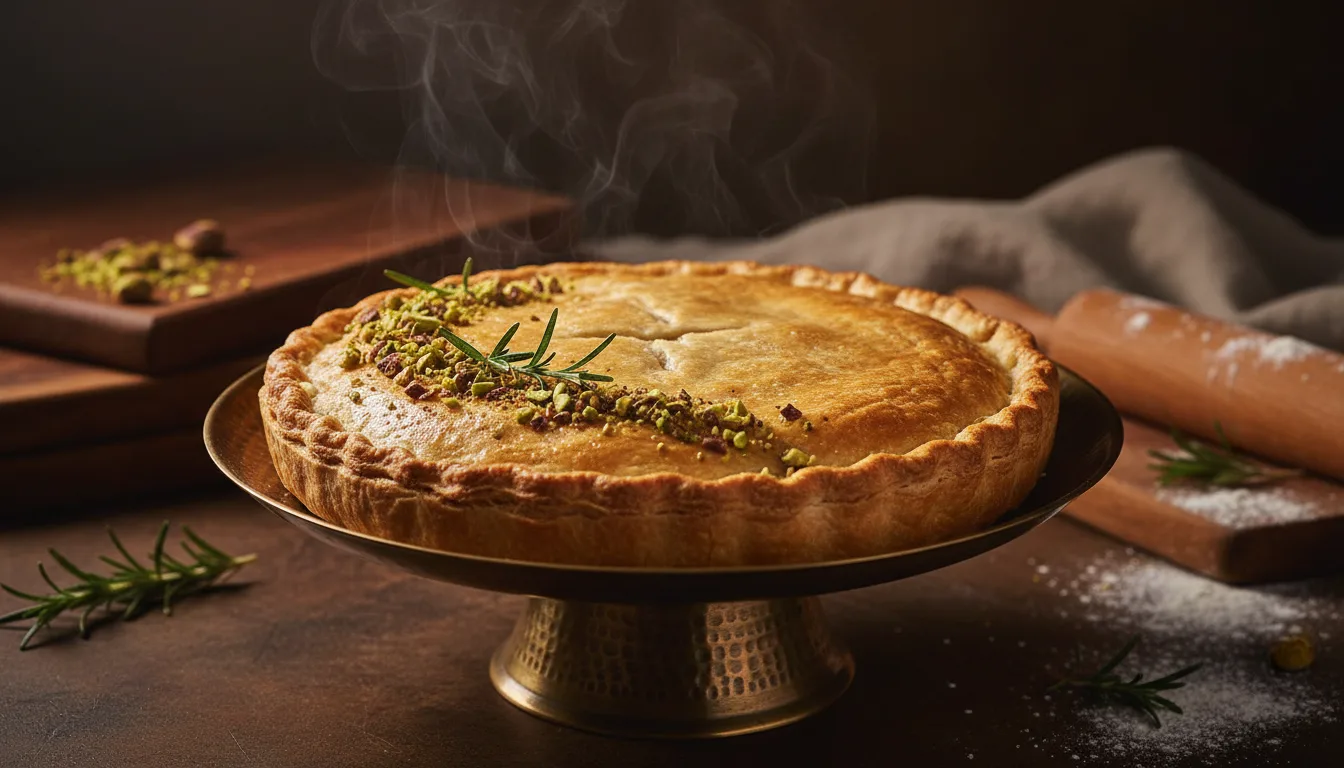
Listen well to the wisdom of the kitchen! When incorporating your butter, never let it melt from the warmth of your hands. If at any point the butter becomes too soft, banish the dough back to the refrigerator immediately. Cold butter is the sovereign ruler of a flaky crust!
Pro Tip
Never underestimate the power of preparation! Always measure your flour by fluffing it with a fork and spooning it into your measuring cup before leveling. Scooping directly from the bag packs the flour too densely, resulting in a tough crust fit only for jesters.
Kitchen Catastrophe Warning
If you dare to use warm butter or overwork the dough with your sweaty hands, you will successfully forge a dense, rubbery shingle fit for paving the castle driveway rather than holding a fruit filling. Keep it ice cold, you magnificent amateurs!
The Jester's Corner
Royal Court Comedy
My master asked me why I didn't bake the pie myself. I told him I’m a jester, not a miracle worker; I can juggle balls, but I cannot juggle butter temperatures
The Culinary Science
Let us consult the ancient laws of thermodynamics and chemistry! As the pie bakes in the oven, the water trapped inside the butter turns into steam. Because the butter is cold and surrounded by layers of flour, this steam expands and creates pockets, forcing the dough layers apart. This grand physical reaction is what grants you the ultimate flaky layers!
Explore Curated Feast Collections
Discover 90+ themed festive banquets, seasonal menus, and imperial regional feasts.
Make Us Your Preferred Culinary Source
Prioritize Ages & Spices in your Google Discover, Top Stories, and AI search feed with one tap.
🎭How does this recipe make you feel?
Tap a reaction to share your vibe
Pastry & Confectionery Stabilization
Storage Science
Cakes and soft desserts should be wrapped tightly to prevent moisture loss and stored at room temperature (if no perishable fillings) or refrigerated. Consume within 3 days.
Reheating Science
Serve at room temperature for optimal flavor perception, as cold mutes sweetness. If it's a baked pastry, flash-heat in a 350°F (175°C) oven for 3-5 minutes to restore the butter matrix and crispness.
Taster's Notes
Community Feedback
0 Comments
Be the first to leave a note on this recipe!