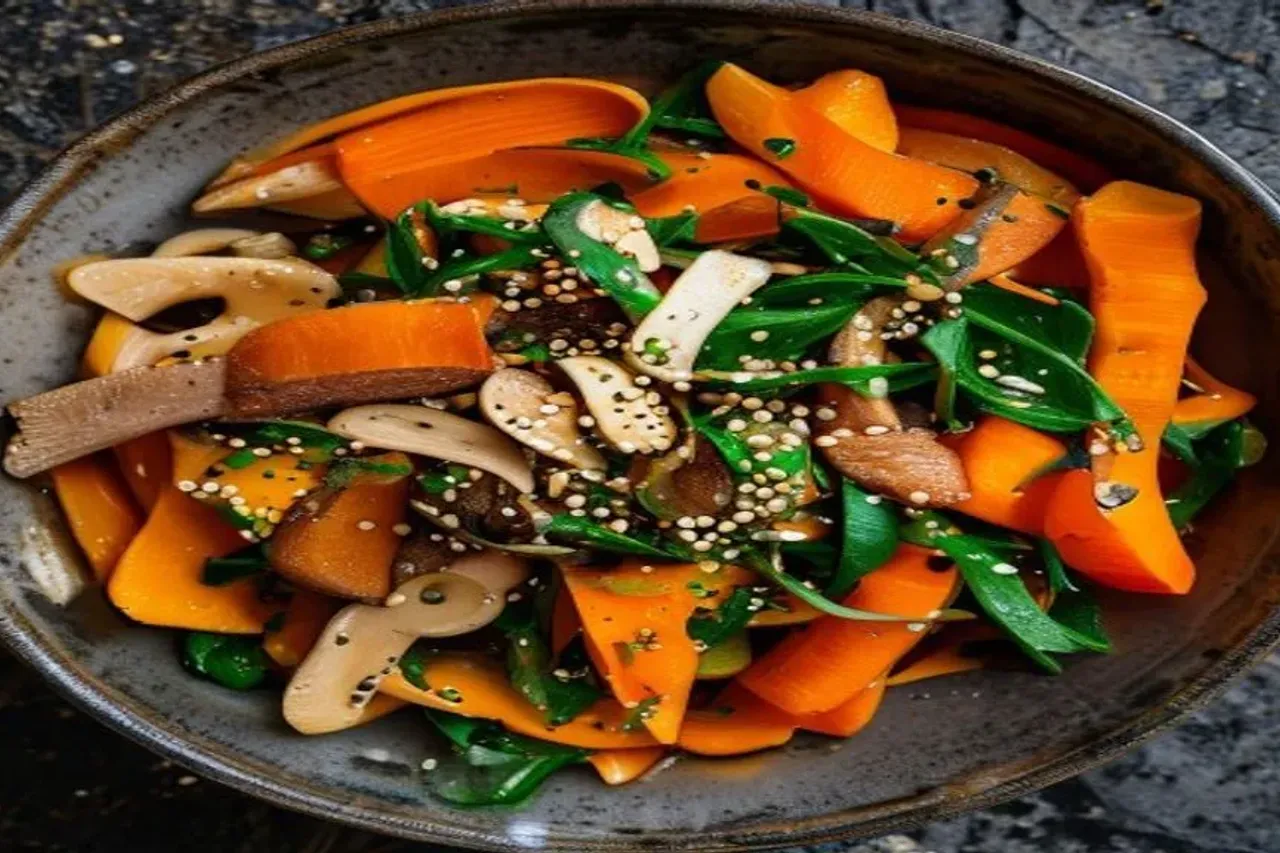
The Ultimate Classic Japchae Recipe
Royal Nutritional Ledger *
For those counting their gold coins and their calories.
The Royal Disclaimer: These figures are calculated by our finest AI court scholars based on standard ingredient values. They are highly educated estimates meant for guidance, not gospel. If you require absolute scientific precision for medical or dietary salvation, please consult a certified physician rather than our kitchen AI!
Did You Know?
Historical Tidbit
Japchae was originally created in the 17th century for a royal banquet and did not actually contain any noodles at all, as they weren't added until the 20th century.
First time here? Click the button above to automatically send all these ingredients to your highest-paying local grocery delivery app.
⚖️ The Modernizer
Missing extinct ingredients? Swap for accessible modern alternatives.
The Golden Rule
"Never overcrowd your pan when searing the vegetables and beef. Give them space to breathe and brown, or you will steam them into culinary disappointment."
Ingredients
12 items required
Make Us Your Preferred Culinary Source
AI Emergency Hub
Hit a snag while prepping? Our elite AI tools are here to save your dish.
Missing an Ingredient?
Recipe Disaster?
Chef's Notes
Japchae is an exercise in organization and harmonious assembly. By cooking each vegetable individually, you honor their unique textures instead of turning them into a sad, soggy mush.
Pro Tip
Use kitchen shears to cut the sweet potato noodles after boiling. Long noodles are dramatic, but nobody wants to accidentally inhale half a meter of glass noodles across the dining room.
Kitchen Catastrophe Warning
Throwing all the vegetables into the pan at once like a chaotic amateur, resulting in a watery, unevenly cooked disaster where the onions are raw and the carrots are liquefied.
The Jester's Corner
Royal Court Comedy
Our Jester says: Why did the noodle go to the royal court? It wanted to get tied up in a knot over dinner!
The Culinary Science
Sweet potato starch contains long-chain amylose molecules, which gives these noodles their legendary, bouncy elasticity and superior sauce-absorbing superpowers compared to wheat noodles.
🏺 Explore More Royal Feasts
Lift the lid on these timeless delicacies
Make Us Your Preferred Culinary Source
Prioritize Ages & Spices in your Google Discover, Top Stories, and AI search feed with one tap.
🎭How does this recipe make you feel?
Tap a reaction to share your vibe
General Food Safety & Storage
Storage Science
Cool rapidly. Store in an airtight container in the refrigerator (below 4°C / 40°F). Consume within 3-4 days.
Reheating Science
Reheat to an internal temperature of 165°F (74°C). Use the stove or oven for best texture, stirring or turning occasionally to ensure even heating.
Taster's Notes
Community Feedback
0 Comments
Be the first to leave a note on this recipe!