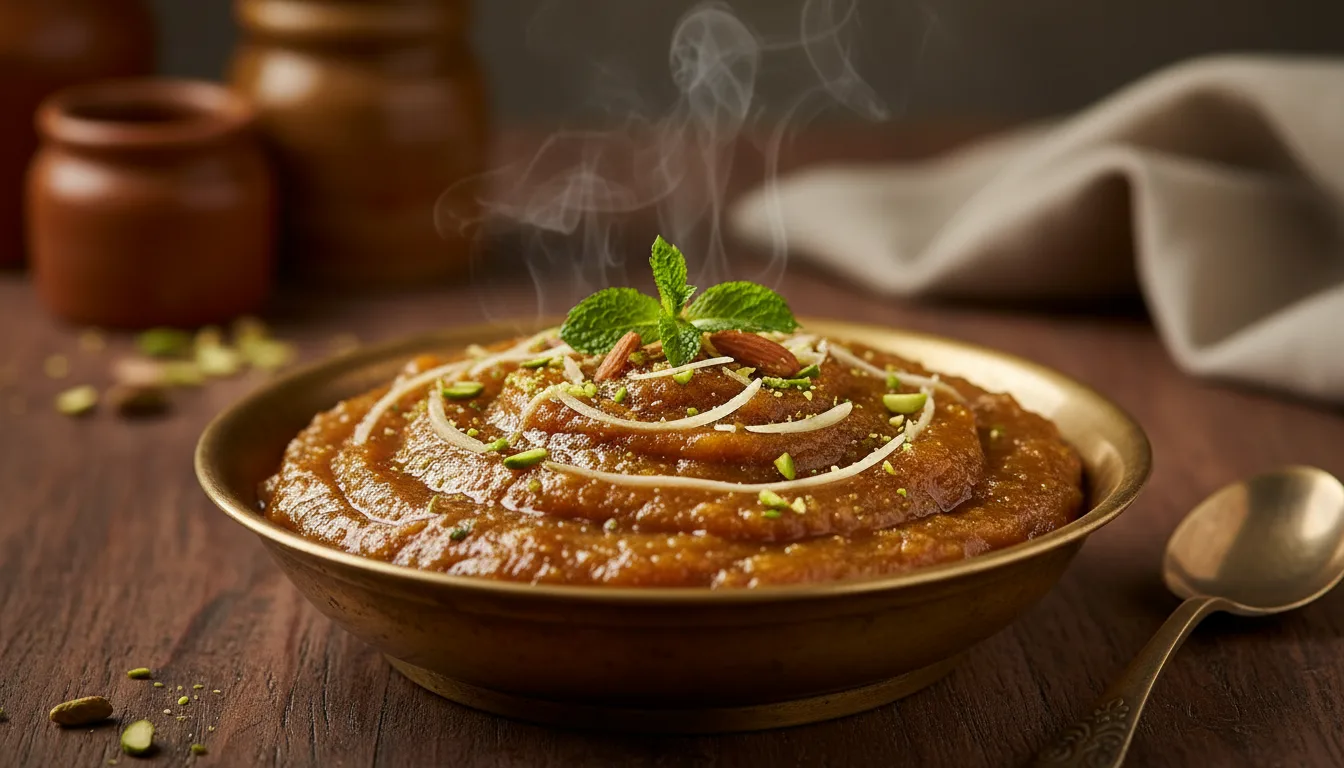
The Ultimate Classic Moong Dal Halwa Recipe
Royal Nutritional Ledger *
For those counting their gold coins and their calories.
The Royal Disclaimer: These figures are calculated by our finest AI court scholars based on standard ingredient values. They are highly educated estimates meant for guidance, not gospel. If you require absolute scientific precision for medical or dietary salvation, please consult a certified physician rather than our kitchen AI!
Part of our Dessert Master Index
Did You Know?
Historical Tidbit
Moong dal halwa is a legendary dish from the deserts of Rajasthan, famously cooked during winter months to provide warmth.
First time here? Click the button above to automatically send all these ingredients to your highest-paying local grocery delivery app.
⚖️ The Modernizer
Missing extinct ingredients? Swap for accessible modern alternatives.
The Golden Rule
"Never skip draining the soaked dal completely; excess water turns your majestic halwa paste into an unmanageable soup."
Ingredients
11 items required
Make Us Your Preferred Culinary Source
AI Emergency Hub
Hit a snag while prepping? Our elite AI tools are here to save your dish.
Missing an Ingredient?
Recipe Disaster?
Chef's Notes
Treat the moong dal halwa like a precious heirloom. Rushing the roasting phase with high heat will only result in burnt lentils and a bitter taste. Low and slow is your passport to perfection!
Pro Tip
Always use room-temperature milk and water when adding them to the hot roasted dal to prevent violent splattering and uneven texture.
Kitchen Catastrophe Warning
Leaving the dal unattended on high heat for even thirty seconds will glue the paste to the bottom of the pan into an impenetrable cement block, earning you a one-way ticket to takeout town.
The Jester's Corner
Royal Court Comedy
I asked the chef why we spend three hours soaking lentils for a dish that disappears in thirty seconds, and he told me it's 'character building'. I think it's just 'lentil-torture'.
The Culinary Science
Roasting moong dal in ghee triggers the Maillard reaction, breaking down amino acids and reducing sugars to create those deeply nutty, complex caramel flavors.
Explore Curated Feast Collections
Discover 90+ themed festive banquets, seasonal menus, and imperial regional feasts.
Make Us Your Preferred Culinary Source
Prioritize Ages & Spices in your Google Discover, Top Stories, and AI search feed with one tap.
🎭How does this recipe make you feel?
Tap a reaction to share your vibe
Pastry & Confectionery Stabilization
Storage Science
Cakes and soft desserts should be wrapped tightly to prevent moisture loss and stored at room temperature (if no perishable fillings) or refrigerated. Consume within 3 days.
Reheating Science
Serve at room temperature for optimal flavor perception, as cold mutes sweetness. If it's a baked pastry, flash-heat in a 350°F (175°C) oven for 3-5 minutes to restore the butter matrix and crispness.
Taster's Notes
Community Feedback
0 Comments
Be the first to leave a note on this recipe!