The Ultimate Classic Shrimp Étouffée Recipe
Royal Nutritional Ledger *
For those counting their gold coins and their calories.
The Royal Disclaimer: These figures are calculated by our finest AI court scholars based on standard ingredient values. They are highly educated estimates meant for guidance, not gospel. If you require absolute scientific precision for medical or dietary salvation, please consult a certified physician rather than our kitchen AI!
Part of our Dinner Master Index
Did You Know?
Historical Tidbit
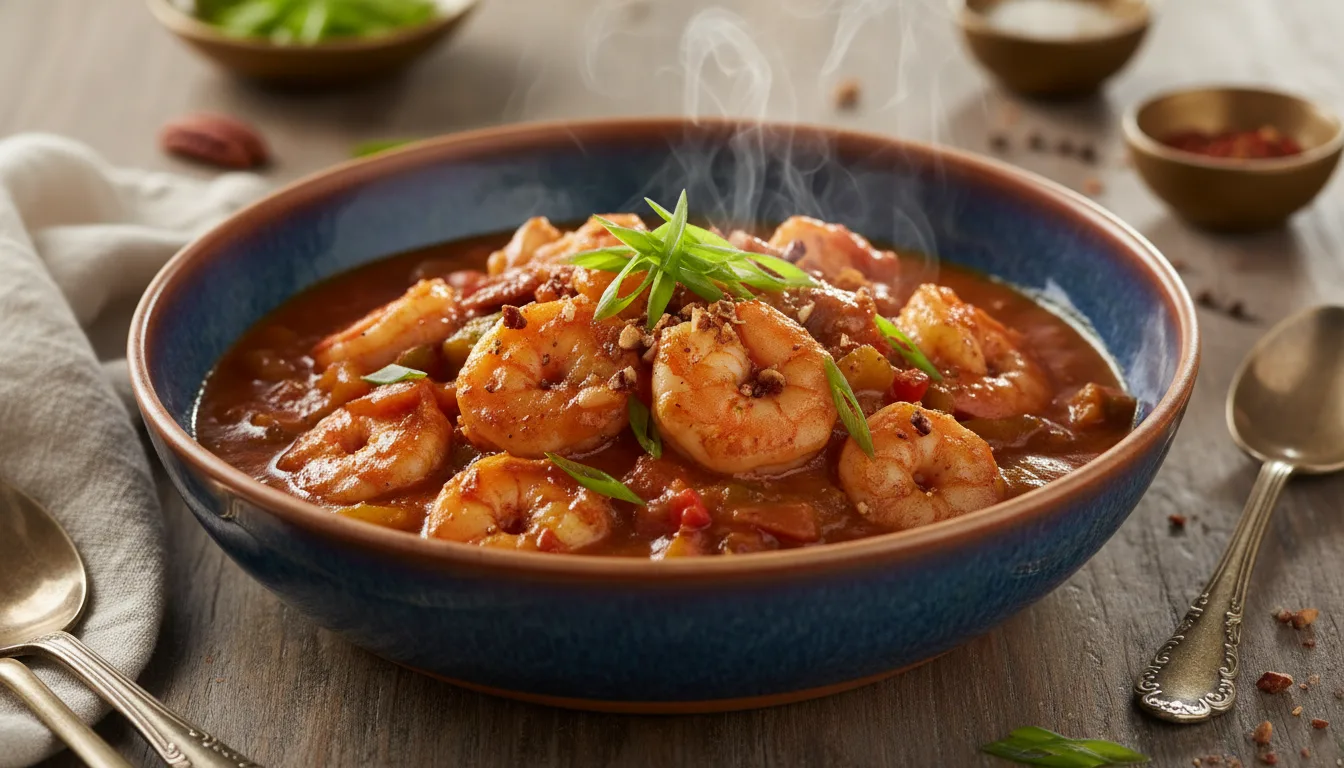
The term 'étouffée' originates from the French word 'étouffer,' which translates to 'to smother' or 'to suffocate' due to the way the shrimp cook within the thick, flavorful sauce.
First time here? Click the button above to automatically send all these ingredients to your highest-paying local grocery delivery app.
⚖️ The Modernizer
Missing extinct ingredients? Swap for accessible modern alternatives.
The Golden Rule
"Never, under any circumstances, rush the roux. If your roux burns, do not try to salvage it with optimism. Toss it out, pour yourself a fresh glass of water, and start over."
Ingredients
21 items required
Make Us Your Preferred Culinary Source
AI Emergency Hub
Hit a snag while prepping? Our elite AI tools are here to save your dish.
Missing an Ingredient?
Recipe Disaster?
Chef's Notes
Listen closely, my ambitious culinary apprentice! Making an étouffée is an exercise in patience, especially during the roux phase. If you walk away to check your smartphone while the flour and oil are browning, expect a tragic rescue mission involving the smoke detector.
Pro Tip
Want to elevate this from a humble Tuesday dinner to a palace-worthy banquet? Always peel your own shrimp and make that stock from scratch. Store-bought seafood broth simply lacks the deep, oceanic majesty of homemade shell stock.
Kitchen Catastrophe Warning
Imagine the horror: turning your back on the stove for thirty seconds, only to return and find your beautiful roux charred black as charcoal, filling your entire home with an acrid haze that lingers for three business days.
The Jester's Corner
Royal Court Comedy
Our Jester notes: 'Cooking this takes over an hour, but it’ll take you three minutes to inhale it. Efficiency at its finest!'
The Culinary Science
Let us talk food chemistry! The deep brown color of your roux comes from the Maillard reaction combined with caramelization. As the flour starches break down and toast in the fat, the nutty flavors multiply exponentially, while the thickening power of the flour slightly decreases—which is precisely why it creates a velvet texture rather than wallpaper paste.
Make Us Your Preferred Culinary Source
Prioritize Ages & Spices in your Google Discover, Top Stories, and AI search feed with one tap.
🎭How does this recipe make you feel?
Tap a reaction to share your vibe
Delicate Protein Preservation
Storage Science
Cool quickly and refrigerate in an airtight container immediately. Seafood degrades rapidly; consume within 24 to 48 hours maximum.
Reheating Science
DO NOT microwave on high. Seafood proteins tighten and become rubbery when rapidly heated. Reheat gently in a covered pan over low heat with a splash of water or stock to create gentle steam, preserving moisture.
Taster's Notes
Community Feedback
0 Comments
Be the first to leave a note on this recipe!