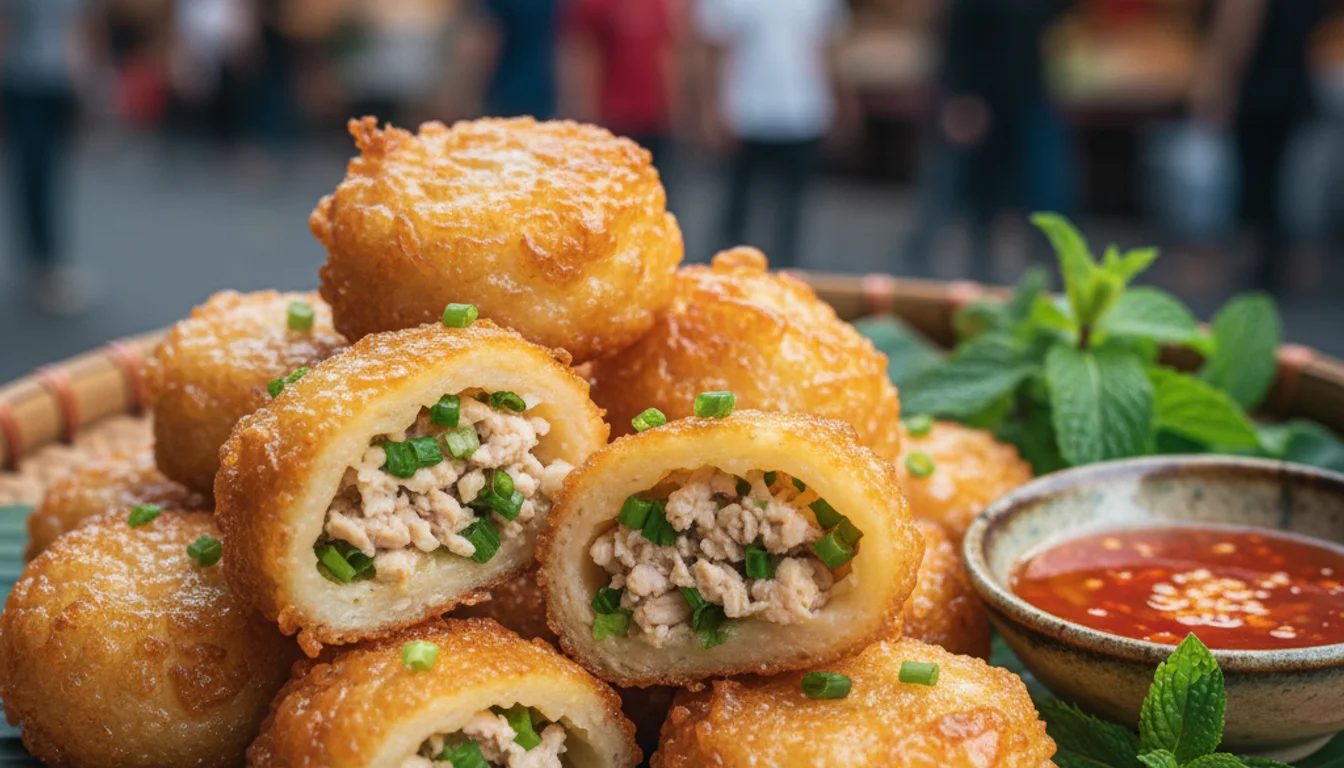
The Ultimate Crispy Rice Paper Chicken Bites Recipe
Royal Nutritional Ledger *
For those counting their gold coins and their calories.
The Royal Disclaimer: These figures are calculated by our finest AI court scholars based on standard ingredient values. They are highly educated estimates meant for guidance, not gospel. If you require absolute scientific precision for medical or dietary salvation, please consult a certified physician rather than our kitchen AI!
The 24-Hour Crunch Air Fryer Compendium: Shatteringly Crisp Tenders, Smashed Potatoes & Bites
Did You Know?
Historical Tidbit
In Vietnam, *Chả Giò* (crispy spring rolls) made with rice paper rather than wheat wrappers originated in the southern provinces and Saigon. In 2023, TikTok food creators simplified the process into flat 'Rice Paper Dumplings', turning an ancient Vietnamese staple into a global viral finger food phenomenon.
First time here? Click the button above to automatically send all these ingredients to your highest-paying local grocery delivery app.
⚖️ The Modernizer
Missing extinct ingredients? Swap for accessible modern alternatives.
The Golden Rule
"Dip rice paper for only 5 seconds, keep parcels separated in the pan, and drain on a wire rack."
Ingredients
18 items required
The Savory Umami Chicken Filling:
The Shatter-Crisp Wrappers:
The Pan-Frying Medium:
The Sweet Chili Garlic Dipping Sauce:
Make Us Your Preferred Culinary Source
AI Emergency Hub
Hit a snag while prepping? Our elite AI tools are here to save your dish.
Missing an Ingredient?
Recipe Disaster?
Chef's Notes
**The 5-Second Water Dip Rule**: The #1 mistake home cooks make with rice paper is soaking it too long until it becomes a soggy, jelly-like mess that tears when rolled. Dip for only 5 to 7 seconds. As you assemble the filling, the residual surface water naturally hydrates the tapioca-rice starch into an elastic, tear-resistant sheet. **Sugar in the Soaking Water**: Dissolving 1 teaspoon of sugar into the soaking water is a professional Vietnamese street hack. The microscopic sugar molecules on the rice paper surface caramelize rapidly in the hot skillet, giving the dumplings a brilliant amber-golden glow that plain rice paper cannot achieve.
Pro Tip
1. **Never Let Raw Bites Touch**: Wet rice paper will fuse together instantly. Always place wrapped uncooked bites on parchment paper with clear space between them. 2. **Wire Rack Drainage**: Always rest fried rice paper bites on a wire cooling rack; placing them on flat paper towels traps escaping steam, turning the bottom shell soggy within 2 minutes. 3. **Air Fryer Alternative**: Brush the wrapped bites generously with oil on all sides. Air fry at 190°C (375°F) for 12 to 14 minutes, flipping halfway, for a mess-free crunch!
Kitchen Catastrophe Warning
**Disaster — The Rice Paper Bites Fused Together in the Pan**: They were placed too close together while the shells were still soft. **The Rescue**: Don't rip them apart while hot! Let them cook completely until the shells become firm and crisp on both sides. Once removed from the heat, use a sharp pair of kitchen shears to snip the crispy seam cleanly between them.
The Jester's Corner
Royal Court Comedy
If you have ever eaten a traditional wheat egg roll that felt like chewing through a wet cardboard tube, these shatter-crisp rice paper bites will restore your faith in appetizers. The crunch sound when you bite into one of these fried rice paper rolls is loud enough to be detected on local seismic monitors. Our Royal Chef notes that making ten of these bites and expecting to have leftovers is a level of culinary optimism that borders on fantasy.
The Culinary Science
**Tapioca Starch Dehydration & Glass Transition**: Vietnamese rice paper (*Bánh Tráng*) is made from a blend of rice flour, tapioca starch, and salt. Tapioca starch has a low gelatinization temperature ($65^{\circ}C$) and high amylopectin content. When shallow-fried in oil at 175°C, surface water flashes into steam, forming micro-cavities across the sheet. As the moisture evaporates completely, the starch passes through its *glass transition state*, freezing into an ultra-brittle, shatter-crisp culinary glass that crackles like chicharrón.
Featured in Master Menu Collections
Calibrated by culinary science for foolproof execution and maximum flavor.
🏺 Explore More Royal Feasts
Lift the lid on these timeless delicacies
Make Us Your Preferred Culinary Source
Prioritize Ages & Spices in your Google Discover, Top Stories, and AI search feed with one tap.
🎭How does this recipe make you feel?
Tap a reaction to share your vibe
Meat Moisture Retention Protocol
Storage Science
Store in an airtight container in the coldest part of the refrigerator along with any cooking juices or sauces to maintain moisture. Consume within 3-4 days.
Reheating Science
Reheat gently in the oven at 300°F (150°C) or on the stovetop over low heat. Add a splash of broth or water and cover tightly to steam. This prevents the proteins from constricting and squeezing out their juices.
Taster's Notes
Community Feedback
0 Comments
Be the first to leave a note on this recipe!