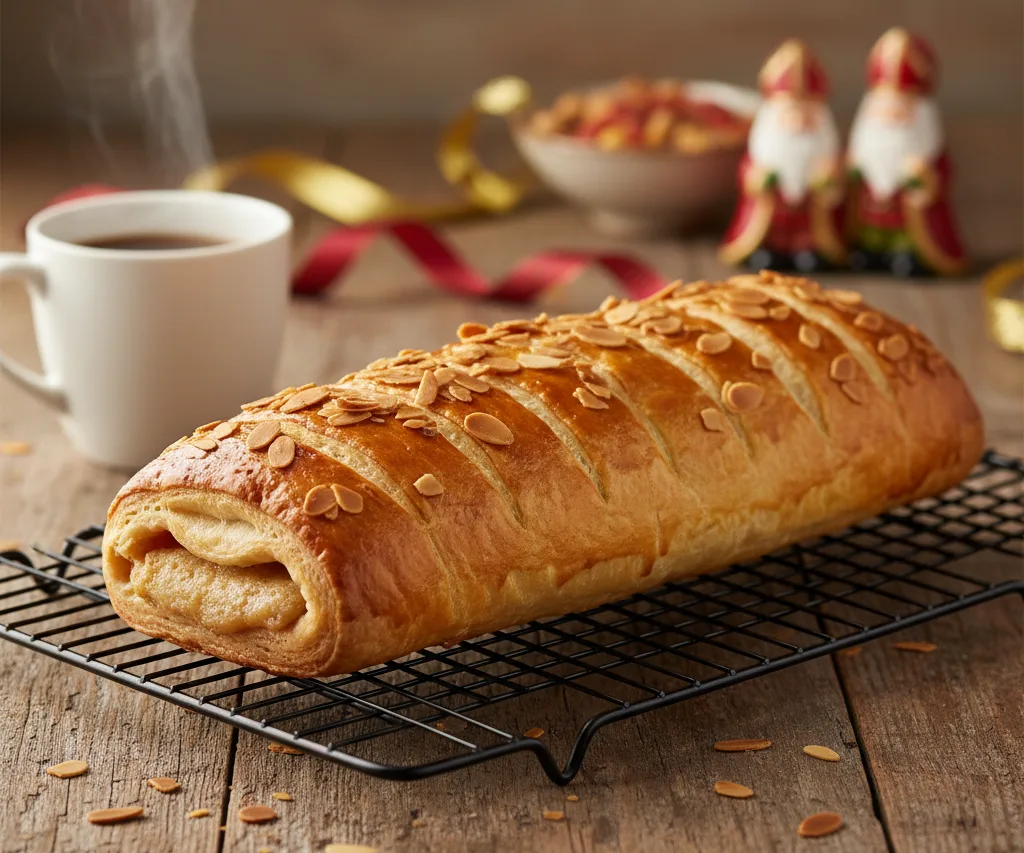
The Ultimate Dutch Banketstaaf Recipe (Almond Paste Puff Pastry Log)
Royal Nutritional Ledger *
For those counting their gold coins and their calories.
The Royal Disclaimer: These figures are calculated by our finest AI court scholars based on standard ingredient values. They are highly educated estimates meant for guidance, not gospel. If you require absolute scientific precision for medical or dietary salvation, please consult a certified physician rather than our kitchen AI!
St. Nicholas Day & Sinterklaas Bakery: Kruidnoten, Speculaas & Winter Treats
Did You Know?
Historical Tidbit
Banketstaaf is a staple during Sinterklaas (St. Nicholas Day) celebrations in the Netherlands, traditionally eaten on the evening of December 5th.
First time here? Click the button above to automatically send all these ingredients to your highest-paying local grocery delivery app.
⚖️ The Modernizer
Missing extinct ingredients? Swap for accessible modern alternatives.
The Golden Rule
"NEVER overwork your puff pastry; treat it with gentle reverence, for its delicate layers are the soul of the Banketstaaf. Overworking will develop too much gluten, resulting in a tough, rather than flaky, crust."
Ingredients
14 items required
The Heart of Amandelspijs (Almond Paste):
The Golden Jacket (Puff Pastry):
The Glaze & Crown (Egg Wash & Topping):
Make Us Your Preferred Culinary Source
AI Emergency Hub
Hit a snag while prepping? Our elite AI tools are here to save your dish.
Missing an Ingredient?
Recipe Disaster?
Chef's Notes
The magic of Banketstaaf lies in the delicate balance between the rich, sweet almond paste and the ethereal flakiness of the puff pastry. The slight tartness from the lemon zest in the amandelspijs cuts through the sweetness beautifully, preventing it from being cloying. The goal is a pastry that shatters with a gentle touch, revealing a soft, aromatic heart. Don't be tempted to overfill, as this can lead to an uneven bake or a burst pastry. Homemade almond paste is paramount for superior flavor and texture; store-bought often contains too much sugar and artificial flavors.
Pro Tip
1. For an extra flaky pastry, ensure your puff pastry is very cold before handling and baking. Work quickly to prevent the butter from melting, which can inhibit the layers from forming. 2. To check for doneness, look for a deep golden-brown color and listen for a hollow sound when tapping the underside of the pastry. The almond paste should also feel firm to the touch if gently pressed. 3. If your pastry is browning too quickly on top before it's fully cooked, loosely tent it with aluminum foil for the last 10-15 minutes of baking.
Kitchen Catastrophe Warning
The most common disaster is the almond paste oozing out during baking, often due to an improperly sealed seam or an overfilled log. If you notice leakage, gently press the pastry seam back together with the back of a spoon, or if it's a small crack, try to pinch it shut with dampened fingers. If it's a major rupture, embrace the rustic charm, as the flavor will still be divine, albeit less visually perfect.
The Jester's Corner
Royal Court Comedy
My family's annual Banketstaaf bake-off always ends with my uncle claiming his 'secret ingredient' is just extra butter. We all know it's just extra guilt.
The Culinary Science
The incredible flakiness of puff pastry is a marvel of physics and culinary technique. It relies on the principle of steam leavening. As the butter (or fat) layers within the dough melt in the hot oven, they release steam. This steam becomes trapped between the thin layers of gluten-developed dough, forcing them apart and creating hundreds of distinct, airy layers. The egg wash and sugar on top contribute to the Maillard reaction, developing those desirable golden-brown hues and complex roasted flavors.
Featured in Master Menu Collections
Calibrated by culinary science for foolproof execution and maximum flavor.
🏺 Explore More Royal Feasts
Lift the lid on these timeless delicacies
Make Us Your Preferred Culinary Source
Prioritize Ages & Spices in your Google Discover, Top Stories, and AI search feed with one tap.
🎭How does this recipe make you feel?
Tap a reaction to share your vibe
General Food Safety & Storage
Storage Science
Cool rapidly. Store in an airtight container in the refrigerator (below 4°C / 40°F). Consume within 3-4 days.
Reheating Science
Reheat to an internal temperature of 165°F (74°C). Use the stove or oven for best texture, stirring or turning occasionally to ensure even heating.
Taster's Notes
Community Feedback
0 Comments
Be the first to leave a note on this recipe!