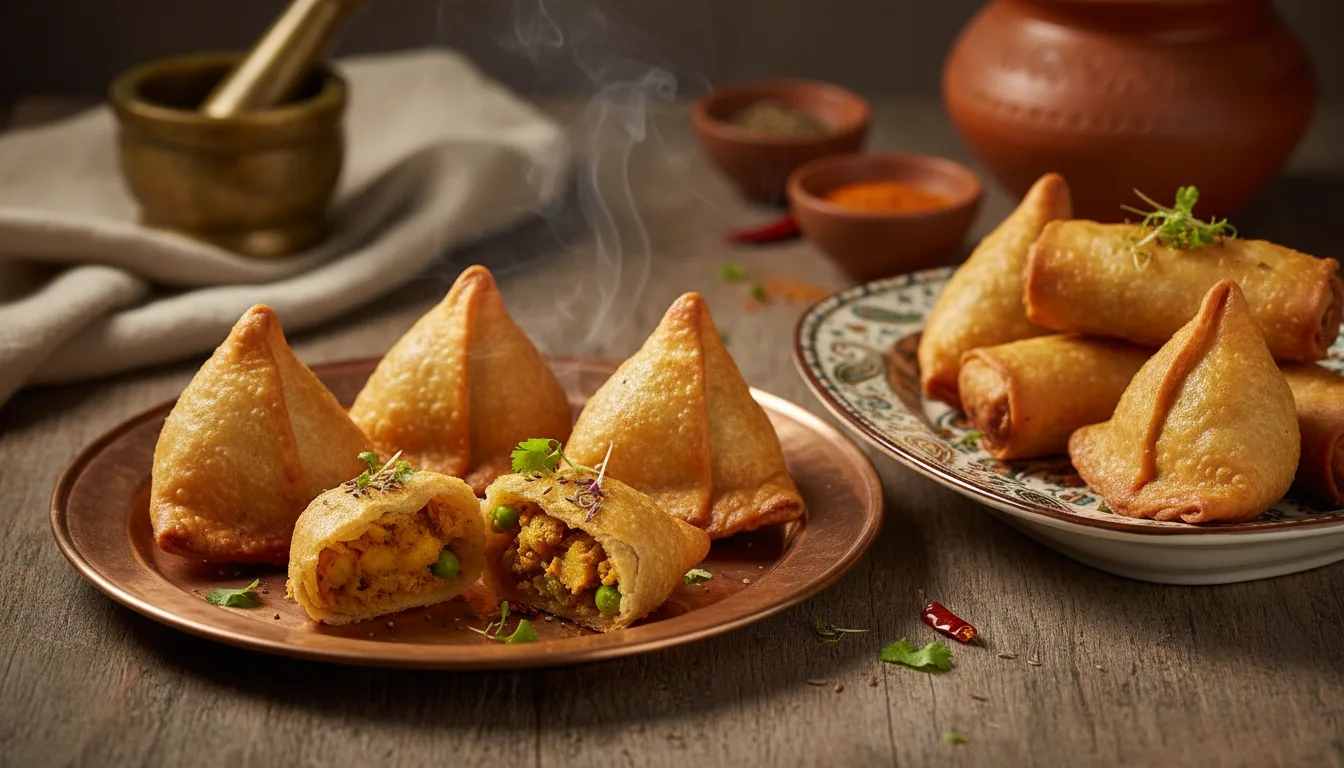
The Ultimate Freezer-Friendly Samosas and Rolls Recipe
Royal Nutritional Ledger *
For those counting their gold coins and their calories.
The Royal Disclaimer: These figures are calculated by our finest AI court scholars based on standard ingredient values. They are highly educated estimates meant for guidance, not gospel. If you require absolute scientific precision for medical or dietary salvation, please consult a certified physician rather than our kitchen AI!
The Grand Ramadan & Iftar Feast: Slow-Simmered Haleem, Make-Ahead Suhoor & Golden Crisp Samosas
Did You Know?
Historical Tidbit
The ancestral samosa originated as the 'Sanbusaj' across the ancient Persian plateau, carried by nomadic horsemen across the Silk Road because its baked or fried envelope preserved minced spiced meat for grueling travels.
First time here? Click the button above to automatically send all these ingredients to your highest-paying local grocery delivery app.
⚖️ The Modernizer
Missing extinct ingredients? Swap for accessible modern alternatives.
The Golden Rule
"Never, under any circumstances, allow frozen pastries to defrost before dropping them into hot oil; fry them straight from the sub-zero deep freeze into oil heated to precisely 160°C (320°F)."
Ingredients
33 items required
The Spiced Keema Filling (Samosa Core):
The Vibrant Vegetable Filling (Spring Roll Core):
The Pastry Envelopes & Edible Adhesive:
The Frying Medium:
Make Us Your Preferred Culinary Source
AI Emergency Hub
Hit a snag while prepping? Our elite AI tools are here to save your dish.
Missing an Ingredient?
Recipe Disaster?
Chef's Notes
The single most disastrous failure in frozen fried snacks is moisture condensation. If the filling contains even a microscopic pool of residual water when packed, that water freezes into jagged ice shards. During frying, these shards instantly vaporize into high-pressure steam, blowing the pastry seams wide open and causing the oil to violently froth and invade the snack.
Pro Tip
Always incorporate a tiny amount of cornstarch slurry into vegetable stir-fries intended for freezing; as the starch gelatinizes, it traps free hydration inside an amylose matrix, stopping the vegetables from weeping moisture during both freezing and frying. Furthermore, maintain the frying oil at 160°C (320°F) initially—frying straight at 190°C will scorch the skin before the center has even defrosted.
Kitchen Catastrophe Warning
If your pastry bursts inside the oil during frying: Immediately lift the burst snack out with a stainless steel spider skimmer to prevent burned filling particles from contaminating and degrading the entire oil bath. Lower the heat. If you notice structural cracks on remaining frozen pieces before frying, paint the fracture lines with a thick paste of 1 part cornstarch and 1 part flour whisked with cold water, let it air-dry for 90 seconds to set a protective seal, then fry gently.
The Jester's Corner
Royal Court Comedy
A grand vizier once tried thawing his samosas on the kitchen counter before frying; he ended up serving a sad, weeping oil sponge that caused an immediate cabinet reshuffle.
The Culinary Science
When frozen pastries are placed directly into oil at 160°C, the moisture in the outer flour wrapper flashes into steam, creating localized bubbles that form micro-blisters. The starch gelatinizes and immediately undergoes rapid dehydration, forming a rigid, shatter-crisp structural network. Cooking straight from frozen prevents the formation of large ice crystals during thawing, which would otherwise rupture the gluten network and turn the wrapper into an oil-absorbent sludge via capillary action.
Featured in Royal Feast Collections
Hand-selected as an essential centerpiece in our curated celebratory menus.
Make Us Your Preferred Culinary Source
Prioritize Ages & Spices in your Google Discover, Top Stories, and AI search feed with one tap.
🎭How does this recipe make you feel?
Tap a reaction to share your vibe
General Food Safety & Storage
Storage Science
Cool rapidly. Store in an airtight container in the refrigerator (below 4°C / 40°F). Consume within 3-4 days.
Reheating Science
Reheat to an internal temperature of 165°F (74°C). Use the stove or oven for best texture, stirring or turning occasionally to ensure even heating.

Taster's Notes
Community Feedback
0 Comments
Be the first to leave a note on this recipe!