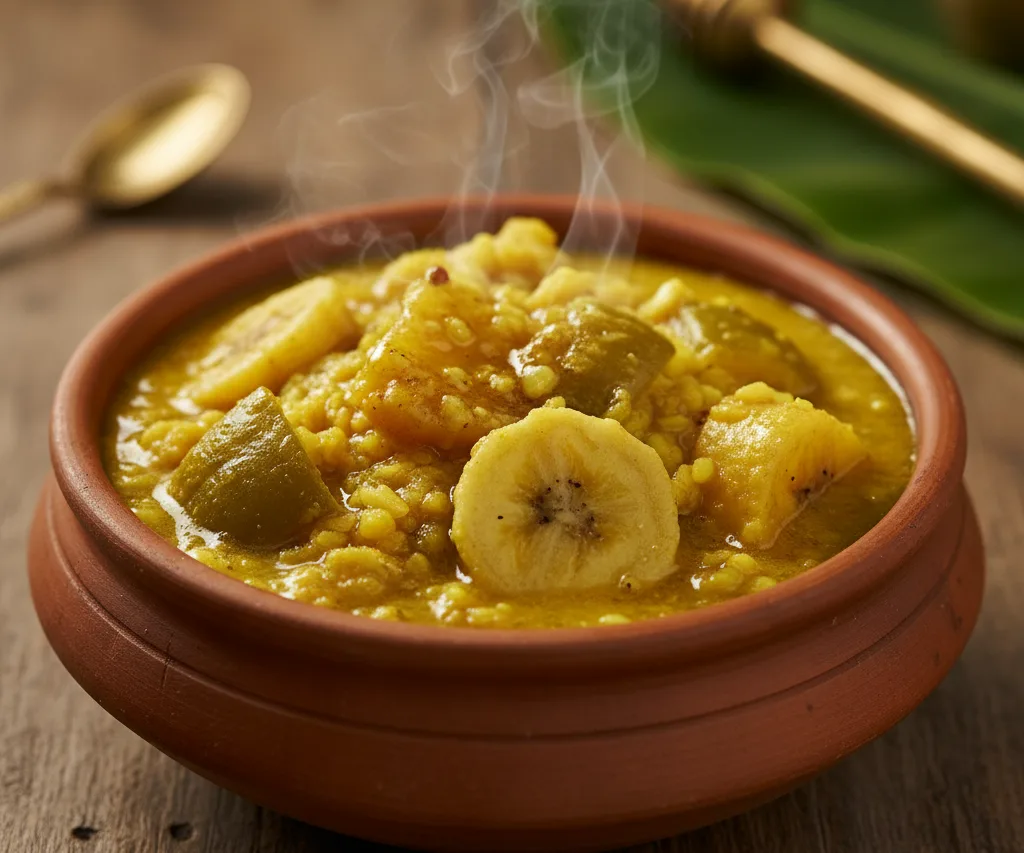
The Ultimate Habisa Dalma Recipe (Odia Kartika Purnima Prasad)
Royal Nutritional Ledger *
For those counting their gold coins and their calories.
The Royal Disclaimer: These figures are calculated by our finest AI court scholars based on standard ingredient values. They are highly educated estimates meant for guidance, not gospel. If you require absolute scientific precision for medical or dietary salvation, please consult a certified physician rather than our kitchen AI!
Karthika Purnima & Karthigai Deepam
Did You Know?
Historical Tidbit
Kartika Purnima is one of the most auspicious days in the Odia calendar, marking the end of the holy month of Kartika.
First time here? Click the button above to automatically send all these ingredients to your highest-paying local grocery delivery app.
⚖️ The Modernizer
Missing extinct ingredients? Swap for accessible modern alternatives.
The Golden Rule
"The Golden Rule for Habisa Dalma is absolute adherence to its pristine simplicity: NO turmeric, NO garlic, NO onion. The purity of the roasted moong dal, the specific fasting vegetables, and the fragrant cumin-ghee tempering defines its sacred character and unique flavor profile. Deviate from this, and it ceases to be Habisa Dalma."
Ingredients
16 items required
The Sacred Dal & Vegetables:
The Divine Tempering:
The Final Benediction:
Make Us Your Preferred Culinary Source
AI Emergency Hub
Hit a snag while prepping? Our elite AI tools are here to save your dish.
Missing an Ingredient?
Recipe Disaster?
Chef's Notes
The essence of Habisa Dalma lies in its understated elegance and the purity of its ingredients. The key is to achieve a harmonious balance: the moong dal should be cooked to a tender, slightly creamy consistency, while the vegetables, especially the elephant apple and raw banana, should retain just enough bite to offer textural contrast. The dry roasting of the dal is non-negotiable; it imparts a depth of flavor that defines this dish. Remember, this is a sacred offering, so every step should be performed with mindfulness and respect for tradition.
Pro Tip
1. To ensure perfectly cooked vegetables without mushiness, cut them into uniform, medium-sized cubes. If using a pressure cooker, ensure the dal and harder vegetables (like elephant apple) are at the bottom. ||| 2. The final ghee drizzle isn't just for flavor; it adds a lustrous sheen and a final aromatic flourish that elevates the entire dish. Use high-quality desi cow ghee for the most authentic taste. ||| 3. If elephant apple (ouu) is genuinely unavailable, a small piece of raw mango can provide a similar tartness, but it deviates from the traditional Habisa Dalma's specific flavor profile. Strive for authenticity first.
Kitchen Catastrophe Warning
The most common catastrophe is either burning the dal during dry roasting or scorching the tempering. If the dal burns, it will impart an acrid, bitter taste to the entire dish – there's no salvaging it; discard and restart. If the tempering (cumin, red chilies) burns, it too will taste bitter. Immediately remove the burnt tempering, clean the pan, and prepare a fresh one. A small amount of ghee and spices can be sacrificed to save the entire pot of dal.
The Jester's Corner
Royal Court Comedy
My mother-in-law says her Habisa Dalma is so pure, it can grant wishes. Mine just grants me an extra trip to the kitchen for more ghee.
The Culinary Science
The dry roasting of the moong dal in Step 1 initiates the Maillard reaction, a complex chemical process between amino acids and reducing sugars that creates hundreds of new flavor compounds, imparting that characteristic nutty, toasted aroma and deeper color without caramelization. This significantly enhances the umami and depth of the dal before it even begins to cook in water, and also helps the dal hold its shape better during cooking by slightly altering its starch structure, preventing it from becoming overly mushy.
Featured in Master Menu Collections
Calibrated by culinary science for foolproof execution and maximum flavor.
Make Us Your Preferred Culinary Source
Prioritize Ages & Spices in your Google Discover, Top Stories, and AI search feed with one tap.
🎭How does this recipe make you feel?
Tap a reaction to share your vibe
General Food Safety & Storage
Storage Science
Cool rapidly. Store in an airtight container in the refrigerator (below 4°C / 40°F). Consume within 3-4 days.
Reheating Science
Reheat to an internal temperature of 165°F (74°C). Use the stove or oven for best texture, stirring or turning occasionally to ensure even heating.
Taster's Notes
Community Feedback
0 Comments
Be the first to leave a note on this recipe!