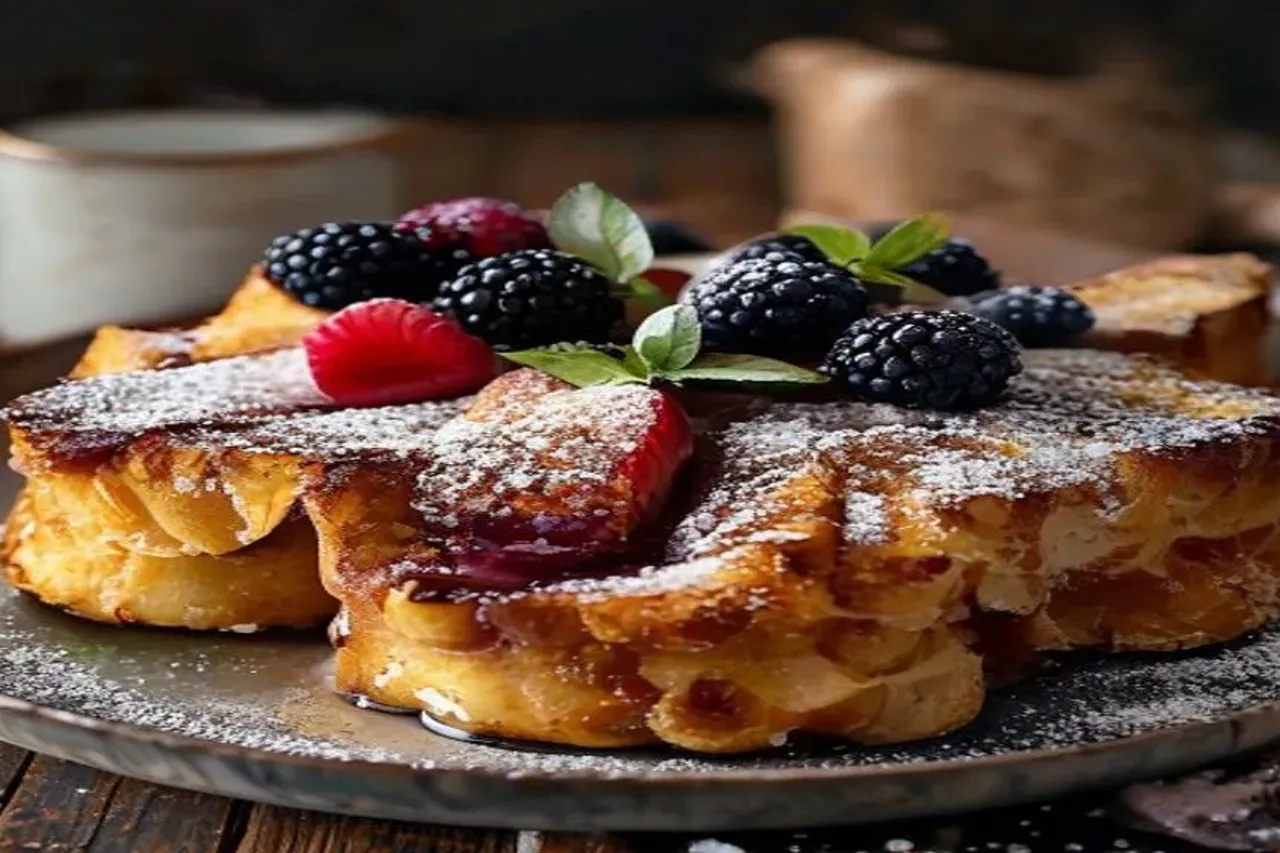
The Ultimate Hasselback Baked French Toast Recipe

Royal Nutritional Ledger *
For those counting their gold coins and their calories.
The Royal Disclaimer: These figures are calculated by our finest AI court scholars based on standard ingredient values. They are highly educated estimates meant for guidance, not gospel. If you require absolute scientific precision for medical or dietary salvation, please consult a certified physician rather than our kitchen AI!
Did You Know?
Historical Tidbit
The 'Hasselback' style originates from the Hasselbacken restaurant in Stockholm, where it was first introduced in the 1950s.
First time here? Click the button above to automatically send all these ingredients to your highest-paying local grocery delivery app.
⚖️ The Modernizer
Missing extinct ingredients? Swap for accessible modern alternatives.
The Golden Rule
"Never rush the soaking stage, for patience is the true secret ingredient of the crown. A hurried breakfast is a tragedy of dry centers and burnt edges!"
Ingredients
11 items required
Make Us Your Preferred Culinary Source
AI Emergency Hub
Hit a snag while prepping? Our elite AI tools are here to save your dish.
Missing an Ingredient?
Recipe Disaster?
Chef's Notes
Listen to me very carefully, my culinary cadets. When you perform the hasselback cut, use a sharp serrated knife and place two chopsticks on either side of the baguette as guardrails. This guarantees you will never accidentally slice all the way through the bottom crust. Precision separates the amateurs from the royals!
Pro Tip
Want to elevate this from mere royalty to absolute divinity? Let your baguette sit uncovered on the counter overnight before slicing it. Stale bread acts like an eager sponge, drinking up every single drop of that rich vanilla custard without turning into a sad, soggy puddle.
Kitchen Catastrophe Warning
Beware, amateur slice-smiths: slicing all the way through the baguette turns your majestic hasselback masterpiece into a pathetic pile of soggy French toast croutons, while failing to let the bread soak long enough leaves you chewing on the dry, tragic bones of unholy, eggy cardboard!
The Jester's Corner
Royal Court Comedy
I asked the chef why we are cutting the bread like potatoes, and he said it was to confuse the carbohydrates into thinking they are vegetables.
The Culinary Science
Let us indulge in a touch of food science! The process of soaking the bread allows the starch molecules in the flour to absorb the liquid proteins from the eggs and milk. When subjected to the dry heat of the oven, these trapped moisture pockets turn to steam, causing the custard-soaked bread to puff up dramatically while the exterior caramelizes into a magnificent crunch.
Make Us Your Preferred Culinary Source
Prioritize Ages & Spices in your Google Discover, Top Stories, and AI search feed with one tap.
🎭How does this recipe make you feel?
Tap a reaction to share your vibe
General Food Safety & Storage
Storage Science
Cool rapidly. Store in an airtight container in the refrigerator (below 4°C / 40°F). Consume within 3-4 days.
Reheating Science
Reheat to an internal temperature of 165°F (74°C). Use the stove or oven for best texture, stirring or turning occasionally to ensure even heating.

Taster's Notes
Community Feedback
0 Comments
Be the first to leave a note on this recipe!