The Ultimate Himachali Siddu Recipe
Royal Nutritional Ledger *
For those counting their gold coins and their calories.
The Royal Disclaimer: These figures are calculated by our finest AI court scholars based on standard ingredient values. They are highly educated estimates meant for guidance, not gospel. If you require absolute scientific precision for medical or dietary salvation, please consult a certified physician rather than our kitchen AI!
The Dussehra & Vijayadashami Master Feast
Did You Know?
Historical Tidbit
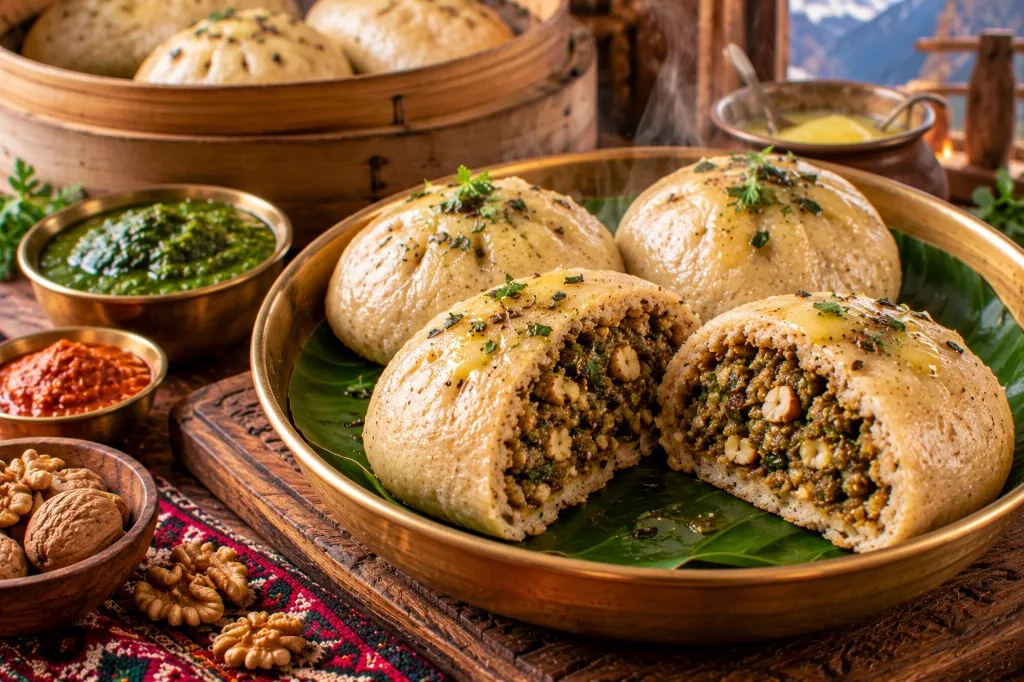
Siddu originated in the harsh high-altitude valleys of Kullu and Manali, deliberately created as an energy-dense bread packed with healthy fats to survive freezing Himalayan winters.
First time here? Click the button above to automatically send all these ingredients to your highest-paying local grocery delivery app.
⚖️ The Modernizer
Missing extinct ingredients? Swap for accessible modern alternatives.
The Golden Rule
"Never pinch the seal lightly—crimp with conviction, or your precious nutty pith will breach in the steam chamber!"
Ingredients
21 items required
The Fermented Wheat Dough:
The Walnut & Poppy Seed Filling (Pith):
For Steaming & The Royal Ghee Drench:
Make Us Your Preferred Culinary Source
AI Emergency Hub
Hit a snag while prepping? Our elite AI tools are here to save your dish.
Missing an Ingredient?
Recipe Disaster?
Chef's Notes
Siddu's defining signature is the marriage of a spongy, yeasted whole wheat crumb with a coarse, unctuous walnut-poppy seed filling. When grinding the nuts, use intermittent pulses; if the natural oils release prematurely, the filling will turn into greasy butter instead of a textured pith. Ensure the dough center remains slightly thicker when rolling out so the heavy filling does not puncture the delicate base during steaming.
Pro Tip
Always maintain a rolling boil before loading the steamer trays; inadequate steam pressure causes the yeasted dough to collapse into a dense, gummy brick instead of rising into a cloud. Additionally, resist opening the steamer lid during the first 15 minutes of cooking to avoid sudden temperature drops that ruin the proofed dough's lift.
Kitchen Catastrophe Warning
The Flat Soggy Flop: An amateur lifted the steamer lid every three minutes to peek, dropping the chamber's temperature and condensating heavy water droplets onto the dough, leaving behind a sad, deflated, waterlogged lump instead of a proud Himalayan cloud.
The Jester's Corner
Royal Court Comedy
Attempting to eat Siddu without ghee is considered a culinary treason punishable by exile to the lowest altitude available.
The Culinary Science
The open, porous crumb of Siddu is achieved through double yeast leavening: first via carbon dioxide production during the room-temperature proof, and second via the sudden thermodynamic expansion of trapped moisture and gas bubbles during rapid steam penetration (known as 'oven spring' in a moist environment). This porous matrix functions like an edible capillary sponge, eagerly drawing in and suspending melted ghee.
Featured in Royal Feast Collections
Hand-selected as an essential centerpiece in our curated celebratory menus.
🏺 Explore More Royal Feasts
Lift the lid on these timeless delicacies



Make Us Your Preferred Culinary Source
Prioritize Ages & Spices in your Google Discover, Top Stories, and AI search feed with one tap.
🎭How does this recipe make you feel?
Tap a reaction to share your vibe
General Food Safety & Storage
Storage Science
Cool rapidly. Store in an airtight container in the refrigerator (below 4°C / 40°F). Consume within 3-4 days.
Reheating Science
Reheat to an internal temperature of 165°F (74°C). Use the stove or oven for best texture, stirring or turning occasionally to ensure even heating.
Taster's Notes
Community Feedback
0 Comments
Be the first to leave a note on this recipe!