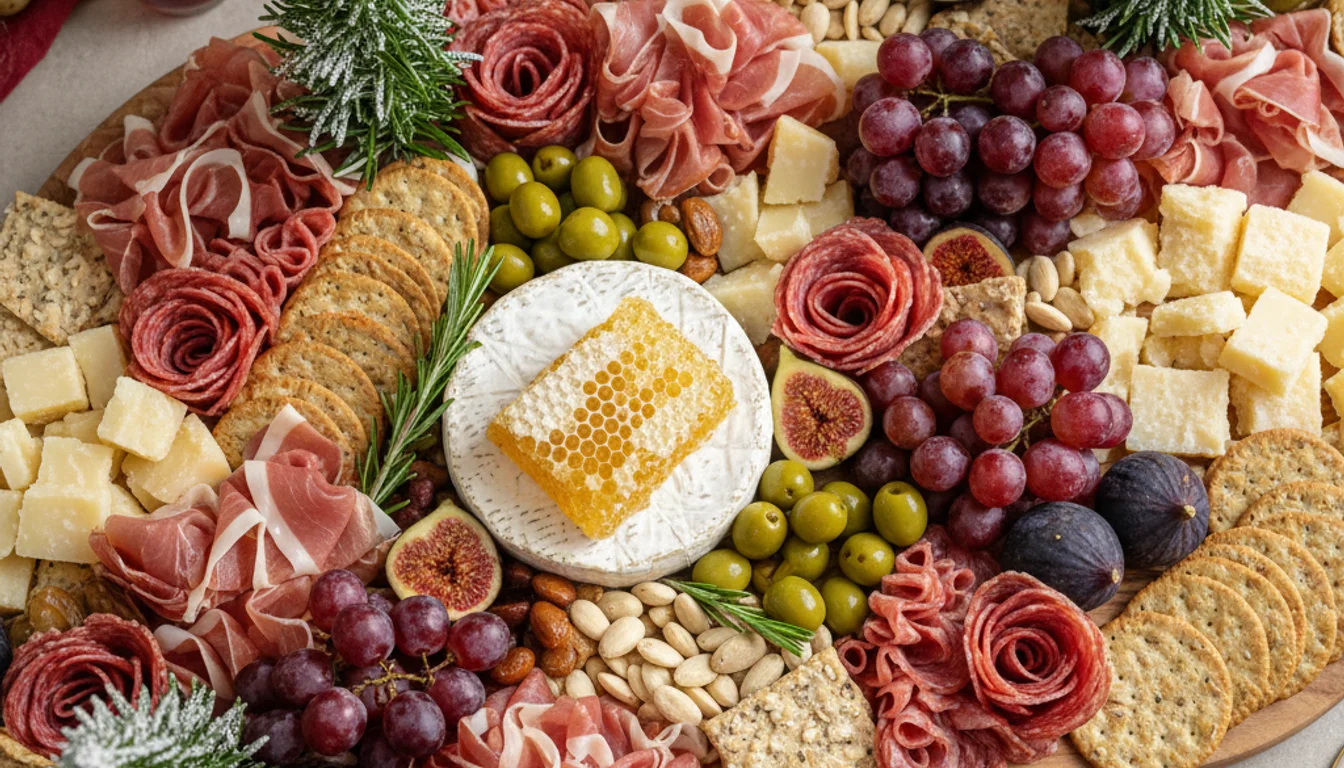
The Ultimate Holiday Charcuterie & Grazing Board Guide Recipe
Royal Nutritional Ledger *
For those counting their gold coins and their calories.
The Royal Disclaimer: These figures are calculated by our finest AI court scholars based on standard ingredient values. They are highly educated estimates meant for guidance, not gospel. If you require absolute scientific precision for medical or dietary salvation, please consult a certified physician rather than our kitchen AI!
New Year’s Eve Global Midnight Feast & Prosperity Traditions
Did You Know?
Historical Tidbit
The word *charcuterie* comes from the 15th-century French words *chair* (flesh) and *cuit* (cooked). Under French guild laws of 1476, *charcutiers* were strictly forbidden from selling raw pork; they were only permitted to sell cooked, salt-cured, or smoked meats and pâtés!
First time here? Click the button above to automatically send all these ingredients to your highest-paying local grocery delivery app.
⚖️ The Modernizer
Missing extinct ingredients? Swap for accessible modern alternatives.
The Golden Rule
"Banish all negative space: an authentic holiday grazing board must look lavishly overflowing with zero visible bare wood."
Ingredients
25 items required
The Charcuterie Trio (Salty, Silky & Spiced):
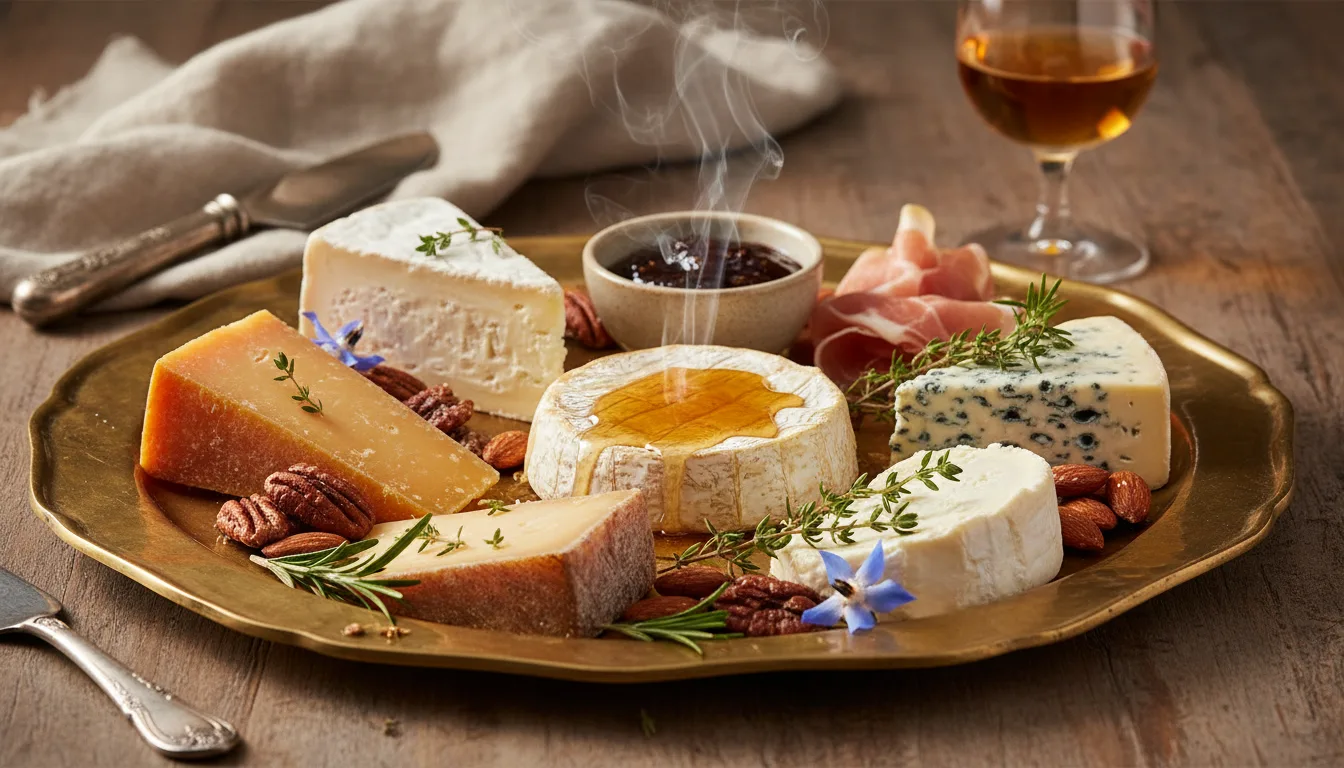
The 4-Quadrant Cheese Matrix:
The Briny & Acidic Counterweights:
The Sweet & Nectar Bridges:
The Grain & Bread Vehicles:
Aromatic Woodland Garnish:
Make Us Your Preferred Culinary Source
AI Emergency Hub
Hit a snag while prepping? Our elite AI tools are here to save your dish.
Missing an Ingredient?
Recipe Disaster?
Chef's Notes
**The Biophysics of Flavor Architecture**: High-fat cured meats (prosciutto, salami) coat the tongue in rich lipids that quickly induce sensory palate fatigue (*sensory-specific satiety*). The acidic and briny elements—acetic acid in cornichons, lactic acid in green olives, and malic acid in crisp apples—act as chemical palate cleansers, emulsifying surface fats and resetting the gustatory receptors. This allows each subsequent bite of cheese or charcuterie to taste as vibrant as the first. **Room Temperature Serving Rule**: Cold temperatures cause dairy butterfat to solidify into a waxy, mute barrier that numbs taste buds. Cheeses must rest at room temperature (20°C / 68°F) for 45 minutes before serving so volatile aromatic fatty acids liquefy and evaporate toward the olfactory bulb as you chew.
Pro Tip
1. **The 3-3-4-4 Golden Ratio**: For every 10 guests, calculate: 3 types of meat (approx. 50g / 2 oz per person), 3 to 4 types of cheese (approx. 75g / 2.5 oz per person), 4 textures of crackers/breads, and 4 sweet/acidic accompaniments. 2. **Pre-Cut the Hard Cheeses**: Guests are naturally hesitant to 'ruin' a gorgeous wedge by hacking into it. Cut 50% of hard cheeses into bite-sized jagged shards or shingles in advance so guests dive in without intimidation. 3. **Keep Crackers Away From Wet Ramekins**: Crackers placed directly against cold, wet ramekins absorb humidity and turn stale within 20 minutes. Buffer them with almonds or dry salami folds.
Kitchen Catastrophe Warning
**Disaster — The Board Looks Sparse, Messy, and Has Huge Empty Gaps**: You ran out of cheese and meat before filling the oversized wooden board. **The Rescue**: Dr. Kitchen SOS: Downsize to a smaller platter immediately, or deploy the 'Fruit & Nut Flood': slice 2 extra apples, scatter extra clusters of grapes, dump handfuls of roasted almonds, walnuts, and dried cranberries to bridge every gap, and weave rosemary sprigs throughout. Nobody will notice missing cheese when surrounded by an abundant garden of vibrant colors and textures!
The Jester's Corner
Royal Court Comedy
A charcuterie board is the only acceptable culinary scenario where placing $60 worth of raw cured pork, stinky cheese, and pickled vegetables on a slab of untreated tree bark is considered refined high society.
The Culinary Science
**Fat-Acid Emulsification & Tannin Synergy**: Charcuterie meats contain high levels of *glutamic acid* (natural umami) and *monounsaturated oleic fats*. Pairing them with high-pectin, high-acid fresh fruits (grapes, apples) and sharp pickled cucumbers triggers salivary flow, neutralizing saliva-binding tannins when paired with red wines and balancing rich lipid textures.
Featured in Master Menu Collections
Calibrated by culinary science for foolproof execution and maximum flavor.
🏺 Explore More Royal Feasts
Lift the lid on these timeless delicacies
Make Us Your Preferred Culinary Source
Prioritize Ages & Spices in your Google Discover, Top Stories, and AI search feed with one tap.
🎭How does this recipe make you feel?
Tap a reaction to share your vibe
General Food Safety & Storage
Storage Science
Cool rapidly. Store in an airtight container in the refrigerator (below 4°C / 40°F). Consume within 3-4 days.
Reheating Science
Reheat to an internal temperature of 165°F (74°C). Use the stove or oven for best texture, stirring or turning occasionally to ensure even heating.
Taster's Notes
Community Feedback
0 Comments
Be the first to leave a note on this recipe!