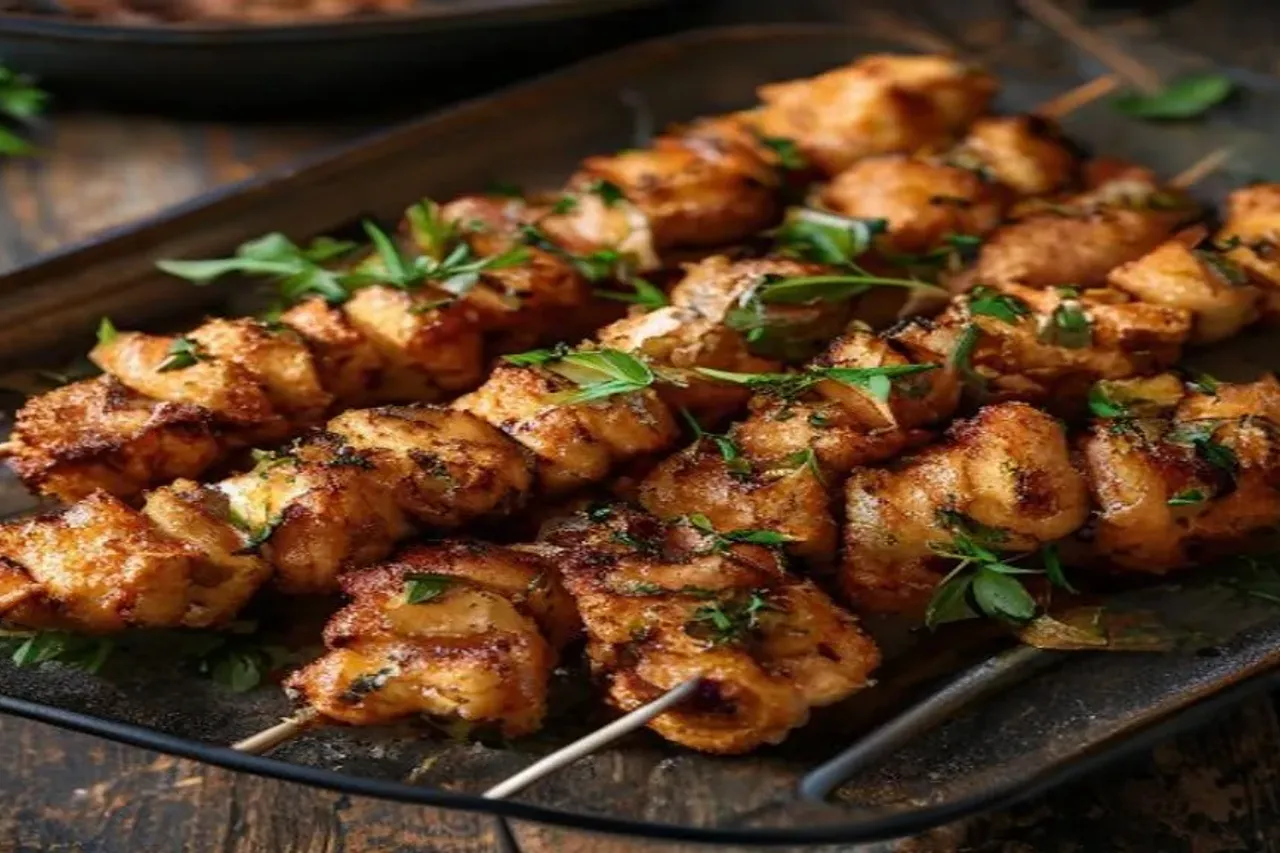
The Ultimate Homemade Breaded Skewer Recipe
Royal Nutritional Ledger *
For those counting their gold coins and their calories.
The Royal Disclaimer: These figures are calculated by our finest AI court scholars based on standard ingredient values. They are highly educated estimates meant for guidance, not gospel. If you require absolute scientific precision for medical or dietary salvation, please consult a certified physician rather than our kitchen AI!
Did You Know?
Historical Tidbit
This dish originated as a budget-friendly way for families to enjoy a 'poultry' experience using pork during times when meat was scarce.
First time here? Click the button above to automatically send all these ingredients to your highest-paying local grocery delivery app.
⚖️ The Modernizer
Missing extinct ingredients? Swap for accessible modern alternatives.
The Golden Rule
"Never overcrowd the frying pan, for a crowded pan drops the oil temperature instantly, turning your proud crispy dreams into a soggy, greasy tragedy."
Ingredients
8 items required
Make Us Your Preferred Culinary Source
AI Emergency Hub
Hit a snag while prepping? Our elite AI tools are here to save your dish.
Missing an Ingredient?
Recipe Disaster?
Chef's Notes
Listen closely to the wisdom of the kitchen: double-breading is not merely an option, it is a sacred duty if you desire that shattering, restaurant-quality crunch. Never skip the rest period after seasoning the pork, as rushing the meat prevents the spices from truly penetrating the core of the cubes.
Pro Tip
Keep your oil temperature fiercely monitored at 350 degrees F using a reliable candy or deep-fry thermometer. If your oil is too cool, your breading will drink the fat like a sponge instead of frying into a crisp armor; if it is too hot, the exterior will scorch before the pork inside reaches tenderness.
Kitchen Catastrophe Warning
If you dare to overcrowd the frying pan like an amateur trying to squeeze into skinny jeans, your oil temperature will plummet, leaving you with soggy, pathetic meat lollipops instead of that glorious, golden crunch we demand in the royal court!
The Jester's Corner
Royal Court Comedy
Our Jester asks: Why did the pig cross the road? To prove he could be just as trendy as a bird in a fryer!
The Culinary Science
The dual-stage cooking method—frying followed by baking—is an absolute stroke of culinary genius. Frying rapidly dehydrates the surface starches and caramelizes the bread crumbs via the Maillard reaction, while the subsequent baking cycle uses gentle ambient heat to finish cooking the thick pork cubes through without burning the delicate exterior.
Make Us Your Preferred Culinary Source
Prioritize Ages & Spices in your Google Discover, Top Stories, and AI search feed with one tap.
🎭How does this recipe make you feel?
Tap a reaction to share your vibe
Starch Retrogradation Reversal
Storage Science
Store at room temperature in a breathable bread bag or paper wrapper for up to 2 days. DO NOT refrigerate, as the cold accelerates starch retrogradation (staling). For long-term storage, freeze tightly wrapped.
Reheating Science
To reverse staling, flick a few drops of water onto the crust and reheat in a 350°F (175°C) oven for 5-8 minutes. The steam will re-gelatinize the starches, making the crumb soft and the crust crisp.
Taster's Notes
Community Feedback
0 Comments
Be the first to leave a note on this recipe!