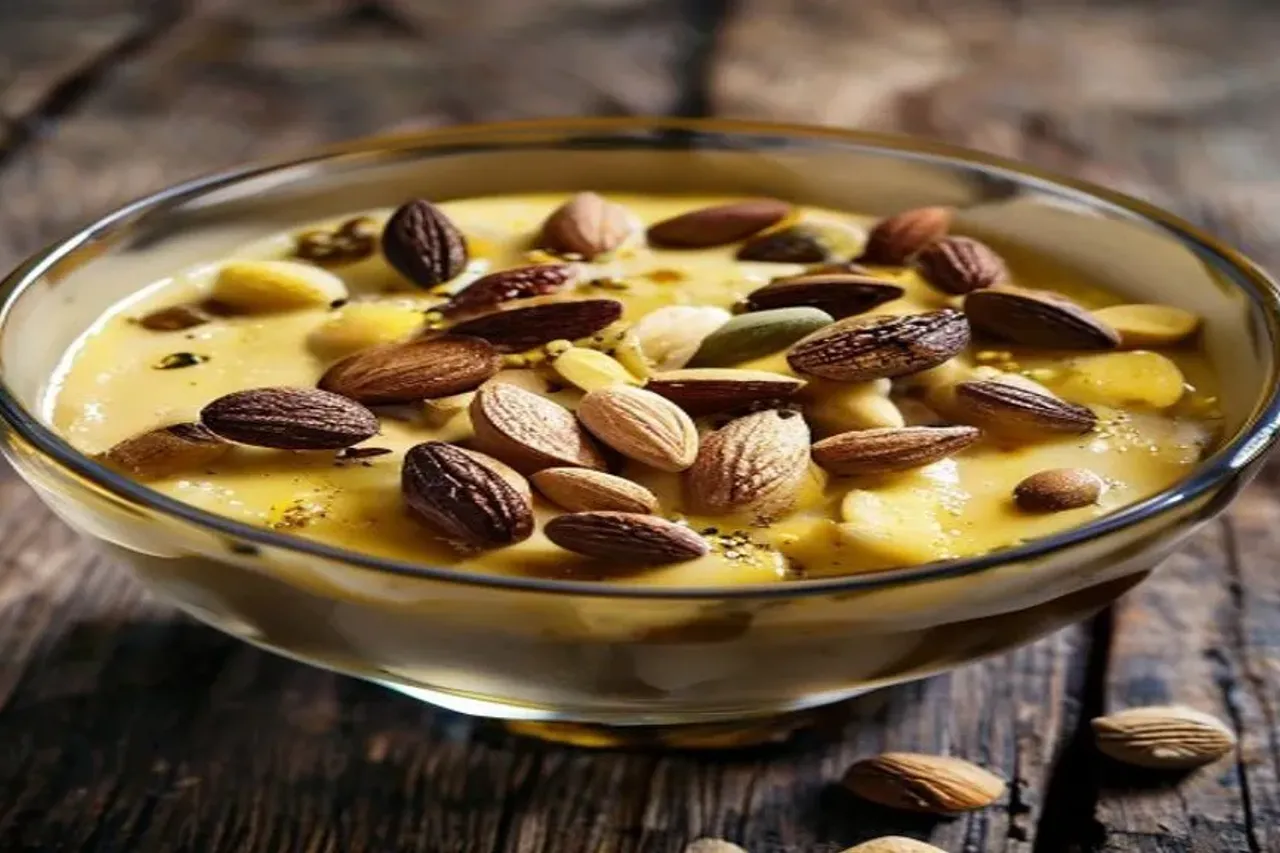
The Ultimate Homemade Custard Powder and Dry Fruit Custard Recipe
Royal Nutritional Ledger *
For those counting their gold coins and their calories.
The Royal Disclaimer: These figures are calculated by our finest AI court scholars based on standard ingredient values. They are highly educated estimates meant for guidance, not gospel. If you require absolute scientific precision for medical or dietary salvation, please consult a certified physician rather than our kitchen AI!
Did You Know?
Historical Tidbit
Custard powder was invented in 1837 by Alfred Bird because his wife was severely allergic to eggs, the traditional thickener for custards.
First time here? Click the button above to automatically send all these ingredients to your highest-paying local grocery delivery app.
⚖️ The Modernizer
Missing extinct ingredients? Swap for accessible modern alternatives.
The Golden Rule
"Never walk away from the stove while heating milk and cornflour. Starch settles instantly and burns at the bottom in the blink of an eye."
Ingredients
12 items required
Make Us Your Preferred Culinary Source
AI Emergency Hub
Hit a snag while prepping? Our elite AI tools are here to save your dish.
Missing an Ingredient?
Recipe Disaster?
Chef's Notes
Do not rush the sifting process for your homemade powder. Sifting incorporates air and ensures your thickener disperses evenly without forming frustrating little dough balls in your milk.
Pro Tip
Always mix your custard powder with cold or room temperature milk first. Pouring dry powder straight into hot milk is a guaranteed one-way ticket to Lumpy Town.
Kitchen Catastrophe Warning
Leaving your custard uncovered in the fridge while it chills, resulting in a tough, rubbery skin forming on top that ruins the velvety mouthfeel.
The Jester's Corner
Royal Court Comedy
Why did the custard powder go to therapy? Because it couldn't handle being whisked around without a real egg identity crisis!
The Culinary Science
Cornstarch contains long chains of starch molecules called amylose and amylopectin. When heated in liquid, these molecules swell and trap water in a process called gelatinization, transforming runny milk into luxurious custard.
Make Us Your Preferred Culinary Source
Prioritize Ages & Spices in your Google Discover, Top Stories, and AI search feed with one tap.
🎭How does this recipe make you feel?
Tap a reaction to share your vibe
General Food Safety & Storage
Storage Science
Cool rapidly. Store in an airtight container in the refrigerator (below 4°C / 40°F). Consume within 3-4 days.
Reheating Science
Reheat to an internal temperature of 165°F (74°C). Use the stove or oven for best texture, stirring or turning occasionally to ensure even heating.


Taster's Notes
Community Feedback
0 Comments
Be the first to leave a note on this recipe!