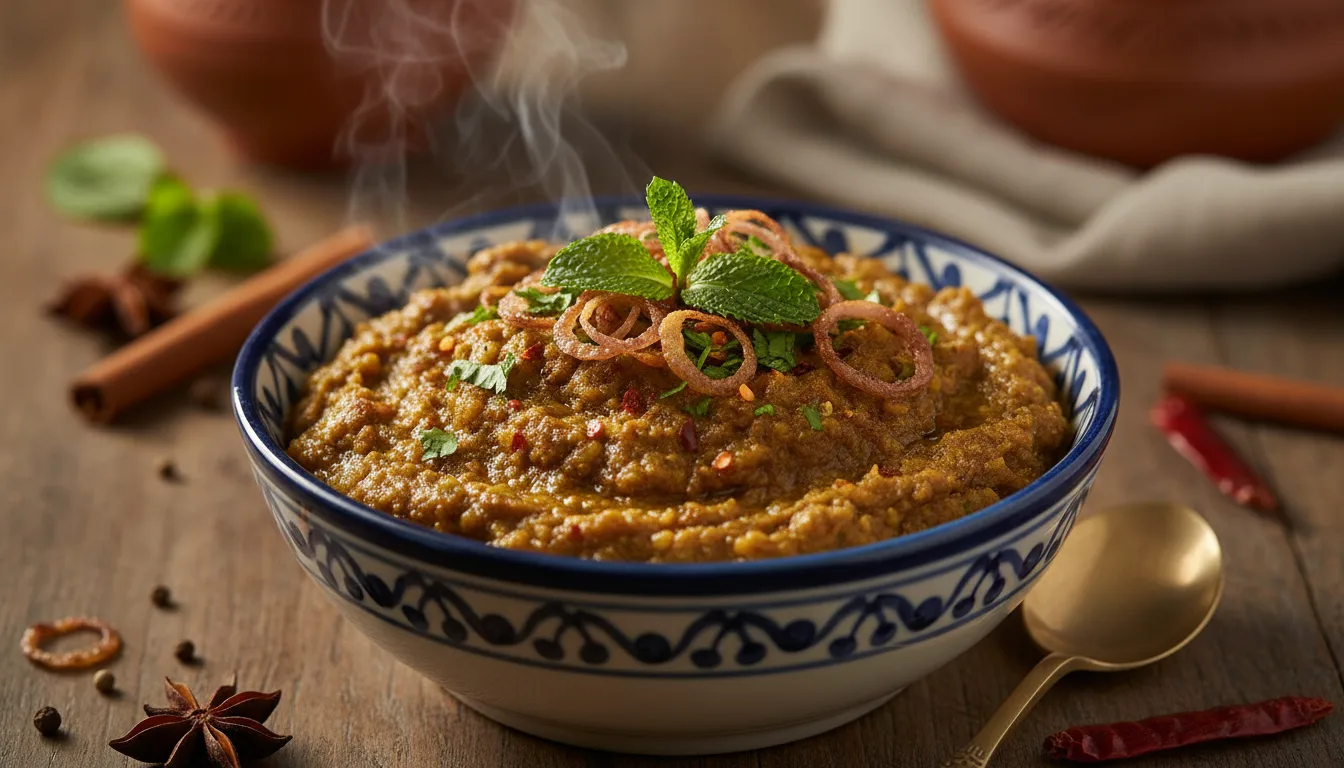
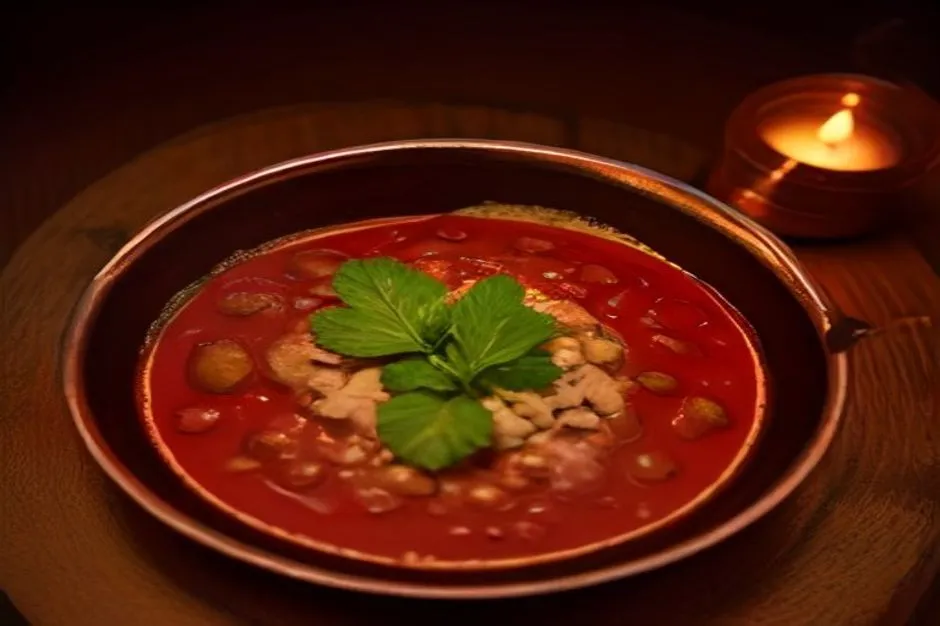
The Ultimate Hyderabadi Haleem Recipe
Royal Nutritional Ledger *
For those counting their gold coins and their calories.
The Royal Disclaimer: These figures are calculated by our finest AI court scholars based on standard ingredient values. They are highly educated estimates meant for guidance, not gospel. If you require absolute scientific precision for medical or dietary salvation, please consult a certified physician rather than our kitchen AI!
The Grand Ramadan & Iftar Feast: Slow-Simmered Haleem, Make-Ahead Suhoor & Golden Crisp Samosas
Did You Know?
Historical Tidbit
Hyderabadi Haleem was granted a Geographical Indication (GI) tag in 2010, making it the first meat product in India to achieve this distinguished heritage status.
First time here? Click the button above to automatically send all these ingredients to your highest-paying local grocery delivery app.
⚖️ The Modernizer
Missing extinct ingredients? Swap for accessible modern alternatives.
The Golden Rule
"The ghota is your scepter: never slice or blend the meat with blades; prolonged, rhythmic pounding against hot metal and wood is the sole method to stretch collagen and myofibrils into authentic, stringy 'resha'."
Ingredients
39 items required
The Royal Grain, Pulse & Nut Complex:
The Braised Mutton & Bone-Marrow Korma:
The Shahi Potli Masala (Freshly Ground):
The Golden Birista & Infused Fat Medium:
The Crown & Finishing Elements:
Make Us Your Preferred Culinary Source
AI Emergency Hub
Hit a snag while prepping? Our elite AI tools are here to save your dish.
Missing an Ingredient?
Recipe Disaster?
Chef's Notes
The unforgivable cardinal sin of modern home cooks is using an electric food processor or high-speed immersion blender on the braised meat. Blades chop and sever the elongated actin and myosin muscle fibers into microscopic confetti, resulting in a gritty, grainy paste reminiscent of canned baby food. True Hyderabadi Haleem relies on mechanical shearing: the meat must be hand-shredded and manually mashed against the curved pot walls with a wooden pestle (ghota) to stretch the fibers into unbroken, gossamer strands (resha) that trap the starch matrix.
Pro Tip
1. Always employ mutton cuts rich in connective tissue (shank/shoulder) along with marrow pipes (nalli); the gelatin released during slow braising is the foundational emulsifier that binds the grain starch to the free fat droplets. 2. Do not salt the grains during their initial boil; early salting hardens the skins of pulses like chana dal and delays complete starch gelatinization. 3. Skim the crimson surface fat (roghan) before adding the grains. If cooked together from the start, the heavy grain starches will absorb and trap all the aromatic red oils, leaving your final presentation pale and dull.
Kitchen Catastrophe Warning
If the Haleem catches at the base of the pot and begins to burn: DO NOT SCRAPE THE BOTTOM. Instantly extinguish the heat and gently ladle the pristine top layers into a fresh, clean pot, leaving the scorched bottom 2 cm completely undisturbed. To counter any subtle acrid smoke flavor absorbed by the mass, stir in 3 tablespoons of warmed pure ghee, 2 tablespoons of whisked heavy yogurt, and a pinch of ground cardamom and mace. If the mixture has seized up and turned overly stiff, loosen it exclusively with boiling bone broth or piping-hot water—never cold liquids, which instantly fracture the starch-gelatin-fat emulsion.
The Jester's Corner
Royal Court Comedy
Attempting to create authentic Hyderabadi Haleem without sweating over a wooden ghota for an hour is a court-martial offense punishable by exile to a bland salad bar.
The Culinary Science
The signature stretchy, elastic texture of Haleem is a masterclass in colloid chemistry and polymer physics. During the extended braise (above 70°C / 158°F), the triple-helix collagen fibers of bone and tendon denature into soluble gelatin. Concurrently, boiling cracked wheat and barley releases amylose and amylopectin starches that undergo thermal gelatinization, swelling to trap water. When subjected to the shear stress of the wooden ghota, the unravelled protein strands of mutton form a structural network with the gelatin and starches, producing a pseudoplastic, shear-thinning emulsion that locks up to 200g of lipophilic ghee without oil separation.
Make Us Your Preferred Culinary Source
Prioritize Ages & Spices in your Google Discover, Top Stories, and AI search feed with one tap.
🎭How does this recipe make you feel?
Tap a reaction to share your vibe
General Food Safety & Storage
Storage Science
Cool rapidly. Store in an airtight container in the refrigerator (below 4°C / 40°F). Consume within 3-4 days.
Reheating Science
Reheat to an internal temperature of 165°F (74°C). Use the stove or oven for best texture, stirring or turning occasionally to ensure even heating.
Taster's Notes
Community Feedback
0 Comments
Be the first to leave a note on this recipe!