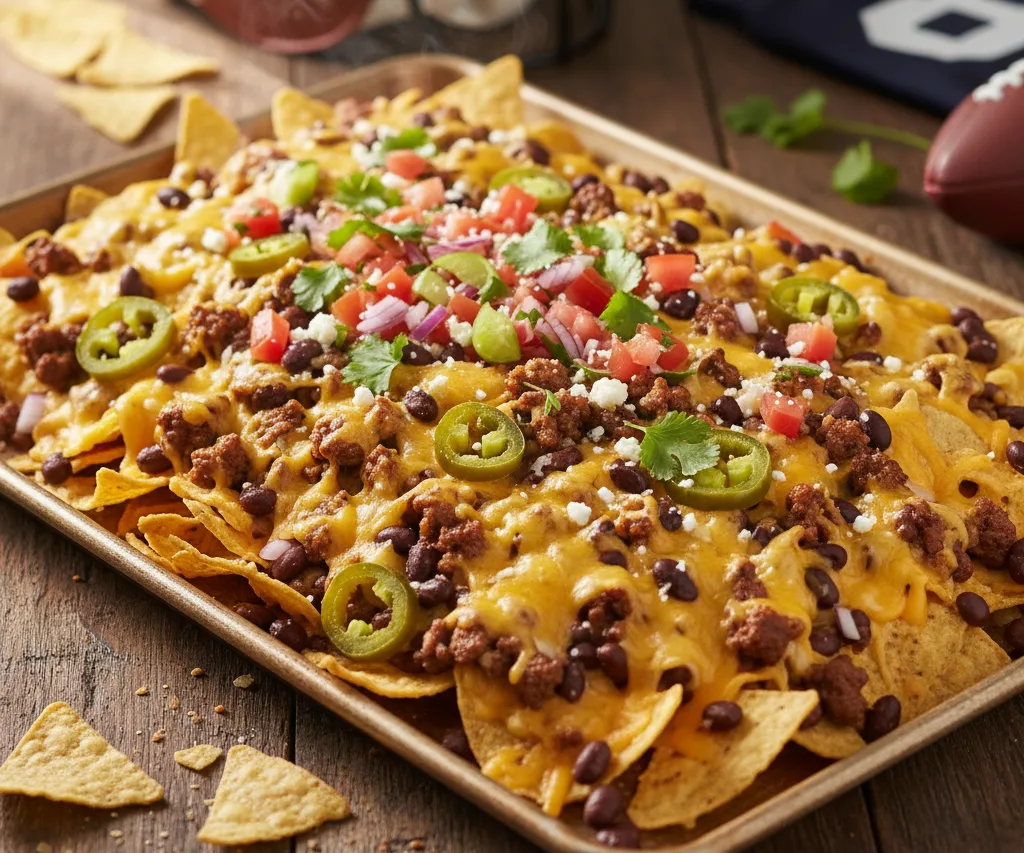
The Ultimate Loaded Sheet Pan Game-Day Nachos Recipe
Royal Nutritional Ledger *
For those counting their gold coins and their calories.
The Royal Disclaimer: These figures are calculated by our finest AI court scholars based on standard ingredient values. They are highly educated estimates meant for guidance, not gospel. If you require absolute scientific precision for medical or dietary salvation, please consult a certified physician rather than our kitchen AI!
Part of our Appetizer Master Index
Did You Know?
Historical Tidbit
Nachos were supposedly invented in 1943 by Ignacio 'Nacho' Anaya in Piedras Negras, Mexico, when he improvised a snack for hungry U.S. military wives using what was on hand: tortillas, cheese, and jalapeños.
First time here? Click the button above to automatically send all these ingredients to your highest-paying local grocery delivery app.
⚖️ The Modernizer
Missing extinct ingredients? Swap for accessible modern alternatives.
The Golden Rule
"Thou shalt not suffer a soggy nacho! The golden rule of supreme nachos is to maintain the structural integrity and crispness of the tortilla chip. This is achieved by employing sturdy chips, meticulous draining of wet ingredients, strategic layering, and baking at a high, consistent temperature."
Ingredients
29 items required
The Sturdy Foundation:
The Savory Core:
The Molten Embrace:
The Zesty Accents:
The Fresh Finish (Pico de Gallo):
The Final Flourish:
Make Us Your Preferred Culinary Source
AI Emergency Hub
Hit a snag while prepping? Our elite AI tools are here to save your dish.
Missing an Ingredient?
Recipe Disaster?
Chef's Notes
The two-tier layering is crucial for optimal nacho architecture. It ensures that every chip has a fighting chance at receiving a generous blanket of cheese and savory toppings, preventing the dreaded 'naked chip' syndrome at the bottom. Furthermore, grating your own cheese from the block is non-negotiable; pre-shredded varieties contain anti-caking agents that inhibit smooth, even melting, leading to a less luxurious texture. Baking at a high temperature for a relatively short time is key to achieving molten cheese and crisp chips without drying out the toppings or rendering the chips soggy.
Pro Tip
1. For an even crispier foundation, flash-bake the unadorned tortilla chips for 3-5 minutes at 400°F (200°C) before adding any toppings. This pre-toasting creates a robust barrier against moisture. || 2. To ensure optimal cheese distribution and melt, use a mix of finely grated and coarsely grated cheeses. The finer shreds melt quickly to coat, while the coarser bits provide delightful pockets of gooey richness. || 3. Always drain your cooked ground beef and rinsed black beans meticulously. Excess moisture is the primary culprit behind soggy nachos; a dry base is a happy nacho base.
Kitchen Catastrophe Warning
The most common and soul-crushing catastrophe is soggy nachos, often due to overloaded toppings, insufficient draining of meat/beans, or baking at too low a temperature. If you find your nachos emerging from the oven with a lamentably soft center, immediately transfer them to a fresh, dry sheet pan, spread them out slightly, and return to a 425°F (220°C) oven for a quick 3-4 minute blast. This can often crisp up the chips. For prevention, always thoroughly drain all wet ingredients, don't over-layer, and ensure your oven is at the correct, high temperature.
The Jester's Corner
Royal Court Comedy
My doctor told me to watch my weight, so I'm making nachos. Now I just need to figure out which chip is the 'watching' chip.
The Culinary Science
The irresistible gooeyness of perfectly melted cheese on nachos is a result of heat breaking down the casein proteins, the primary proteins in milk. As temperatures rise, these proteins denature and unravel, releasing the fat and water they usually bind. This allows the fat to lubricate the protein matrix, creating that smooth, flowing, molten texture. The Maillard reaction also contributes to the savory brown crust on some of the cheese and the browned beef, producing hundreds of complex flavor compounds.
Explore Curated Feast Collections
Discover 90+ themed festive banquets, seasonal menus, and imperial regional feasts.
🏺 Explore More Royal Feasts
Lift the lid on these timeless delicacies

Make Us Your Preferred Culinary Source
Prioritize Ages & Spices in your Google Discover, Top Stories, and AI search feed with one tap.
🎭How does this recipe make you feel?
Tap a reaction to share your vibe
General Food Safety & Storage
Storage Science
Cool rapidly. Store in an airtight container in the refrigerator (below 4°C / 40°F). Consume within 3-4 days.
Reheating Science
Reheat to an internal temperature of 165°F (74°C). Use the stove or oven for best texture, stirring or turning occasionally to ensure even heating.
Taster's Notes
Community Feedback
0 Comments
Be the first to leave a note on this recipe!