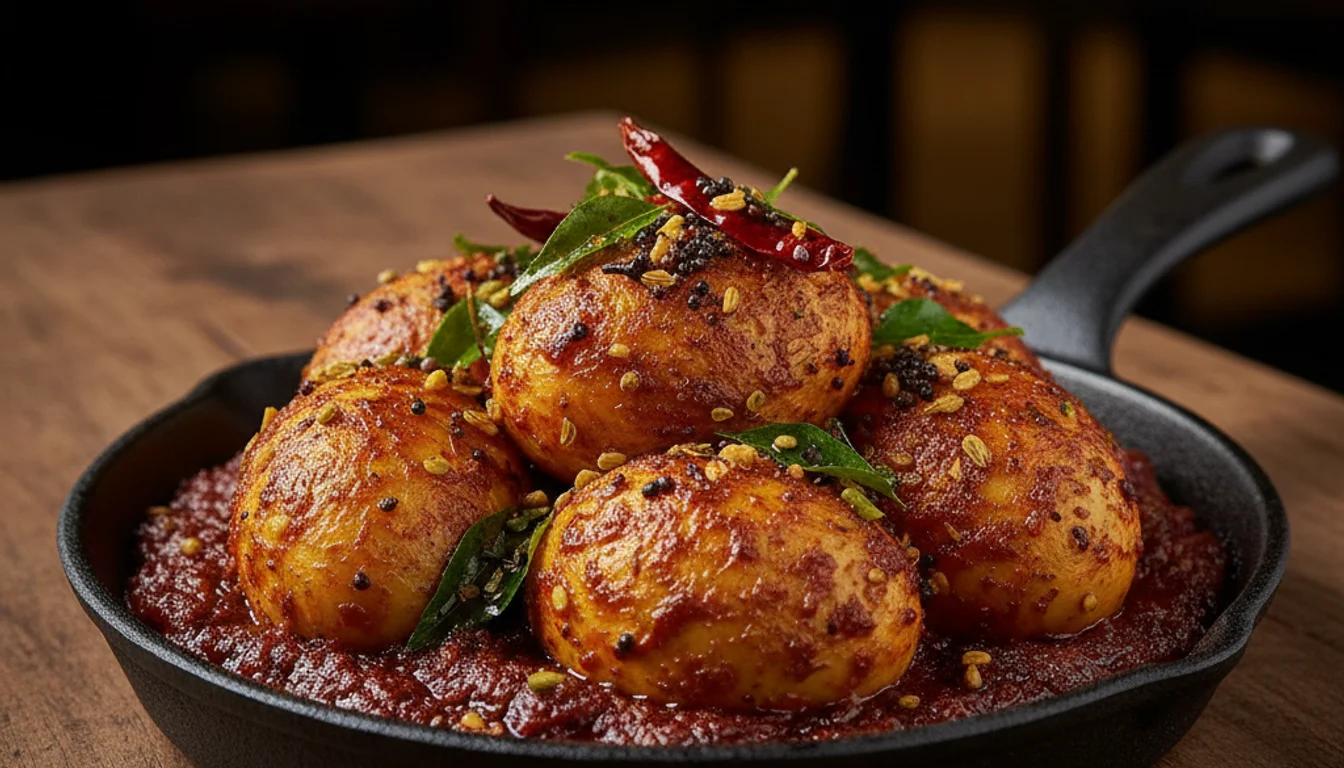
The Ultimate Mangalore Ghee Egg Roast Recipe
Royal Nutritional Ledger *
For those counting their gold coins and their calories.
The Royal Disclaimer: These figures are calculated by our finest AI court scholars based on standard ingredient values. They are highly educated estimates meant for guidance, not gospel. If you require absolute scientific precision for medical or dietary salvation, please consult a certified physician rather than our kitchen AI!
The Viral Kitchen Phenomenon: Internet-Famous Recipes Mastered by Science
Did You Know?
Historical Tidbit
Ghee Roast was originally created in the 1950s by Tejamma Shetty at the iconic 'Shetty Lunch Home' in Kundapur, Karnataka. Originally reserved for chicken, the unmistakable ghee roast masala quickly became a legend across Mangalore, inspiring paneer, mushroom, prawn, and egg variations that define South Indian coastal culinary artistry.
First time here? Click the button above to automatically send all these ingredients to your highest-paying local grocery delivery app.
⚖️ The Modernizer
Missing extinct ingredients? Swap for accessible modern alternatives.
The Golden Rule
"Roast the masala paste until the ghee completely separates from the red paste—impatience breeds raw chili bitterness."
Ingredients
25 items required
The Hard-Boiled Eggs:
The Ancestral Kundapur Ghee Roast Masala Paste:
The Ghee Simmer & Gravy:
Make Us Your Preferred Culinary Source
AI Emergency Hub
Hit a snag while prepping? Our elite AI tools are here to save your dish.
Missing an Ingredient?
Recipe Disaster?
Chef's Notes
**The Byadgi vs. Guntur Ratio**: The soul of authentic Mangalorean Ghee Roast is the Byadgi chilli. Byadgi chillies are wrinkly and contain high levels of red capsanthin pigments but mild capsaicin heat. Pairing them with a smaller portion of sharp Guntur chillies gives the sauce its signature dramatic crimson glow without setting your tongue on fire. **Why Desi Ghee is Non-Negotiable**: Cooking oils like refined sunflower or mustard will completely alter the dish's identity. Ghee has a high smoke point (250°C / 482°F) and contains milk solids that brown into nutty lactones, chemically binding with the lipophilic capsaicin of the roasted chillies to create a rounded, buttery velvet finish.
Pro Tip
1. **Ice Bath for Peel Perfection**: Always shock hot-boiled eggs in ice water for 5 minutes. This creates steam retraction between the albumen and shell membrane, preventing ugly jagged tears on the egg surface. 2. **Never Burn the Fenugreek**: Toast whole spices on gentle low heat; if fenugreek seeds scorch even slightly, they release bitter volatile alkaloids that ruin the entire masala batch. 3. **The Resting Window**: Let the finished ghee egg roast rest covered off the flame for 10 minutes before serving. The boiled egg yolks will drink up the spiced ghee through the scored fissures, intensifying every bite.
Kitchen Catastrophe Warning
**Disaster — Masala Tastes Bitter or Overly Sour**: The tamarind was too strong or the whole spices caught too much direct heat. **The Rescue**: Dissolve 1 additional tablespoon of jaggery or brown sugar with 1 tablespoon of warm melted ghee and stir directly into the simmering sauce. The sucrose instantly counterbalances excess tartaric acid while the fat coats the tongue to mute harsh bitter undertones.
The Jester's Corner
Royal Court Comedy
If you try making Mangalore Ghee Roast with refined olive oil and store-bought curry powder, an elder auntie from Kundapur will appear in your kitchen to confiscate your cookware. Cooking with this much desi ghee isn't a cheat meal; it's a coastal spiritual baptism for your soul. Our Royal Chef insists that peeling hard-boiled eggs with a spoon is a supreme test of patience, and anyone who tears the egg white must wash all the cast-iron skillets.
The Culinary Science
**Lipophilic Flavor Extraction**: Capsaicin, the pungent compound in dried chillies, and piperine in black pepper are highly lipophilic (fat-soluble) and practically insoluble in water. Frying the wet masala paste slowly in clarified butter (*ghee*) dissolves these pungent molecules into the butterfat matrix. This not only tempers harsh tongue burn into a smooth, lingering warmth but also ensures that volatile aromatics (*linalool* from coriander and *cuminaldehyde* from cumin) disperse evenly across the palate.
Featured in Master Menu Collections
Calibrated by culinary science for foolproof execution and maximum flavor.
🏺 Explore More Royal Feasts
Lift the lid on these timeless delicacies
Make Us Your Preferred Culinary Source
Prioritize Ages & Spices in your Google Discover, Top Stories, and AI search feed with one tap.
🎭How does this recipe make you feel?
Tap a reaction to share your vibe
General Food Safety & Storage
Storage Science
Cool rapidly. Store in an airtight container in the refrigerator (below 4°C / 40°F). Consume within 3-4 days.
Reheating Science
Reheat to an internal temperature of 165°F (74°C). Use the stove or oven for best texture, stirring or turning occasionally to ensure even heating.
Taster's Notes
Community Feedback
0 Comments
Be the first to leave a note on this recipe!