The Ultimate Masala Kulcha Recipe
Royal Nutritional Ledger *
For those counting their gold coins and their calories.
The Royal Disclaimer: These figures are calculated by our finest AI court scholars based on standard ingredient values. They are highly educated estimates meant for guidance, not gospel. If you require absolute scientific precision for medical or dietary salvation, please consult a certified physician rather than our kitchen AI!
Part of our Indian Breads Master Index
Did You Know?
Historical Tidbit
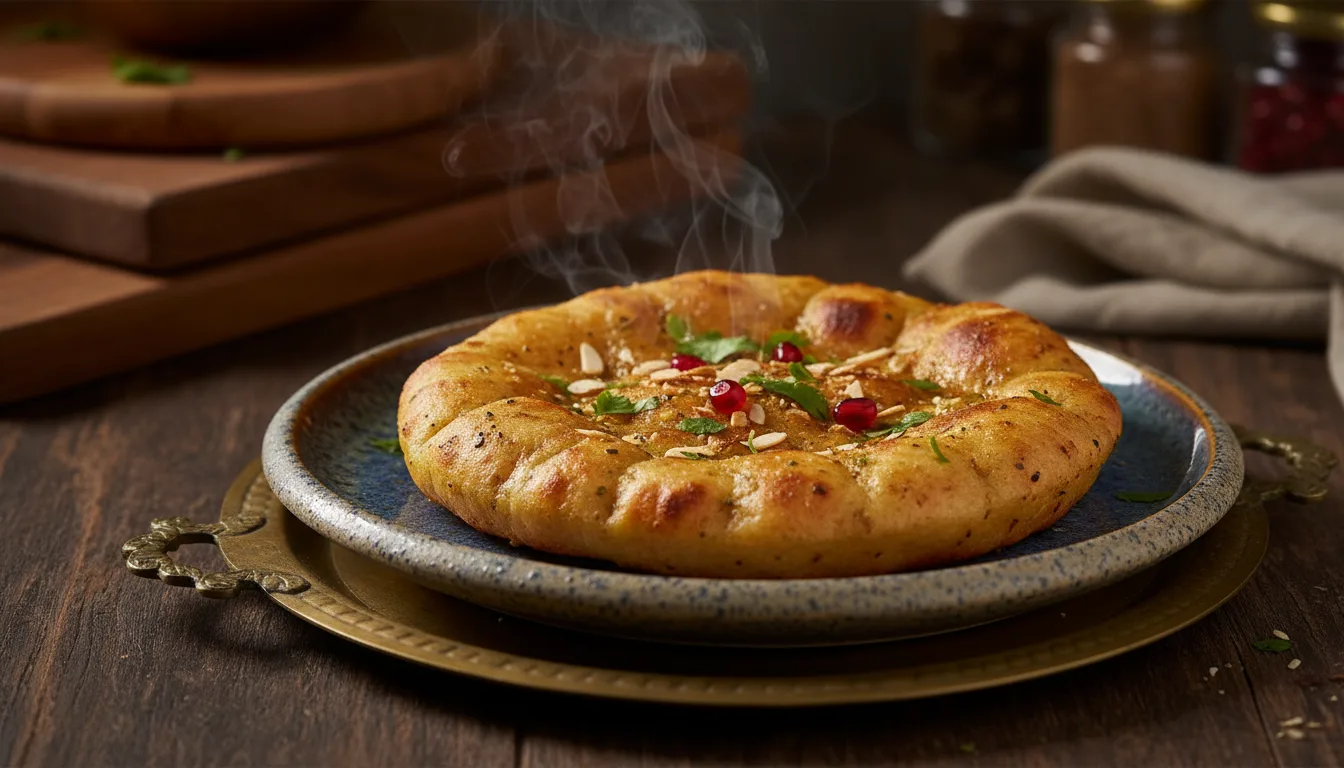
Masala kulchas trace their delicious lineage back to the royal kitchens of the Mughal Empire, where bakers experimented heavily with fermented breads baked in clay ovens.
First time here? Click the button above to automatically send all these ingredients to your highest-paying local grocery delivery app.
⚖️ The Modernizer
Missing extinct ingredients? Swap for accessible modern alternatives.
The Golden Rule
"Measure the salt with your heart, but treat the resting time of the dough with absolute mathematical precision."
Ingredients
20 items required
Make Us Your Preferred Culinary Source
AI Emergency Hub
Hit a snag while prepping? Our elite AI tools are here to save your dish.
Missing an Ingredient?
Recipe Disaster?
Chef's Notes
Treat your dough with the respect of a sovereign; a proper 10-minute knead and a 2-hour rest are non-negotiable for achieving that pillowy, cloud-like texture.
Pro Tip
Never use a non-stick tawa for the traditional flip-and-char method, as the kulcha relies on the raw cast iron or steel friction to stay attached when inverted over the open flame!
Kitchen Catastrophe Warning
Failing to seal the pleats properly will cause your spiced potato filling to aggressively erupt across your stovetop the exact second it touches the inverted flame.
The Jester's Corner
Royal Court Comedy
Why did the kulcha go to therapy? Because it felt entirely kneaded and under immense pressure from the royal bakers!
The Culinary Science
The combination of yogurt, baking soda, and baking powder triggers a simultaneous acid-base reaction and biological fermentation, creating carbon dioxide pockets that make the bread wonderfully fluffy.
Make Us Your Preferred Culinary Source
Prioritize Ages & Spices in your Google Discover, Top Stories, and AI search feed with one tap.
🎭How does this recipe make you feel?
Tap a reaction to share your vibe
Starch Retrogradation Reversal
Storage Science
Store at room temperature in a breathable bread bag or paper wrapper for up to 2 days. DO NOT refrigerate, as the cold accelerates starch retrogradation (staling). For long-term storage, freeze tightly wrapped.
Reheating Science
To reverse staling, flick a few drops of water onto the crust and reheat in a 350°F (175°C) oven for 5-8 minutes. The steam will re-gelatinize the starches, making the crumb soft and the crust crisp.
Taster's Notes
Community Feedback
0 Comments
Be the first to leave a note on this recipe!