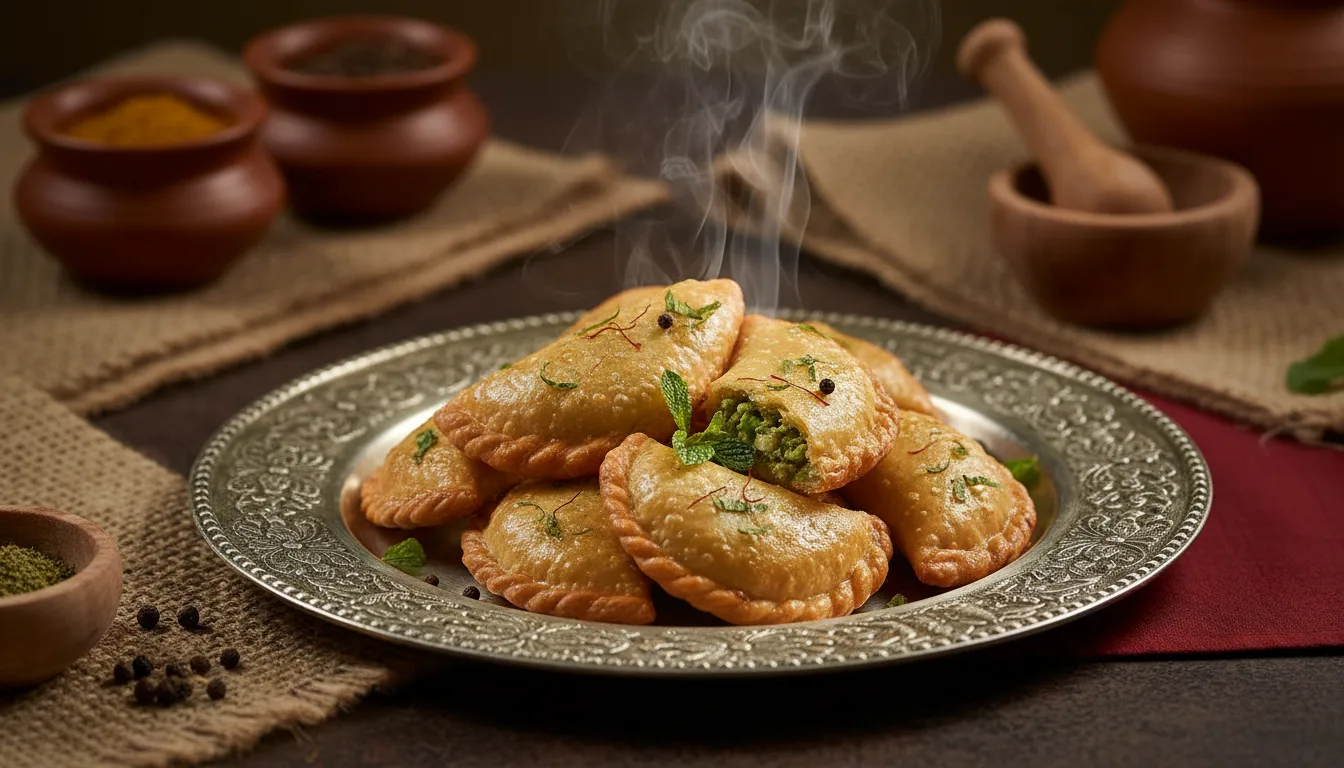
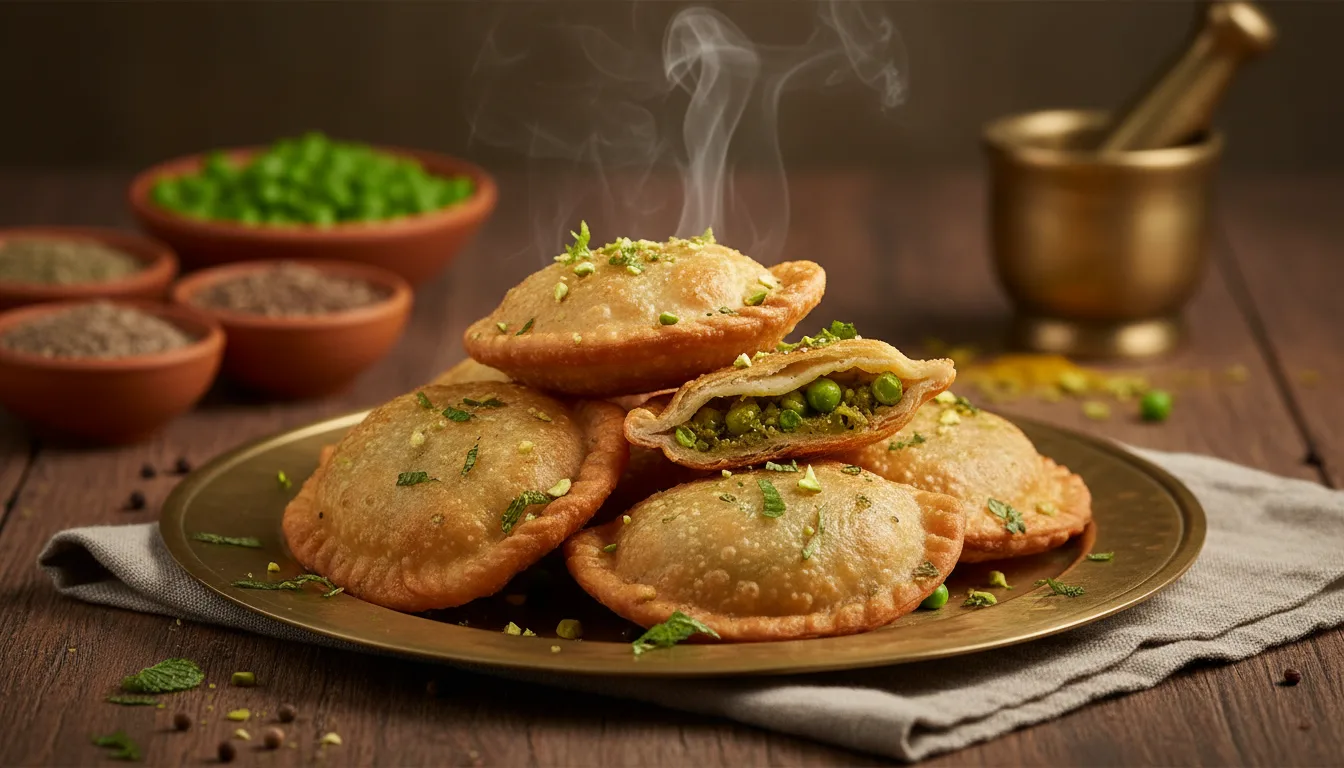
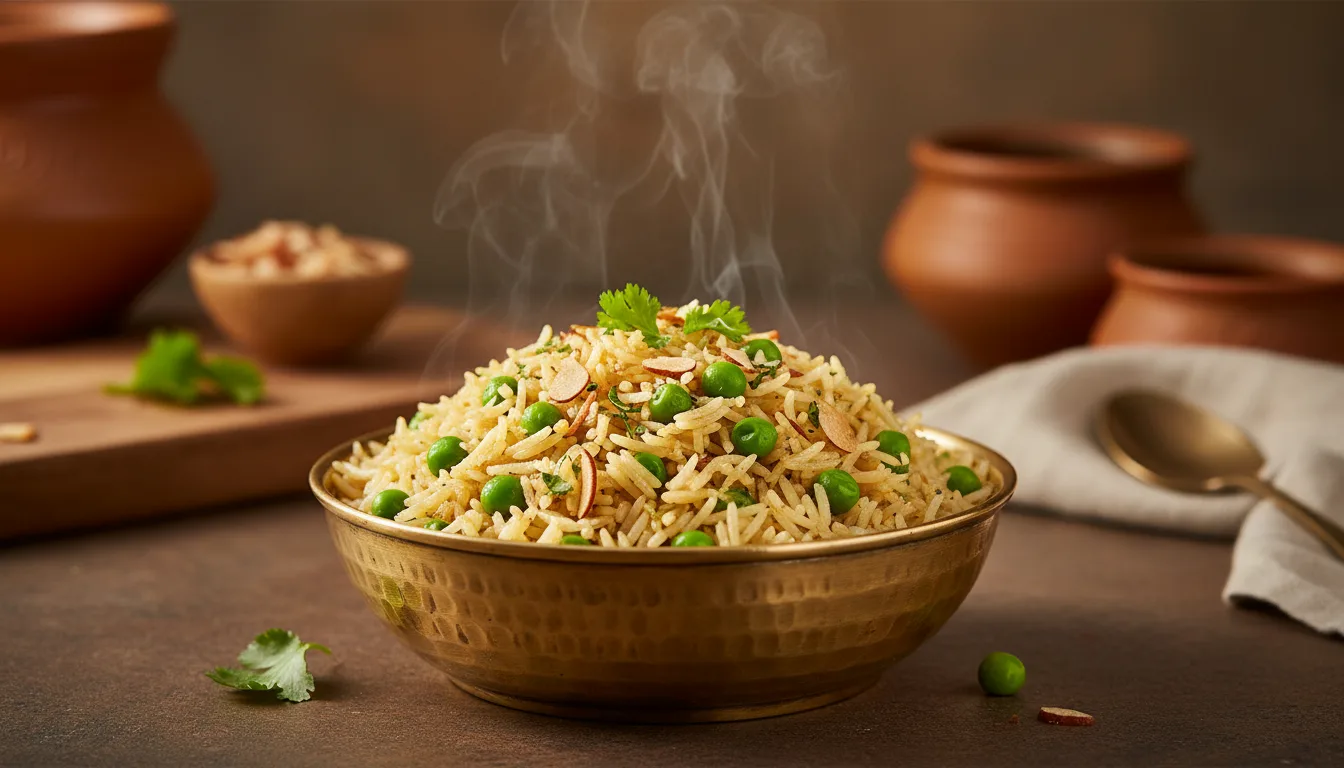
The Ultimate Matar Gujiya Recipe
Royal Nutritional Ledger *
For those counting their gold coins and their calories.
The Royal Disclaimer: These figures are calculated by our finest AI court scholars based on standard ingredient values. They are highly educated estimates meant for guidance, not gospel. If you require absolute scientific precision for medical or dietary salvation, please consult a certified physician rather than our kitchen AI!
The Grand Holi Festival of Colors: Crispy Gujiyas, Kanji Vada & Chilled Thandais
Did You Know?
Historical Tidbit
While traditional modern North Indian Holi celebrations spotlight the sweet, mawa-filled gujiya, the savory pea-filled variation originated in the royal winter courts of Awadh during the late pea harvests of February and March, transitioning seamlessly into spring Holi banquets.
First time here? Click the button above to automatically send all these ingredients to your highest-paying local grocery delivery app.
⚖️ The Modernizer
Missing extinct ingredients? Swap for accessible modern alternatives.
The Golden Rule
"The dough must be kneaded stiff as a potter's clay, the pea filling must be bone-dry and stone-cold before wrapping, and the oil must whisper gently, never roar."
Ingredients
26 items required
The Khasta Pastry Crust (Moyan Dough):
The Royal Spiced Pea Filling (Matar Puram):
The Frying Medium & Slurry:
Make Us Your Preferred Culinary Source
AI Emergency Hub
Hit a snag while prepping? Our elite AI tools are here to save your dish.
Missing an Ingredient?
Recipe Disaster?
Chef's Notes
The single most catastrophic error home cooks commit with Matar Gujiya is frying in oil that is too hot. If your fat exceeds 155°C (311°F) on initial immersion, water in the crust turns instantly into hyper-pressurized steam before the exterior fat can temper the proteins, erupting into ugly, pale, brittle blisters ('phaphole'). Frying must begin low and slow, allowing the fat-laminated starch layers to cook evenly into a smooth, biscuit-crisp, khasta shell.
Pro Tip
Always ensure the green pea mash is thoroughly dehydrated in the pan. Green peas retain over 75% internal water; if this liquid isn't cooked off completely, the steam generated inside the enclosed pastry during deep frying will balloon outward, tearing the delicate crimped seal and spilling filling into the hot fat, ruining your entire oil batch.
Kitchen Catastrophe Warning
If a gujiya splits or cracks open inside the hot oil: Immediately rescue it with tongs before peas disperse and burn in the fat. Lower the pan heat to prevent scorching. For the un-fried gujiyas that show microscopic tears or unsealed borders, prepare a thick paste of 1 tbsp cornstarch and 1/2 tsp cold water. Dab a microscopic layer over the fault line with a clean fingertip and let dry for 2 minutes to form an airtight gelatinized barrier before sliding back into the oil.
The Jester's Corner
Royal Court Comedy
The royal astrologer strictly declared: a single air bubble on the gujiya crust represents a future political upheaval—hence, chefs fry at low heat to preserve imperial peace.
The Culinary Science
The legendary 'khasta' (short, flaky) texture relies on lipid interference with gluten matrix formation. When warm ghee (shortening) is vigorously rubbed into maida, the hydrophobic triglycerides coat the gliadin and glutenin protein molecules. This barrier mechanically inhibits the proteins from cross-linking and forming extensive elastic gluten networks upon water addition. The low water-to-flour ratio (roughly 35-40% hydration) leaves starch granules tightly packed, resulting in microscopic laminated pockets that shatter upon contact rather than stretching like bread.
Featured in Master Menu Collections
Calibrated by culinary science for foolproof execution and maximum flavor.
Make Us Your Preferred Culinary Source
Prioritize Ages & Spices in your Google Discover, Top Stories, and AI search feed with one tap.
🎭How does this recipe make you feel?
Tap a reaction to share your vibe
Pastry & Confectionery Stabilization
Storage Science
Cakes and soft desserts should be wrapped tightly to prevent moisture loss and stored at room temperature (if no perishable fillings) or refrigerated. Consume within 3 days.
Reheating Science
Serve at room temperature for optimal flavor perception, as cold mutes sweetness. If it's a baked pastry, flash-heat in a 350°F (175°C) oven for 3-5 minutes to restore the butter matrix and crispness.
Taster's Notes
Community Feedback
0 Comments
Be the first to leave a note on this recipe!