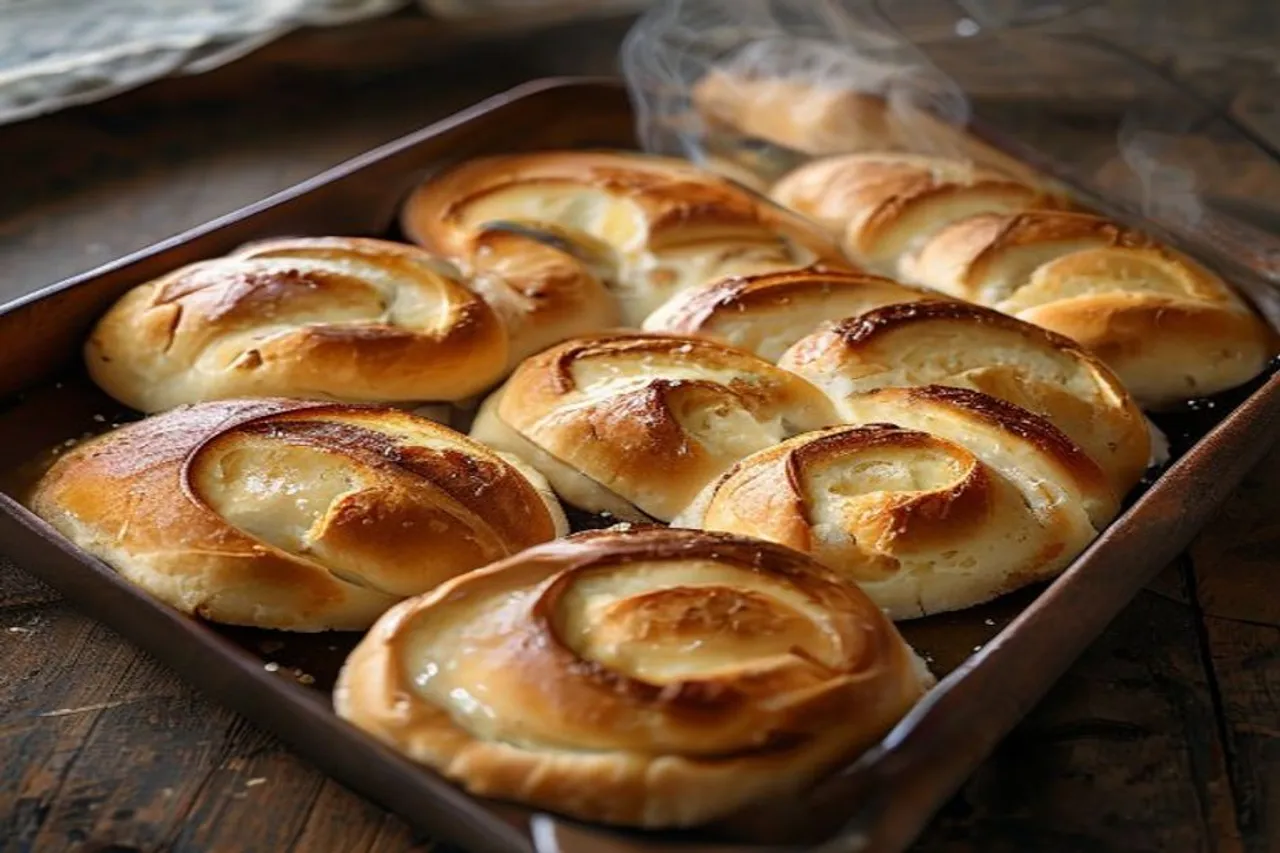
The Ultimate Milk Bread Rolls Recipe
Royal Nutritional Ledger *
For those counting their gold coins and their calories.
The Royal Disclaimer: These figures are calculated by our finest AI court scholars based on standard ingredient values. They are highly educated estimates meant for guidance, not gospel. If you require absolute scientific precision for medical or dietary salvation, please consult a certified physician rather than our kitchen AI!
Did You Know?
Historical Tidbit
Milk bread is universally known as shokupan in Japan and simply as ppang in Korea, serving as the quintessential everyday bread for families across generations.
First time here? Click the button above to automatically send all these ingredients to your highest-paying local grocery delivery app.
⚖️ The Modernizer
Missing extinct ingredients? Swap for accessible modern alternatives.
The Golden Rule
"Never overheat your tangzhong paste! Keep the heat at medium-low and whisk constantly; if it curdles or scorches, you must toss it out and start over, or your bread will taste like campfire smoke."
Ingredients
11 items required
Make Us Your Preferred Culinary Source
AI Emergency Hub
Hit a snag while prepping? Our elite AI tools are here to save your dish.
Missing an Ingredient?
Recipe Disaster?
Chef's Notes
Mastering the tangzhong method is your secret ticket to cloud-like textures. By pre-cooking a small portion of the flour and liquid, you trap starches and hold onto moisture, ensuring your rolls stay extraordinarily soft for days without losing their divine bounce.
Pro Tip
Do not rush the 10-minute stand mixer knead! High-gluten bread flour needs that friction to develop a robust gluten structure. If your dough looks like a sticky disaster at minute three, simply trust the process and let the machine do the heavy lifting.
Kitchen Catastrophe Warning
Beware the impatient baker who dumps boiling-hot tangzhong directly onto cold yeast, effectively creating a microscopic tragedy by cooking the living leaveners before they even touch the bowl.
The Jester's Corner
Royal Court Comedy
Our royal jester claims that calling store-bought dinner rolls 'homemade' just because you preheated the plastic packaging is a punishable offense in the castle courtyard.
The Culinary Science
The tangzhong technique relies on gelatinization. When flour and liquid are heated together, the starch granules swell and absorb the liquid completely, creating a starch-water matrix that locks in moisture during baking.
🏺 Explore More Royal Feasts
Lift the lid on these timeless delicacies
Make Us Your Preferred Culinary Source
Prioritize Ages & Spices in your Google Discover, Top Stories, and AI search feed with one tap.
🎭How does this recipe make you feel?
Tap a reaction to share your vibe
Starch Retrogradation Reversal
Storage Science
Store at room temperature in a breathable bread bag or paper wrapper for up to 2 days. DO NOT refrigerate, as the cold accelerates starch retrogradation (staling). For long-term storage, freeze tightly wrapped.
Reheating Science
To reverse staling, flick a few drops of water onto the crust and reheat in a 350°F (175°C) oven for 5-8 minutes. The steam will re-gelatinize the starches, making the crumb soft and the crust crisp.
Taster's Notes
Community Feedback
0 Comments
Be the first to leave a note on this recipe!