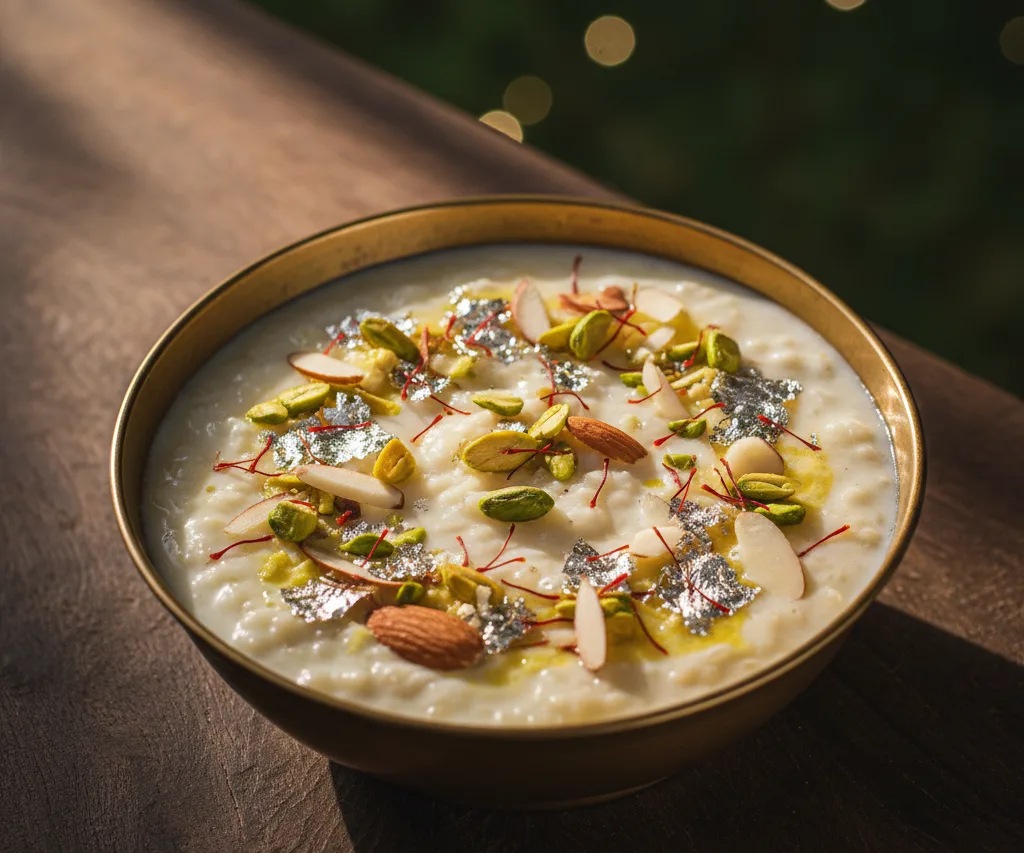
The Ultimate Moonlight Sharad Purnima Rice Kheer Recipe
Royal Nutritional Ledger *
For those counting their gold coins and their calories.
The Royal Disclaimer: These figures are calculated by our finest AI court scholars based on standard ingredient values. They are highly educated estimates meant for guidance, not gospel. If you require absolute scientific precision for medical or dietary salvation, please consult a certified physician rather than our kitchen AI!
Sharad Purnima & Kojagiri Master Food Guide
Did You Know?
Historical Tidbit
Sharad Purnima, also known as Kojagiri Purnima, is believed to be the only day in the year when the moon showers 'Amrit' (elixir of life) through its rays.
First time here? Click the button above to automatically send all these ingredients to your highest-paying local grocery delivery app.
⚖️ The Modernizer
Missing extinct ingredients? Swap for accessible modern alternatives.
The Golden Rule
"Never leave the Kheer unattended during the simmering and reduction phase; constant, gentle stirring from the bottom up is non-negotiable to prevent scorching and ensure a smooth, creamy texture."
Ingredients
17 items required
The Sacred Grains:
The Elixir of Life:
The Aromatic Ambrosia:
The Jewels & Nectar:
For the Moonlight Ritual:
Make Us Your Preferred Culinary Source
AI Emergency Hub
Hit a snag while prepping? Our elite AI tools are here to save your dish.
Missing an Ingredient?
Recipe Disaster?
Chef's Notes
The essence of this Moonlight Kheer lies in the patient, slow reduction of full-cream milk. This process concentrates the milk's natural sugars, leading to a richer flavor and a thicker, silkier texture without the need for excessive thickeners. The goal is a creamy, pourable consistency where the rice grains are soft and integrated, not separate or lumpy. The brass kadai facilitates even heat distribution and a subtle, traditional flavor profile. Resist the urge to rush; time is your most valuable ingredient here.
Pro Tip
1. **Preventing Scorching:** To prevent milk from sticking and burning at the bottom, use a heavy-bottomed pan, stir almost continuously, and keep the heat consistently low after the initial boil. A trick is to place a small, heat-proof saucer upside down at the bottom of the pan before adding milk; it helps circulate heat. 2. **Perfect Rice Integration:** For optimal creaminess, avoid over-washing the rice to retain some starch. Also, once the rice is added, use the back of your stirring spoon to gently mash some of the rice grains against the side of the pan as they soften. This releases more starch, contributing to the Kheer's luscious texture. 3. **Saffron Bloom & Aroma:** Always bloom your saffron in warm milk, not water, and allow it sufficient time (at least 15 minutes). This maximizes the release of its color and complex aroma compounds, ensuring a truly fragrant and visually appealing Kheer.
Kitchen Catastrophe Warning
The most common catastrophe is burnt milk or rice stuck to the bottom of the pan, imparting a bitter, smoky flavor. If this happens, immediately transfer the unburnt Kheer from the top into a fresh, clean pan, being careful not to scrape the burnt layer. Continue cooking in the new pan, but be aware that a faint smoky undertone might persist. Prevention is truly key here!
The Jester's Corner
Royal Court Comedy
My mother-in-law asked if I put the Kheer under the moonlight. I said, 'Of course! I even sang it a lullaby to absorb maximum lunar energy!'
The Culinary Science
The slow reduction of milk in this recipe exemplifies both **evaporation** and the **Maillard reaction**. As water evaporates, the milk solids, proteins, and sugars concentrate, intensifying flavor. Simultaneously, the sustained gentle heat promotes the Maillard reaction between amino acids and reducing sugars in the milk, contributing to the Kheer's deepening color, rich aroma, and complex, nutty-caramelized undertones, distinct from simple caramelization.
Featured in Master Menu Collections
Calibrated by culinary science for foolproof execution and maximum flavor.
Make Us Your Preferred Culinary Source
Prioritize Ages & Spices in your Google Discover, Top Stories, and AI search feed with one tap.
🎭How does this recipe make you feel?
Tap a reaction to share your vibe
Pastry & Confectionery Stabilization
Storage Science
Cakes and soft desserts should be wrapped tightly to prevent moisture loss and stored at room temperature (if no perishable fillings) or refrigerated. Consume within 3 days.
Reheating Science
Serve at room temperature for optimal flavor perception, as cold mutes sweetness. If it's a baked pastry, flash-heat in a 350°F (175°C) oven for 3-5 minutes to restore the butter matrix and crispness.
Taster's Notes
Community Feedback
0 Comments
Be the first to leave a note on this recipe!