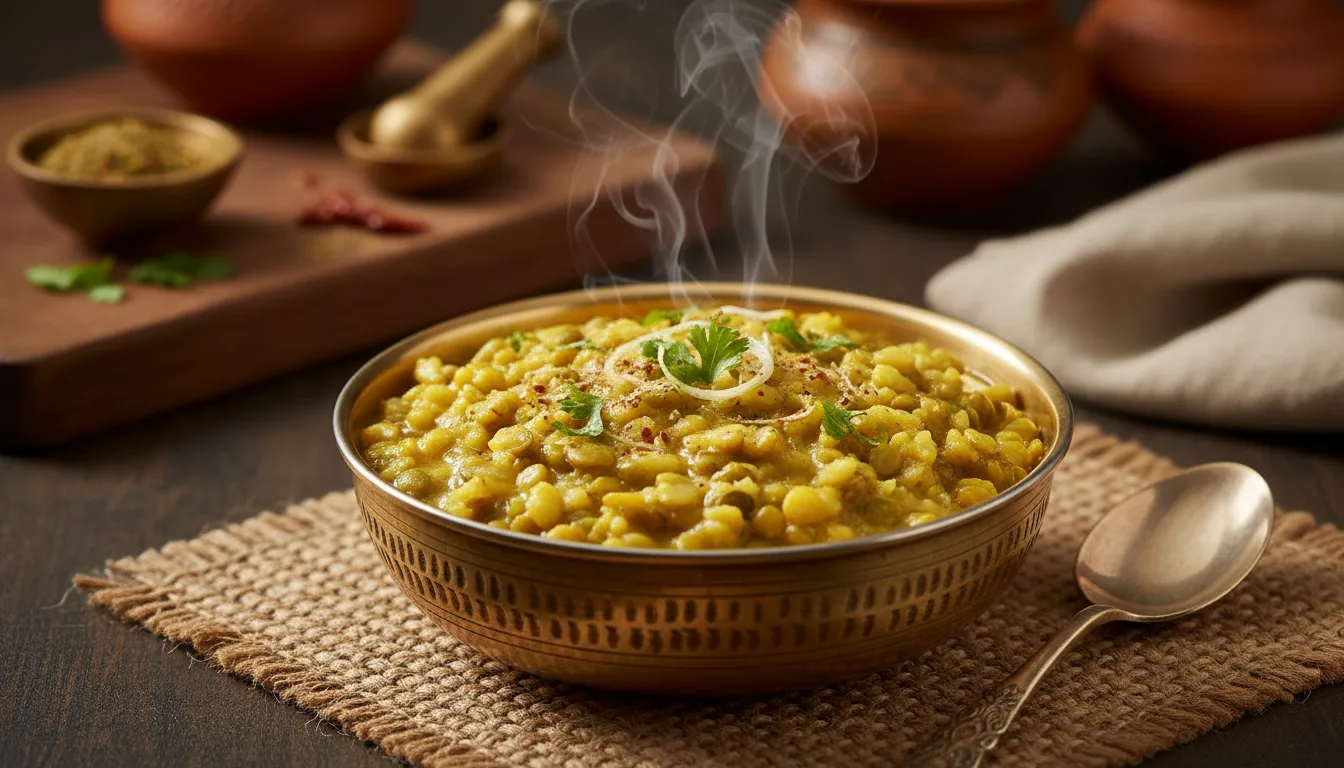
The Ultimate No-Onion No-Garlic Moong Dal Khichdi Recipe
Royal Nutritional Ledger *
For those counting their gold coins and their calories.
The Royal Disclaimer: These figures are calculated by our finest AI court scholars based on standard ingredient values. They are highly educated estimates meant for guidance, not gospel. If you require absolute scientific precision for medical or dietary salvation, please consult a certified physician rather than our kitchen AI!
Buddha Purnima & Mahavir Jayanti: Pure Ahimsa Satvik Feasts & No-Onion No-Garlic Heirlooms
Did You Know?
Historical Tidbit
Khichdi traces its lineage to the ancient Vedic preparation known as 'Krusara', documented in the Upanishads and Charaka Samhita as the premier tridoshic medicine that restores gut balance.
First time here? Click the button above to automatically send all these ingredients to your highest-paying local grocery delivery app.
⚖️ The Modernizer
Missing extinct ingredients? Swap for accessible modern alternatives.
The Golden Rule
"Maintain a strict 1:1 volume ratio of rice to split moong dal, use precisely 4 to 4.5 times total water by volume, and lock the lid immediately following the tadka pour to infuse the volatile spices."
Ingredients
22 items required
The Grain & Pulse Core:
The Sattvic Tempered Tadka (Vaghar):
The Royal Finishing Touch:
Make Us Your Preferred Culinary Source
AI Emergency Hub
Hit a snag while prepping? Our elite AI tools are here to save your dish.
Missing an Ingredient?
Recipe Disaster?
Chef's Notes
The primary blunder home cooks commit is adding chilled tap water to thin out thick khichdi after cooking. Doing so immediately shocks the ruptured starch granules, separating the water from the solids into a grainy, unappetizing sludge. Always use boiling water to adjust the final texture. Furthermore, verify that your asafoetida (hing) is pure or compounded exclusively with rice flour, as commercial budget varieties are heavily adulterated with wheat flour or garlic essence.
Pro Tip
For an exquisite nutty depth without compromising Sattvic tenets, dry-roast the split yellow moong dal in an ungreased pan over medium-low heat for 3 minutes until warm and fragrant before combining it with the rice. When executing the vaghar (tadka), keep your pot lid in your left hand while pouring the sputtering ghee with your right hand; clapping the lid down in under two seconds traps the delicate pinene and cuminaldehyde aromatic compounds that otherwise escape into the kitchen air.
Kitchen Catastrophe Warning
If your khichdi scorches at the base of the pressure cooker, DO NOT scrape the pan bottom under any circumstances! Immediately turn off the heat, lift the pan gently, and ladle out only the top 80% of unburned khichdi into a fresh, clean saucepan. To completely neutralize any latent acrid burnt odors, bloom an extra 0.5 tsp cumin seeds and a generous pinch of hing in 1 tbsp of hot ghee, pour it into the rescued grains, and fold in 2 tablespoons of warm milk or hot water.
The Jester's Corner
Royal Court Comedy
The royal physician once prescribed this khichdi to a gluttonous Nawab, who wept bitter tears upon discovering that inner spiritual peace tasted entirely of ghee and zero butter chicken.
The Culinary Science
During the cooking phase, rice amylose and moong dal globulins undergo complete hydrothermal gelatinization between 65°C and 85°C. When beaten with the wooden churner, mechanical shearing disperses liberated amylopectin and protein colloids into a uniform hydrophilic sol. The final addition of hot A2 ghee introduces long-chain saturated fatty acids that form amylose-lipid inclusion complexes; this biophysical reaction slows enzymatic retrogradation and reduces the postprandial glycemic spike.
Featured in Master Menu Collections
Calibrated by culinary science for foolproof execution and maximum flavor.
Make Us Your Preferred Culinary Source
Prioritize Ages & Spices in your Google Discover, Top Stories, and AI search feed with one tap.
🎭How does this recipe make you feel?
Tap a reaction to share your vibe
General Food Safety & Storage
Storage Science
Cool rapidly. Store in an airtight container in the refrigerator (below 4°C / 40°F). Consume within 3-4 days.
Reheating Science
Reheat to an internal temperature of 165°F (74°C). Use the stove or oven for best texture, stirring or turning occasionally to ensure even heating.



Taster's Notes
Community Feedback
0 Comments
Be the first to leave a note on this recipe!