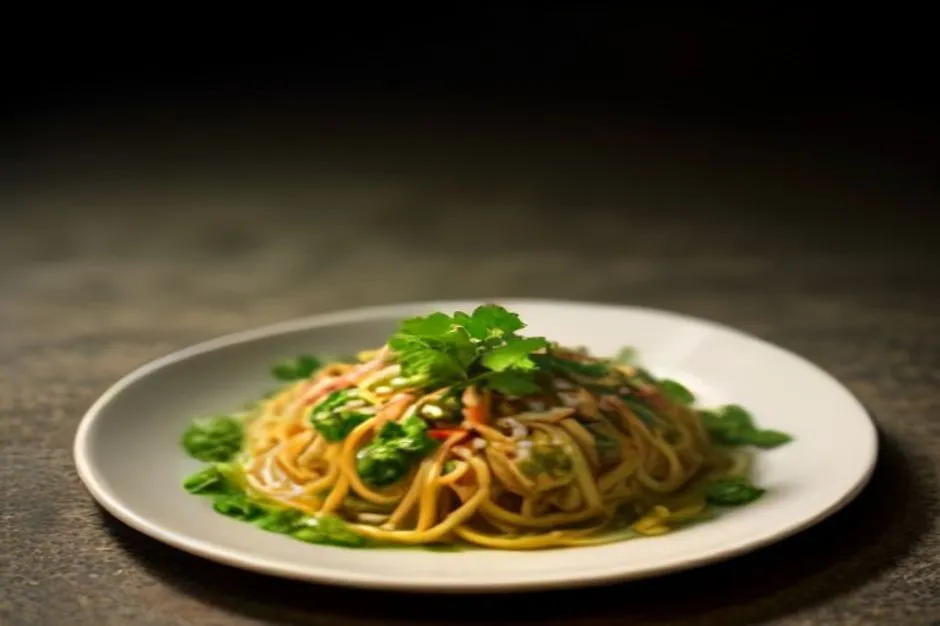
The Ultimate Provencal Japchae Recipe
Royal Nutritional Ledger *
For those counting their gold coins and their calories.
The Royal Disclaimer: These figures are calculated by our finest AI court scholars based on standard ingredient values. They are highly educated estimates meant for guidance, not gospel. If you require absolute scientific precision for medical or dietary salvation, please consult a certified physician rather than our kitchen AI!
Part of our Auto-Drip Master Index
Did You Know?
Historical Tidbit
Japchae originally contained zero noodles and was served strictly as a royal court vegetable dish in 17th-century Korea.
First time here? Click the button above to automatically send all these ingredients to your highest-paying local grocery delivery app.
⚖️ The Modernizer
Missing extinct ingredients? Swap for accessible modern alternatives.
The Golden Rule
"Never let the sesame oil touch direct high heat for too long, or you will burn away its delicate nutty soul."
Ingredients
11 items required
Make Us Your Preferred Culinary Source
AI Emergency Hub
Hit a snag while prepping? Our elite AI tools are here to save your dish.
Missing an Ingredient?
Recipe Disaster?
Chef's Notes
Treat the glass noodles with respect; overboil them and you will end up with architectural despair instead of a bouncy texture.
Pro Tip
Snip the noodles with kitchen shears before tossing if you prefer a polite bite-sized experience rather than a slurping marathon.
Kitchen Catastrophe Warning
Beware of turning your noodles into an unholy, gluey clump by skipping the cold water rinse, effectively gluing your pan to the countertop for eternity.
The Jester's Corner
Royal Court Comedy
Why did the glass noodle go to therapy? Because it had deep-seated issues with being too transparent under pressure.
The Culinary Science
Starch retrogradation occurs when cooked glass noodles cool down, creating that signature springy texture beloved in East Asian banquets.
Make Us Your Preferred Culinary Source
Prioritize Ages & Spices in your Google Discover, Top Stories, and AI search feed with one tap.
🎭How does this recipe make you feel?
Tap a reaction to share your vibe
General Food Safety & Storage
Storage Science
Cool rapidly. Store in an airtight container in the refrigerator (below 4°C / 40°F). Consume within 3-4 days.
Reheating Science
Reheat to an internal temperature of 165°F (74°C). Use the stove or oven for best texture, stirring or turning occasionally to ensure even heating.
Taster's Notes
Community Feedback
0 Comments
Be the first to leave a note on this recipe!