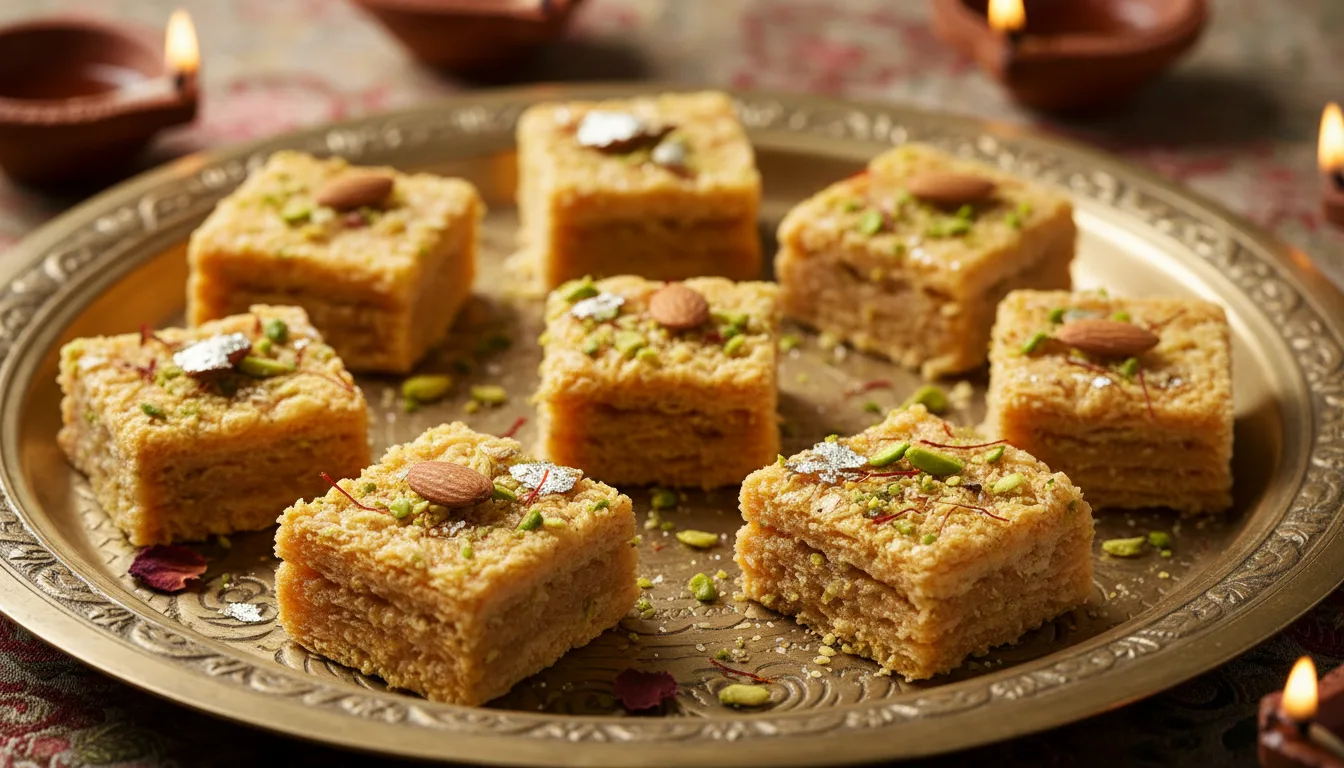
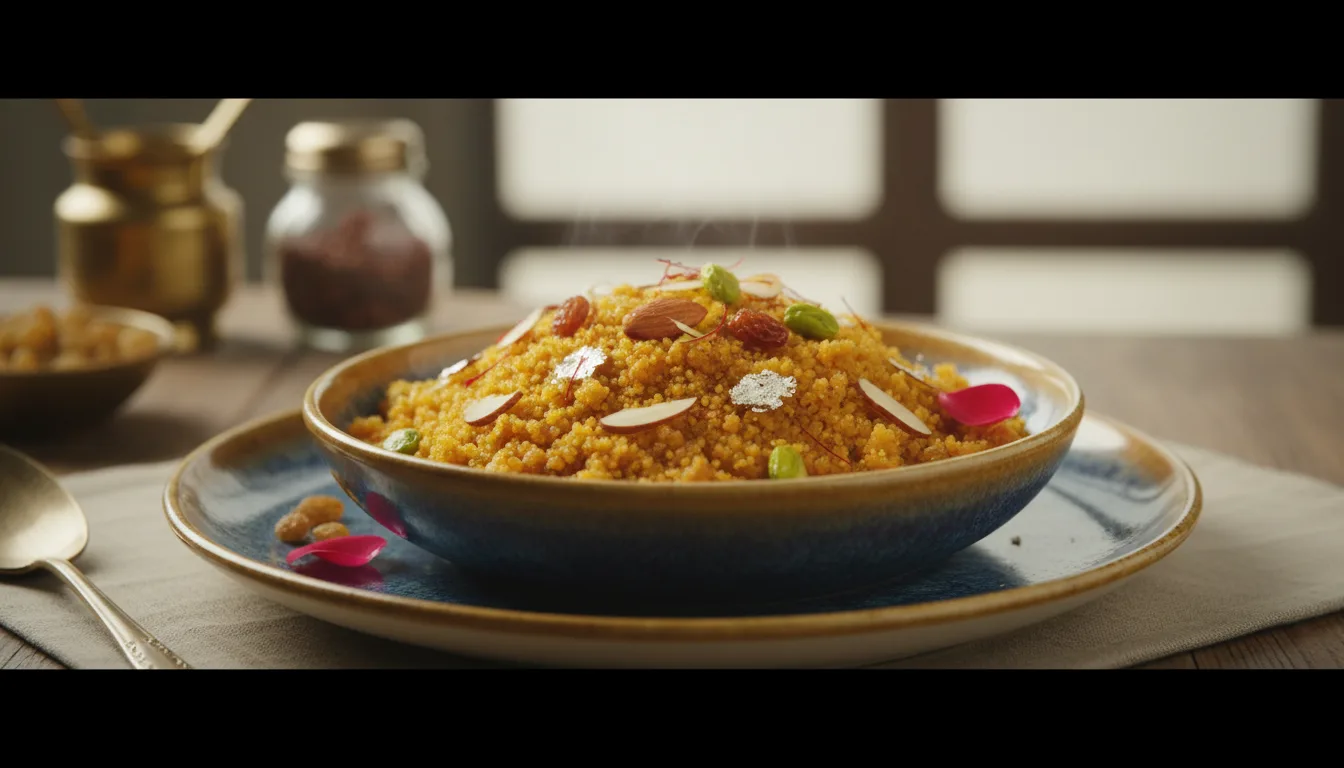
The Ultimate Singhara Halwa Recipe
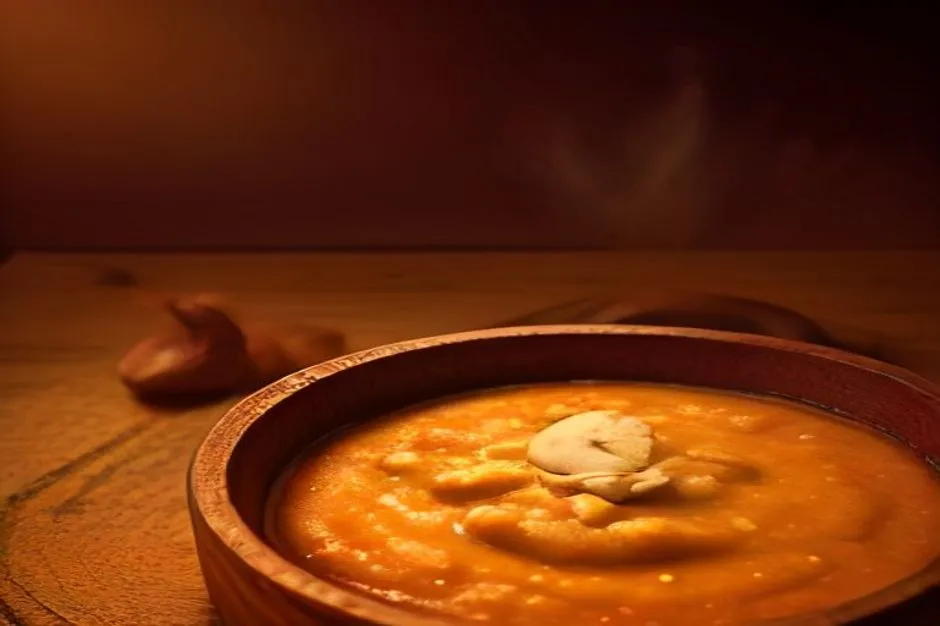
Royal Nutritional Ledger *
For those counting their gold coins and their calories.
The Royal Disclaimer: These figures are calculated by our finest AI court scholars based on standard ingredient values. They are highly educated estimates meant for guidance, not gospel. If you require absolute scientific precision for medical or dietary salvation, please consult a certified physician rather than our kitchen AI!
Part of our Indian Desserts and Sweets (Mithai) Master Index
Did You Know?
Historical Tidbit
Water chestnut flour is made from dried ground corms of the Trapa natans plant, which float on water like lily pads!
First time here? Click the button above to automatically send all these ingredients to your highest-paying local grocery delivery app.
⚖️ The Modernizer
Missing extinct ingredients? Swap for accessible modern alternatives.
The Golden Rule
"Never rush the roasting process; the nutty aroma is your guiding light."
Ingredients
7 items required
Make Us Your Preferred Culinary Source
AI Emergency Hub
Hit a snag while prepping? Our elite AI tools are here to save your dish.
Missing an Ingredient?
Recipe Disaster?
Chef's Notes
Do not walk away from the pan while roasting the flour! Water chestnut flour goes from perfectly golden to charred charcoal faster than royal gossip travels.
Pro Tip
Always warm your sugar syrup before adding it to the flour. Adding cold water to hot roasted flour creates an epic, lumpy disaster.
Kitchen Catastrophe Warning
Dropping the entire jar of cardamom powder into the halwa, turning your delicate dessert into a pungent spice potion that tastes like an old perfume bottle.
The Jester's Corner
Royal Court Comedy
Why did the water chestnut bring a life jacket to the kitchen? Because it wanted to stay afloat in the halwa!
The Culinary Science
Water chestnut flour is naturally gluten-free and packed with starches that gelatinize rapidly when heated with water and fat, creating that signature glossy halwa texture.
Make Us Your Preferred Culinary Source
Prioritize Ages & Spices in your Google Discover, Top Stories, and AI search feed with one tap.
🎭How does this recipe make you feel?
Tap a reaction to share your vibe
Pastry & Confectionery Stabilization
Storage Science
Cakes and soft desserts should be wrapped tightly to prevent moisture loss and stored at room temperature (if no perishable fillings) or refrigerated. Consume within 3 days.
Reheating Science
Serve at room temperature for optimal flavor perception, as cold mutes sweetness. If it's a baked pastry, flash-heat in a 350°F (175°C) oven for 3-5 minutes to restore the butter matrix and crispness.
Taster's Notes
Community Feedback
0 Comments
Be the first to leave a note on this recipe!