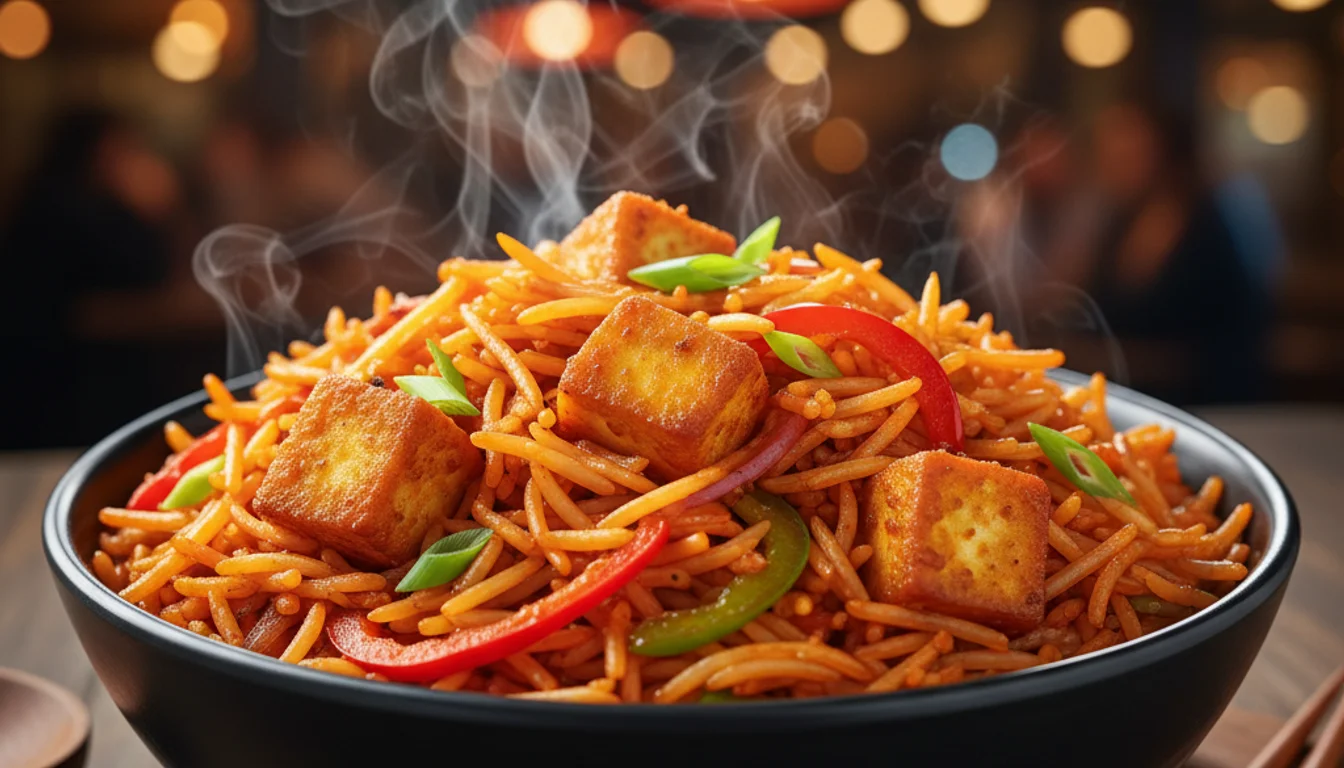
The Ultimate Spicy Paneer Schezwan Rice Recipe
Royal Nutritional Ledger *
For those counting their gold coins and their calories.
The Royal Disclaimer: These figures are calculated by our finest AI court scholars based on standard ingredient values. They are highly educated estimates meant for guidance, not gospel. If you require absolute scientific precision for medical or dietary salvation, please consult a certified physician rather than our kitchen AI!
The Viral Kitchen Phenomenon: Internet-Famous Recipes Mastered by Science
Did You Know?
Historical Tidbit
Schezwan fried rice was created in Mumbai's Chinatown in Tangra and popularized by street carts in the 1980s. Indian chefs combined Chinese stir-frying with local garlic-and-Kashmiri-chilli paste, giving birth to a unique culinary genre that exists nowhere in China, but is worshipped across India.
First time here? Click the button above to automatically send all these ingredients to your highest-paying local grocery delivery app.
⚖️ The Modernizer
Missing extinct ingredients? Swap for accessible modern alternatives.
The Golden Rule
"Use cold refrigerated rice and toss on maximum heat in a smoking-hot wok to lock in Wok Hei."
Ingredients
28 items required
The Chilled Fried Rice Grain:
The Crispy Paneer Cubes:
The Street Wok Aromatics:
The Crunchy Street Vegetables:
The Fiery Schezwan Sauce Matrix:
Make Us Your Preferred Culinary Source
AI Emergency Hub
Hit a snag while prepping? Our elite AI tools are here to save your dish.
Missing an Ingredient?
Recipe Disaster?
Chef's Notes
**The Cold Day-Old Rice Rule (Retrogradation)**: Never make fried rice with freshly boiled warm rice; the moisture on the surface will turn your stir-fry into mushy porridge. Cook rice the night before, spread it on a tray to steam off, and chill in the fridge. Chilling crystallizes the starch (*retrogradation*), ensuring individual grains stay distinct, firm, and chewable during high-heat tossing. **The Wok Well Technique**: Pouring soy sauce and Schezwan sauce directly onto cold rice makes it soggy. Pouring the sauces into the bare, red-hot center of the wok causes sugars to flash-caramelize, generating that authentic smoky Chinese restaurant flavor (*Wok Hei*) before it touches the rice.
Pro Tip
1. **High Flame Always**: Indo-Chinese cooking relies entirely on rapid high heat; do not lower the flame once stir-frying begins. 2. **Small Batches**: If doubling the recipe, cook in two separate batches; overloading the wok drops the temperature and causes vegetables to steam rather than fry. 3. **Schezwan Heat Level**: Adjust heat by adding 1 extra teaspoon of dry red chilli flakes or a dash of Sichuan pepper oil for real numbing tingling heat!
Kitchen Catastrophe Warning
**Disaster — The Rice Clumped Together into Soggy Red Paste**: The rice was too warm/wet or the wok wasn't hot enough. **The Rescue**: Immediately spread the rice out in a thin layer across the bottom and sides of the wok. Leave untouched on high heat for 60 seconds so the intense heat evaporates surface moisture, then toss again briskly.
The Jester's Corner
Royal Court Comedy
If your fried rice doesn't produce enough sizzle to make you feel like a street-cart maestro with a fire extinguisher nearby, you aren't cooking on high enough heat. Cold leftover rice sitting in your fridge isn't an inconvenience; it's the culinary foundation for a 10-minute masterpiece. Our Royal Chef notes that the sound of a wok spatula clattering against iron at maximum flame is the sweetest symphony known to humanity.
The Culinary Science
**Starch Retrogradation & Wok Hei Pyrolysis**: Chilling cooked rice at 4°C promotes *amylose retrogradation*, where starch chains align into tightly packed crystalline structures with reduced water absorption capacity. When tossed in a wok exceeding 220°C, microscopic oil droplets aerosolize (*pyrolysis*), vaporizing instantly. This vapor deposits aromatic smoky hydrocarbons across the firm retrograded grains without softening them, producing that unmistakable restaurant *Wok Hei* signature.
Featured in Master Menu Collections
Calibrated by culinary science for foolproof execution and maximum flavor.
🏺 Explore More Royal Feasts
Lift the lid on these timeless delicacies
Make Us Your Preferred Culinary Source
Prioritize Ages & Spices in your Google Discover, Top Stories, and AI search feed with one tap.
🎭How does this recipe make you feel?
Tap a reaction to share your vibe
General Food Safety & Storage
Storage Science
Cool rapidly. Store in an airtight container in the refrigerator (below 4°C / 40°F). Consume within 3-4 days.
Reheating Science
Reheat to an internal temperature of 165°F (74°C). Use the stove or oven for best texture, stirring or turning occasionally to ensure even heating.
Taster's Notes
Community Feedback
0 Comments
Be the first to leave a note on this recipe!