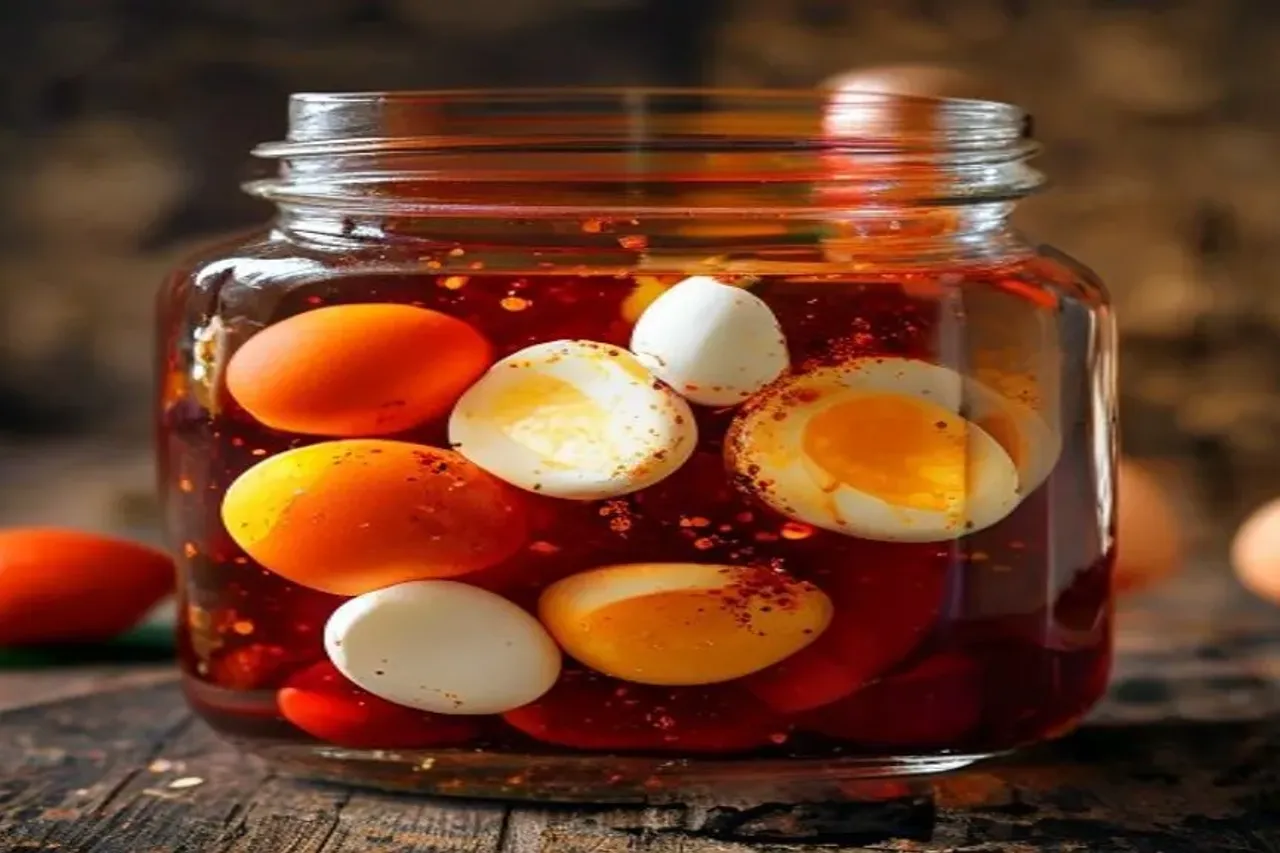
The Ultimate Sriracha Pickled Eggs Recipe
Royal Nutritional Ledger *
For those counting their gold coins and their calories.
The Royal Disclaimer: These figures are calculated by our finest AI court scholars based on standard ingredient values. They are highly educated estimates meant for guidance, not gospel. If you require absolute scientific precision for medical or dietary salvation, please consult a certified physician rather than our kitchen AI!
Did You Know?
Historical Tidbit
Pickling eggs became a popular method in the 19th century as a way to preserve excess protein from backyard flocks during the peak laying season.
First time here? Click the button above to automatically send all these ingredients to your highest-paying local grocery delivery app.
⚖️ The Modernizer
Missing extinct ingredients? Swap for accessible modern alternatives.
The Golden Rule
"Always completely submerge every single egg in the brine, or face the wrath of pale, unpickled spots."
Ingredients
6 items required
Make Us Your Preferred Culinary Source
AI Emergency Hub
Hit a snag while prepping? Our elite AI tools are here to save your dish.
Missing an Ingredient?
Recipe Disaster?
Chef's Notes
Do not rush the cooling of your brine, lest you create a rubbery tragedy of overcooked protein before the curing even begins.
Pro Tip
Use slightly older eggs for boiling so they peel smoothly without tearing their delicate whites apart.
Kitchen Catastrophe Warning
Dropping boiling hot brine straight onto a freezing cold glass jar, turning your kitchen counter into a slippery battlefield of shattered glass and spicy tears.
The Jester's Corner
Royal Court Comedy
Why did the egg go to the doctor? It was feeling a little 'pickled' after hanging out with the Sriracha for two days!
The Culinary Science
The acetic acid in vinegar lowers the pH of the egg surface, denaturing proteins and allowing spicy capsaicin compounds to penetrate deep into the white.
Make Us Your Preferred Culinary Source
Prioritize Ages & Spices in your Google Discover, Top Stories, and AI search feed with one tap.
🎭How does this recipe make you feel?
Tap a reaction to share your vibe
General Food Safety & Storage
Storage Science
Cool rapidly. Store in an airtight container in the refrigerator (below 4°C / 40°F). Consume within 3-4 days.
Reheating Science
Reheat to an internal temperature of 165°F (74°C). Use the stove or oven for best texture, stirring or turning occasionally to ensure even heating.
Taster's Notes
Community Feedback
0 Comments
Be the first to leave a note on this recipe!