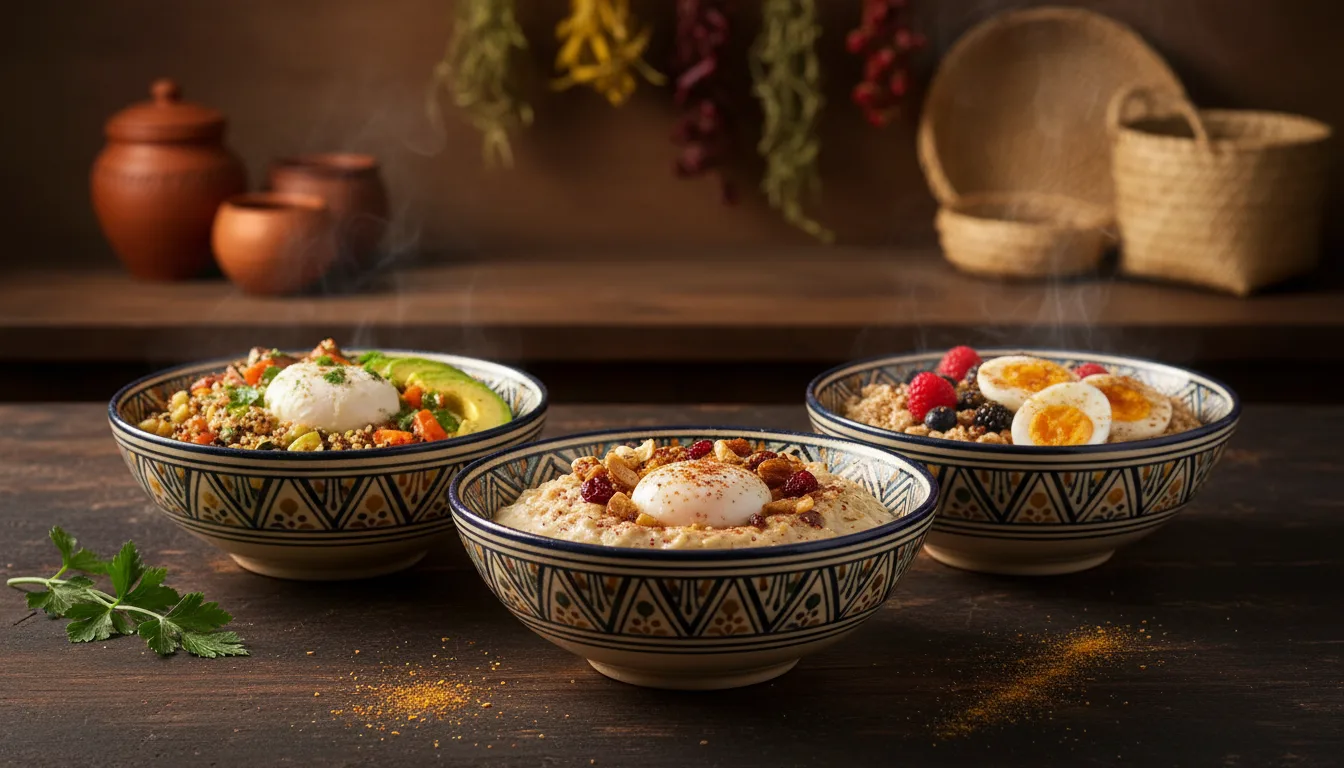
The Ultimate Suhoor Make-Ahead Oats, Eggs and Grain Bowls Recipe
Royal Nutritional Ledger *
For those counting their gold coins and their calories.
The Royal Disclaimer: These figures are calculated by our finest AI court scholars based on standard ingredient values. They are highly educated estimates meant for guidance, not gospel. If you require absolute scientific precision for medical or dietary salvation, please consult a certified physician rather than our kitchen AI!
The Grand Ramadan & Iftar Feast: Slow-Simmered Haleem, Make-Ahead Suhoor & Golden Crisp Samosas
Did You Know?
Historical Tidbit
Steel-cut oats and ancient grains like farro were primary staples of pre-dawn meals during early trade expeditions across the Silk Road because their complex amylose starches sustained cellular energy for up to 16 hours.
First time here? Click the button above to automatically send all these ingredients to your highest-paying local grocery delivery app.
⚖️ The Modernizer
Missing extinct ingredients? Swap for accessible modern alternatives.
The Golden Rule
"Never mix hot grains with the cold dairy or raw vegetables; each element must be chilled to refrigerator temperature (4°C / 39°F) before assembly to prevent condensation, bacterial growth, and structural collapse."
Ingredients
26 items required
The Slow-Release Ancient Grain & Oats Base:
The Jammy Spiced Marinated Eggs:
The Hydrating Labneh & Fat Binder:
The High-Satiety Crunch & Fresh Finishing Elements:
Make Us Your Preferred Culinary Source
AI Emergency Hub
Hit a snag while prepping? Our elite AI tools are here to save your dish.
Missing an Ingredient?
Recipe Disaster?
Chef's Notes
The primary downfall of Suhoor make-ahead bowls is sogginess and high-sodium thirst-traps. Never dress the grains with wet dressings ahead of time; keep the labneh and cucumbers compartmentalized. More crucially, keep added salt strictly moderate: rely on garlic, za'atar, and umami-rich tamari for flavor depth rather than table salt, or you will experience dehydrating osmotic thirst by midday.
Pro Tip
Cool your cooked grains completely on a flat sheet pan before transferring them into meal-prep containers. This rapid temperature reduction triggers starch retrogradation—crystallizing amylose molecules—which not only preserves their firm toothsome chew over 4 days of storage, but also fundamentally lowers the glycemic index of the grain base.
Kitchen Catastrophe Warning
If your grains turn into a wet, sticky mush from over-hydration, do not discard them! Spread the grain porridge onto a parchment-lined baking tray and bake at 160°C / 320°F for 10 to 12 minutes to evaporate excess moisture and re-crisp the exterior into toasted grain clusters that provide texture rather than paste.
The Jester's Corner
Royal Court Comedy
Waking up at 4:15 AM to cook an intricate breakfast is a delusion; real royalty meal-preps their grains on Sunday so they can consume Michelin-grade sustenance while practically asleep.
The Culinary Science
When eggs are boiled for precisely 6 minutes and 30 seconds and rapidly iced, the yolk proteins (primarily lipovitellin and phosvitin) denature only partially, coagulating into a viscous, gelled sol-phase rather than a dry, cross-linked rigid gel network. Simultaneously, beta-glucan soluble fibers from the steel-cut oats expand in the digestive tract, forming a gel layer that delays gastric emptying and activates satiety hormones GLP-1 and PYY throughout the fasting day.
Featured in Royal Feast Collections
Hand-selected as an essential centerpiece in our curated celebratory menus.
Make Us Your Preferred Culinary Source
Prioritize Ages & Spices in your Google Discover, Top Stories, and AI search feed with one tap.
🎭How does this recipe make you feel?
Tap a reaction to share your vibe
General Food Safety & Storage
Storage Science
Cool rapidly. Store in an airtight container in the refrigerator (below 4°C / 40°F). Consume within 3-4 days.
Reheating Science
Reheat to an internal temperature of 165°F (74°C). Use the stove or oven for best texture, stirring or turning occasionally to ensure even heating.
Taster's Notes
Community Feedback
0 Comments
Be the first to leave a note on this recipe!