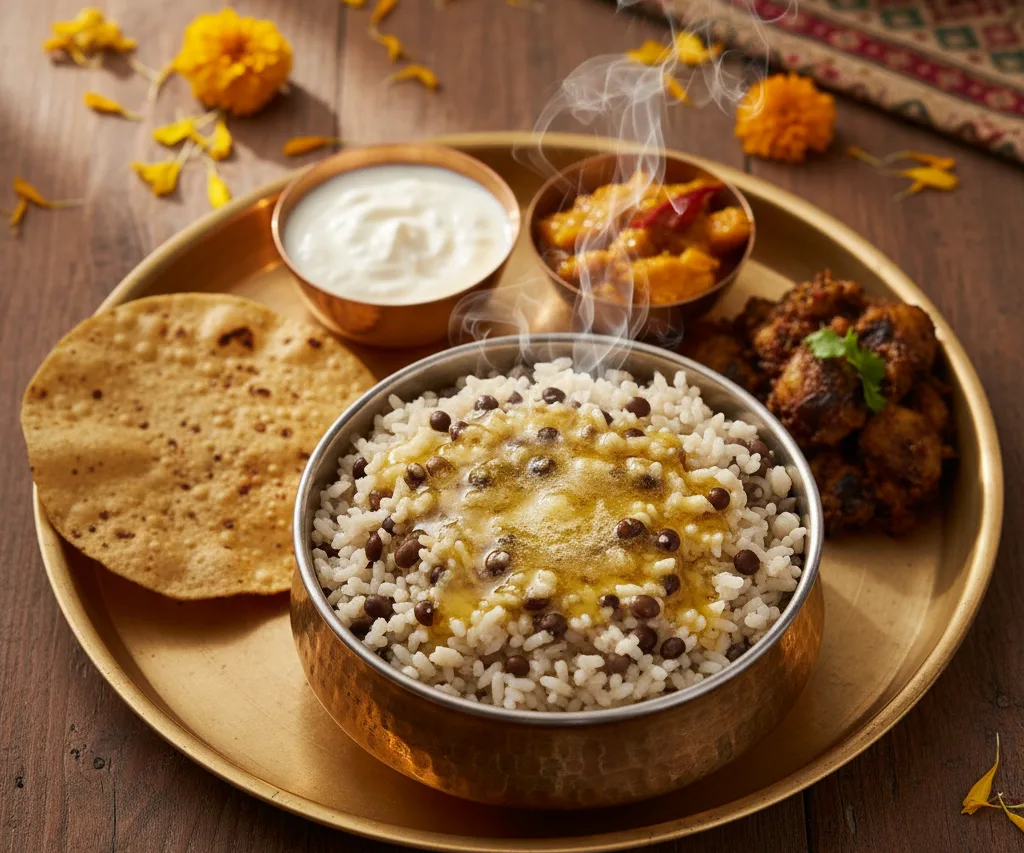
The Ultimate Traditional Makar Sankranti Urad Dal Khichdi Recipe (With Chaar Yaar)
Royal Nutritional Ledger *
For those counting their gold coins and their calories.
The Royal Disclaimer: These figures are calculated by our finest AI court scholars based on standard ingredient values. They are highly educated estimates meant for guidance, not gospel. If you require absolute scientific precision for medical or dietary salvation, please consult a certified physician rather than our kitchen AI!
Part of our Festive Main Course Master Index
Did You Know?
Historical Tidbit
Makar Sankranti is the only Hindu festival celebrated according to the solar calendar, marking the sun's transit into Capricorn (Makara), signifying the end of winter and the beginning of longer days.
First time here? Click the button above to automatically send all these ingredients to your highest-paying local grocery delivery app.
⚖️ The Modernizer
Missing extinct ingredients? Swap for accessible modern alternatives.
The Golden Rule
"The non-negotiable golden rule for this Makar Sankranti Urad Dal Khichdi is the **perfection of the tempering (tadka)**; it must be executed with fresh, high-quality desi cow ghee and bloomed spices, as it is the soul that elevates simple grains and legumes into a divine festive offering."
Ingredients
21 items required
The Sacred Grains & Legumes:
Aromatic Foundations:
The Tempering (Tadka) Symphony:
The Sacred 'Chaar Yaar' Accompaniments:
Make Us Your Preferred Culinary Source
AI Emergency Hub
Hit a snag while prepping? Our elite AI tools are here to save your dish.
Missing an Ingredient?
Recipe Disaster?
Chef's Notes
The essence of a perfect Urad Dal Khichdi lies in its texture – it must be creamy and comforting, yet each grain of rice and dal should retain its individual integrity, never becoming a homogenous mush. The key is the precise water-to-grain ratio and allowing the pressure to release naturally, which gently steams the khichdi to perfection. The final tempering, bloomed in pure desi ghee, is not just for flavor but also for the visual appeal and the intoxicating aroma that defines this festive dish. Balance is paramount: the earthiness of urad dal, the subtle sweetness of Govindobhog rice, and the sharp notes of ginger and chili, all harmonized by the warmth of ghee and cumin.
Pro Tip
1. **The Perfect Consistency:** For that ideal creamy-but-not-mushy texture, ensure your rice and dal are soaked adequately. The 2:1 water-to-grain ratio (after soaking) in the pressure cooker is crucial. If it appears too thick after resting, gently stir in a splash of hot water, one tablespoon at a time, until desired consistency is reached.|||2. **Blooming the Spices:** Never rush the tempering. Allow the cumin seeds to fully bloom and turn golden in the hot ghee before adding hing, ginger, and chilies. This sequential addition ensures each spice releases its full aromatic potential without burning, creating layers of flavor.|||3. **The Resting Period:** After mixing in the tempering, cover the khichdi and let it rest for 5-10 minutes. This crucial step allows the flavors from the tadka to infuse deeply into the khichdi, making it more aromatic and cohesive, and also allows the grains to fully absorb any remaining moisture, resulting in a perfectly fluffy texture.
Kitchen Catastrophe Warning
The most common kitchen catastrophe with khichdi is it turning into an overcooked, watery, or overly mushy paste, losing all grain definition. If your khichdi turns out too mushy, don't despair! You can salvage it by gently spreading it on a wide, non-stick pan over very low heat for a few minutes, allowing some excess moisture to evaporate. To counteract the texture, serve it with extra crispy elements like more roasted papad or fried onions, and a generous dollop of thick dahi, which will add textural contrast and freshness.
The Jester's Corner
Royal Court Comedy
My mother-in-law makes khichdi so good, even my diet plan takes a 'Sankranti break' just to honor it. It's less a dish, more a spiritual experience (and a caloric one!).
The Culinary Science
The cooking of khichdi involves the fascinating process of **starch gelatinization** in both rice and dal. When heated in the presence of water, the starch granules absorb water, swell, and eventually rupture, releasing amylose and amylopectin, which creates the characteristic creamy and viscous texture. Simultaneously, the proteins in the urad dal undergo **denaturation**, making them more digestible. The aromatic compounds in cumin, ginger, and hing are fat-soluble, and blooming them in ghee allows these compounds to dissolve and distribute evenly, enhancing their bioavailability and flavor perception through **flavor extraction** into the cooking medium.
Explore Curated Feast Collections
Discover 90+ themed festive banquets, seasonal menus, and imperial regional feasts.
Make Us Your Preferred Culinary Source
Prioritize Ages & Spices in your Google Discover, Top Stories, and AI search feed with one tap.
🎭How does this recipe make you feel?
Tap a reaction to share your vibe
General Food Safety & Storage
Storage Science
Cool rapidly. Store in an airtight container in the refrigerator (below 4°C / 40°F). Consume within 3-4 days.
Reheating Science
Reheat to an internal temperature of 165°F (74°C). Use the stove or oven for best texture, stirring or turning occasionally to ensure even heating.
Taster's Notes
Community Feedback
0 Comments
Be the first to leave a note on this recipe!