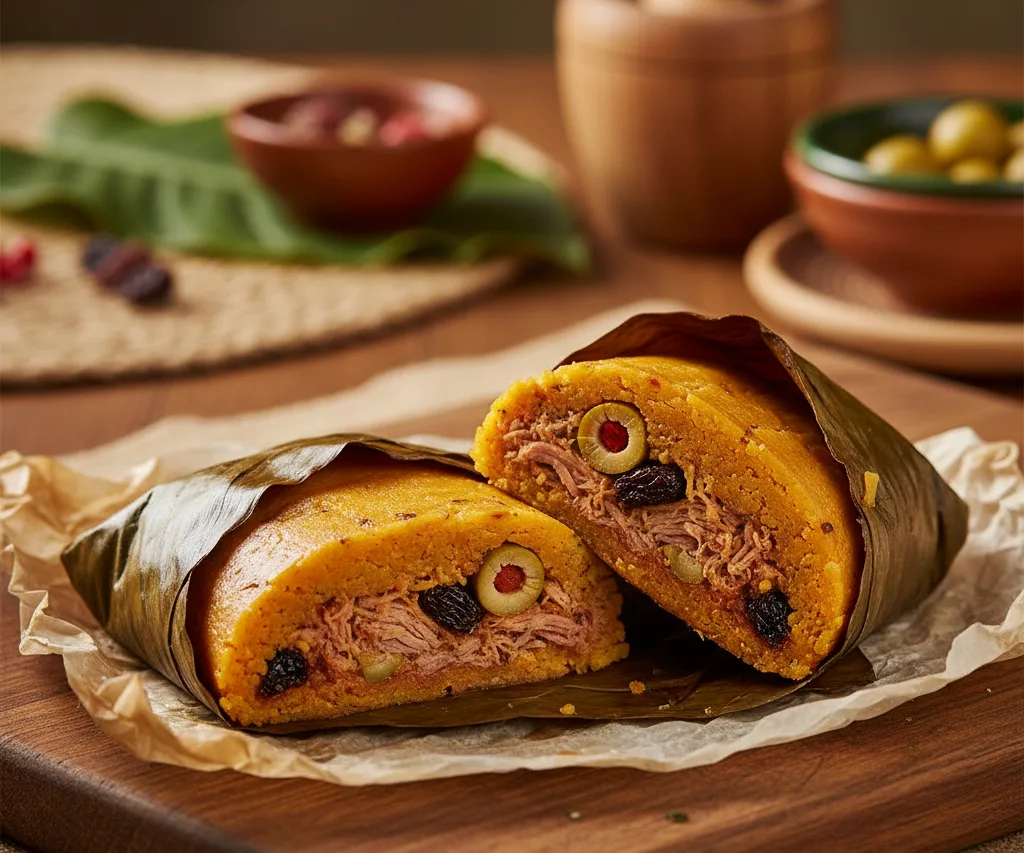
The Ultimate Traditional Puerto Rican Pasteles Recipe
Royal Nutritional Ledger *
For those counting their gold coins and their calories.
The Royal Disclaimer: These figures are calculated by our finest AI court scholars based on standard ingredient values. They are highly educated estimates meant for guidance, not gospel. If you require absolute scientific precision for medical or dietary salvation, please consult a certified physician rather than our kitchen AI!
Three Kings Day & Epiphany Master Food Guide: Roscón, Rosca & Regional Feasts
Did You Know?
Historical Tidbit
Pasteles are a labor of love, often prepared communally by families during the holiday season, a tradition known as 'pasteladas.'
First time here? Click the button above to automatically send all these ingredients to your highest-paying local grocery delivery app.
⚖️ The Modernizer
Missing extinct ingredients? Swap for accessible modern alternatives.
The Golden Rule
"The Golden Rule of Pasteles is the airtight seal of the wrapper. Any breach in the banana leaf or parchment paper will allow the masa to seep out into the boiling water, resulting in a disintegrated pastel and a diluted, starchy cooking liquid. A tightly wrapped, securely tied pastel ensures the masa cooks perfectly within its own flavorful confines, preserving its shape and succulence."
Ingredients
26 items required
The Sacred Dough (Masa):
The Savory Filling (Guineo Relleno):
The Wrapping & Assembly:
Make Us Your Preferred Culinary Source
AI Emergency Hub
Hit a snag while prepping? Our elite AI tools are here to save your dish.
Missing an Ingredient?
Recipe Disaster?
Chef's Notes
The heart of a perfect pastel lies in the masa's consistency and the filling's flavor balance. The masa must be smooth, cohesive, and just wet enough to spread without being watery, allowing it to cook evenly and achieve that signature silky texture. The achiote oil is not just for color; it imparts a subtle, earthy flavor and helps keep the masa moist. For the filling, ensure the pork is tender and the sauce is rich and slightly reduced, as this concentrated flavor will shine through the masa. The ratio of masa to filling is crucial; too much masa can be bland, too little filling leaves you wanting more. Aim for a generous but manageable portion of filling encased in a thin, flavorful masa shell. The wrapping technique, though seemingly complex, ensures the pastel holds its shape and steams perfectly within its protective layers.
Pro Tip
1. Masa Consistency Check: To test your masa, take a small spoonful and drop it into a cup of cold water. If it dissolves, it's too thin; add a little finely grated yautía or green plantain. If it stays together, it's perfect. ||| 2. Banana Leaf Preparation: If using fresh banana leaves, pass them quickly over an open flame or dip them in hot water until they become pliable. This makes them easier to fold and prevents cracking. ||| 3. Freezing for Future Feasts: Pasteles freeze beautifully uncooked. Once wrapped and tied, place them in freezer bags, removing as much air as possible. They can be stored for several months and cooked directly from frozen, adding about 30-45 minutes to the boiling time.
Kitchen Catastrophe Warning
The most common catastrophe is pasteles disintegrating in the pot. This usually happens due to a masa that is too wet or wrappers that are not sealed properly. If you notice a pastel breaking apart, immediately remove it. For the remaining uncooked pasteles, you can try to add a tablespoon of cornstarch (mixed with a little water) to the masa if it feels too loose, or re-wrap any suspect parcels more tightly. For the disintegrated pastel, all is not lost! The cooked filling can be salvaged and served over rice, and any masa that is still somewhat intact can be served as a side, though it won't have the traditional shape.
The Jester's Corner
Royal Court Comedy
Why did the pastel go to therapy? Because it had too many unresolved layers!
The Culinary Science
The transformation of pasteles during boiling is a prime example of starch gelatinization. The masa, primarily composed of the starches from green plantains, green bananas, and yautía, undergoes a physical change when heated in water. The starch granules absorb water, swell, and burst, forming a viscous gel. This process is responsible for the masa's characteristic smooth, tender, and slightly chewy texture. The achiote oil, being fat-soluble, helps to lubricate these starch granules, contributing to the masa's silky mouthfeel and preventing excessive stickiness.
Make Us Your Preferred Culinary Source
Prioritize Ages & Spices in your Google Discover, Top Stories, and AI search feed with one tap.
🎭How does this recipe make you feel?
Tap a reaction to share your vibe
General Food Safety & Storage
Storage Science
Cool rapidly. Store in an airtight container in the refrigerator (below 4°C / 40°F). Consume within 3-4 days.
Reheating Science
Reheat to an internal temperature of 165°F (74°C). Use the stove or oven for best texture, stirring or turning occasionally to ensure even heating.
Taster's Notes
Community Feedback
0 Comments
Be the first to leave a note on this recipe!