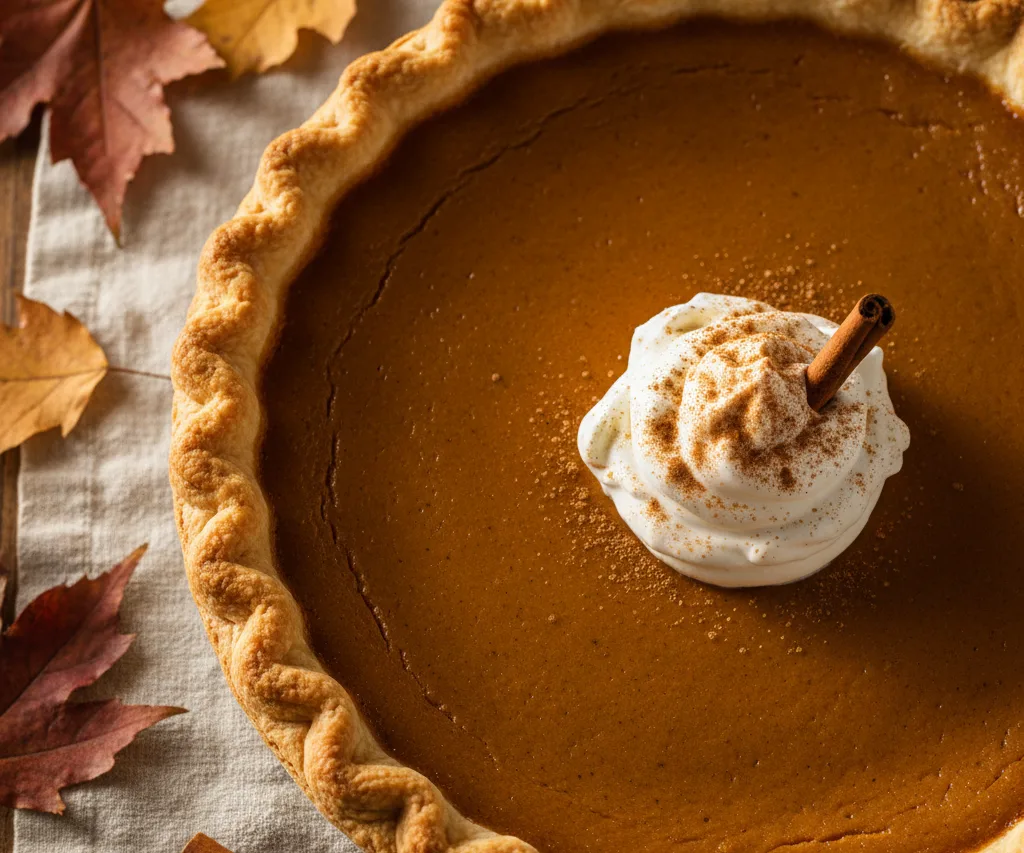
The Ultimate Traditional Spiced Pumpkin Pie with Flaky All-Butter Crust Recipe
Royal Nutritional Ledger *
For those counting their gold coins and their calories.
The Royal Disclaimer: These figures are calculated by our finest AI court scholars based on standard ingredient values. They are highly educated estimates meant for guidance, not gospel. If you require absolute scientific precision for medical or dietary salvation, please consult a certified physician rather than our kitchen AI!
Part of our Dessert Master Index
Did You Know?
Historical Tidbit
Pumpkin pie as we know it today didn't become a Thanksgiving staple until the 19th century, championed by figures like Sarah Josepha Hale.
First time here? Click the button above to automatically send all these ingredients to your highest-paying local grocery delivery app.
⚖️ The Modernizer
Missing extinct ingredients? Swap for accessible modern alternatives.
The Golden Rule
"Never, under any circumstances, overbake the pumpkin pie. The center should still have a slight, almost imperceptible jiggle when removed from the oven; it will continue to set as it cools, achieving that perfect, creamy texture."
Ingredients
24 items required
The Flaky All-Butter Crust:
The Silky Spiced Pumpkin Custard:
For the Par-Bake:
For Garnish (Optional):
Make Us Your Preferred Culinary Source
AI Emergency Hub
Hit a snag while prepping? Our elite AI tools are here to save your dish.
Missing an Ingredient?
Recipe Disaster?
Chef's Notes
The pursuit of a perfect pumpkin pie hinges on two critical elements: a truly flaky crust and a silken, crack-free custard. For the crust, cold butter and minimal handling are paramount to prevent gluten development and ensure those coveted layers. For the filling, gentle heat and precise cooking are key. Overbaking is the enemy; it leads to a rubbery texture and dreaded cracks. The custard should be barely set, allowing it to firm up beautifully as it cools. This careful balance ensures a luxurious mouthfeel that is both rich and delicate.
Pro Tip
1. To ensure a perfectly crisp bottom crust, blind bake it thoroughly until it's lightly golden. If you notice any puffing, gently prick it with a fork.||2. Bake the pie on a baking sheet to catch any potential spills and to aid in even heat distribution, promoting a uniformly baked bottom crust.||3. To prevent the crust edges from burning, create a foil collar and place it around the pie's crimped edge for the last 20-30 minutes of baking, or if you notice it browning too quickly.
Kitchen Catastrophe Warning
The most common disaster is a cracked pumpkin pie filling. This usually occurs from overbaking, causing the custard to contract too much, or from cooling it too rapidly. If your pie cracks, do not despair! Simply let it cool completely, then artfully conceal the fissure with a generous dollop (or an entire layer!) of freshly whipped cream, a dusting of cinnamon, or even some candied pecans. No one will ever know, and the taste will still be divine.
The Jester's Corner
Royal Court Comedy
My family's Thanksgiving dinner isn't complete until someone complains about the pumpkin pie 'not being like Grandma's' – even though Grandma used store-bought crust.
The Culinary Science
The silky texture of pumpkin pie custard is a triumph of protein denaturation and starch gelatinization. The eggs' proteins (albumen and globulins) slowly coagulate and form a delicate network when heated, trapping the liquid and creating the custard's structure. Simultaneously, starches present in the pumpkin purée and flour (if any is used, though not in this specific recipe) absorb moisture and swell, thickening the mixture. Overheating causes the proteins to coagulate too tightly, expelling moisture and leading to a cracked, rubbery custard.
Explore Curated Feast Collections
Discover 90+ themed festive banquets, seasonal menus, and imperial regional feasts.
🏺 Explore More Royal Feasts
Lift the lid on these timeless delicacies
Make Us Your Preferred Culinary Source
Prioritize Ages & Spices in your Google Discover, Top Stories, and AI search feed with one tap.
🎭How does this recipe make you feel?
Tap a reaction to share your vibe
Pastry & Confectionery Stabilization
Storage Science
Cakes and soft desserts should be wrapped tightly to prevent moisture loss and stored at room temperature (if no perishable fillings) or refrigerated. Consume within 3 days.
Reheating Science
Serve at room temperature for optimal flavor perception, as cold mutes sweetness. If it's a baked pastry, flash-heat in a 350°F (175°C) oven for 3-5 minutes to restore the butter matrix and crispness.
Taster's Notes
Community Feedback
0 Comments
Be the first to leave a note on this recipe!