The Ultimate Vietnamese Pickled Carrots and Daikon Recipe
Royal Nutritional Ledger *
For those counting their gold coins and their calories.
The Royal Disclaimer: These figures are calculated by our finest AI court scholars based on standard ingredient values. They are highly educated estimates meant for guidance, not gospel. If you require absolute scientific precision for medical or dietary salvation, please consult a certified physician rather than our kitchen AI!
Part of our pickles Master Index
Did You Know?
Historical Tidbit
Daikon is known as the 'great root' in Japanese and is a staple in many Asian cuisines for its cooling properties.
First time here? Click the button above to automatically send all these ingredients to your highest-paying local grocery delivery app.
⚖️ The Modernizer
Missing extinct ingredients? Swap for accessible modern alternatives.
The Golden Rule
"Never rush the resting phase on the counter! Letting those vegetables lounge in the warm brine for the full two hours is the non-negotiable gateway to achieving that authentic, perfectly balanced sweet-and-sour crunch that elevates a humble meal into a legendary masterpiece."
Ingredients
6 items required
Make Us Your Preferred Culinary Source
AI Emergency Hub
Hit a snag while prepping? Our elite AI tools are here to save your dish.
Missing an Ingredient?
Recipe Disaster?
Chef's Notes
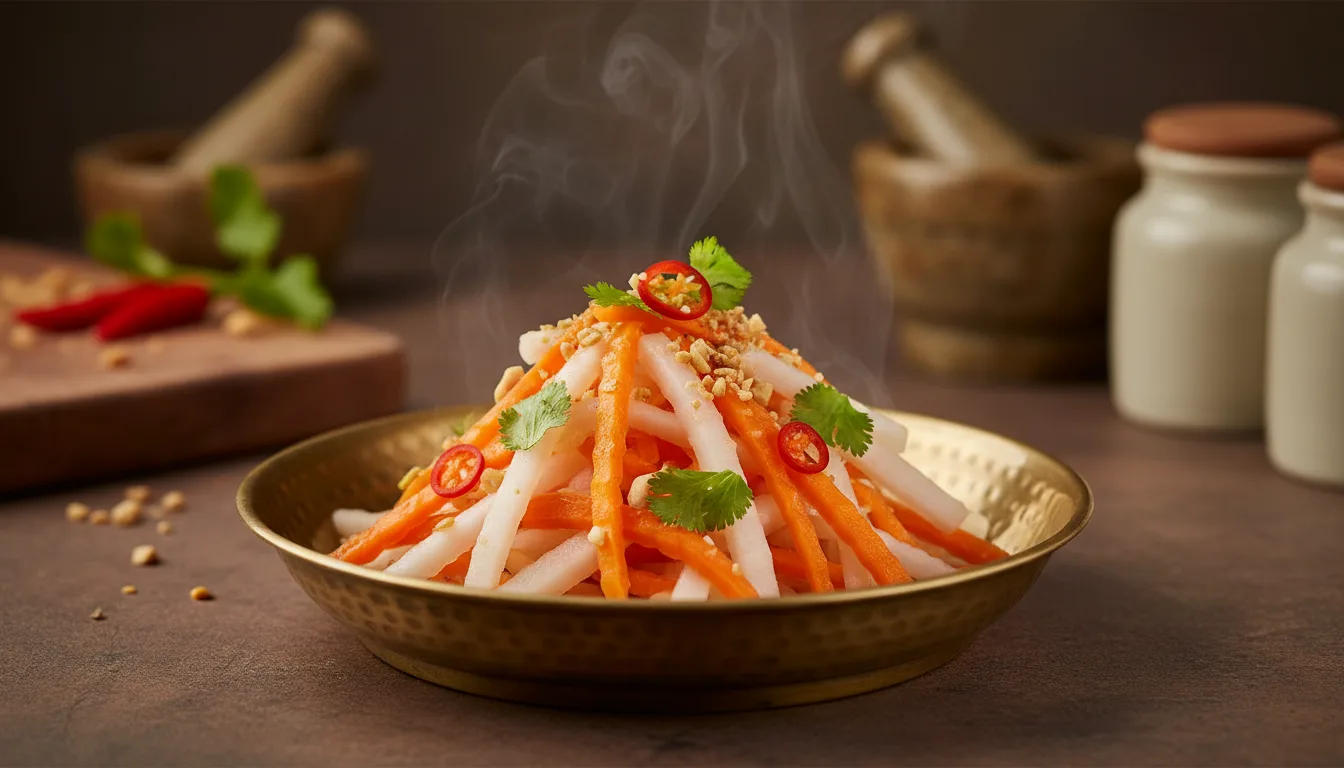
Greetings, culinary explorers! When preparing your carrot and daikon batons, consistency is the secret language of the professional kitchen. Cutting them uniformly to about 3mm or 1/10th of an inch ensures that every single bite marinates at the exact same pace, giving you that uniform, satisfying crunch every single time.
Pro Tip
Listen to the wisdom of the crown! If you cannot find rice wine vinegar, apple cider vinegar makes a noble substitute, bringing a wonderful fruity sharpness to the brine. Always use clean utensils when diving into your pickle jar to protect your batch from unwanted bacteria and extend its royal shelf life.
Kitchen Catastrophe Warning
If you dare to rush the cutting phase and chop your carrots and daikon into thick, chunky logs instead of delicate 3mm batons, you will end up with woody, raw-tasting roots that completely reject the brine, bringing great shame to your kitchen.
The Jester's Corner
Royal Court Comedy
I asked the court gardener why the daikon wasn't growing; he said it was too busy preparing its tax return.
The Culinary Science
Let us peer into the microscope of kitchen science! Osmosis is the invisible force at play here. The high concentration of sugar and salt in your warm brine creates a hypertonic environment, drawing out the excess water from inside the carrot and daikon cells while simultaneously forcing the flavorful vinegar, salt, and sweet notes deep into the vegetable tissue, softening their rigid cell walls.
Explore Curated Feast Collections
Discover 90+ themed festive banquets, seasonal menus, and imperial regional feasts.
Make Us Your Preferred Culinary Source
Prioritize Ages & Spices in your Google Discover, Top Stories, and AI search feed with one tap.
🎭How does this recipe make you feel?
Tap a reaction to share your vibe
General Food Safety & Storage
Storage Science
Cool rapidly. Store in an airtight container in the refrigerator (below 4°C / 40°F). Consume within 3-4 days.
Reheating Science
Reheat to an internal temperature of 165°F (74°C). Use the stove or oven for best texture, stirring or turning occasionally to ensure even heating.
Taster's Notes
Community Feedback
0 Comments
Be the first to leave a note on this recipe!